The short answer
- The 1 mukhi has a single natural line and one internal compartment. The Devi Bhagavata says the one-faced bead “reveals Paratattva”, the highest truth (Devi Bhagavatam, Book 11, ch. 7).
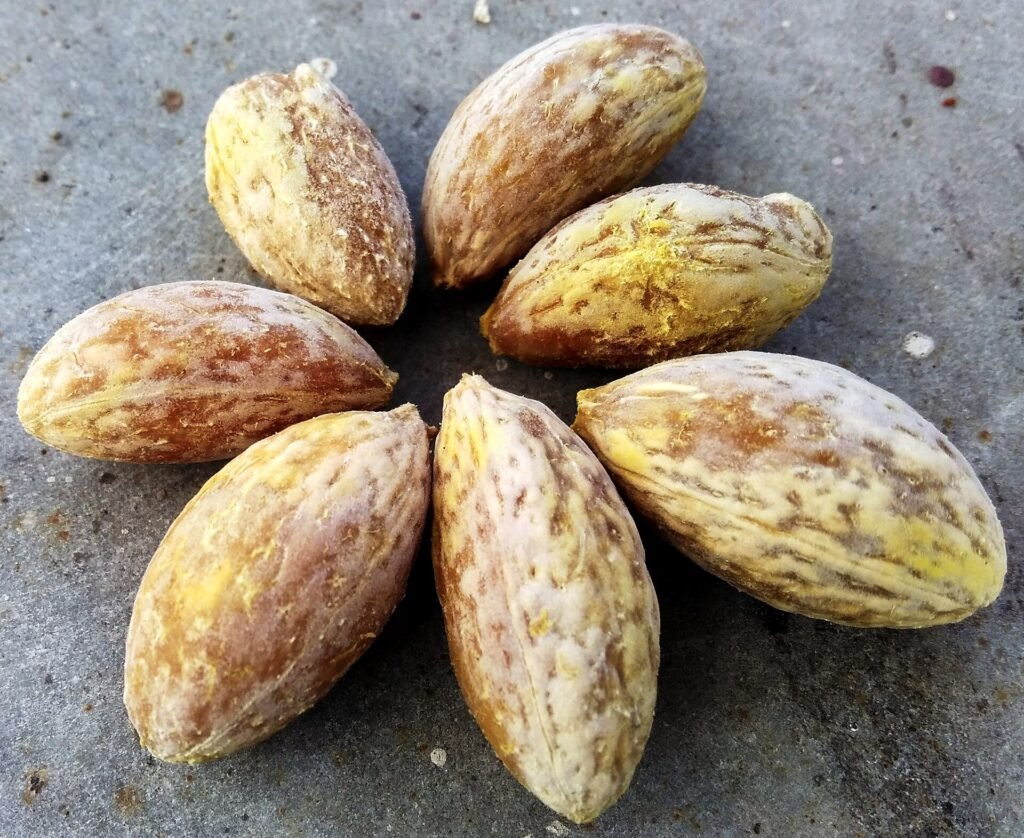
- Three kinds are sold, and sellers disagree about them. Half-moon (half-ellipse) beads: one large seller calls these Bhadraksha, from Elaeocarpus serratus of South India and Sri Lanka, not true rudraksha (Rudra Centre), while another sells them as “1 Mukhi Rudraksha (Half-moon)” from India (GemKrishna builder).
- Java (Indonesian) 1 mukhi beads are small; one seller listed them at ₹975 per bead. Nepal 1 mukhi beads were listed at ₹8,250 for 15–17 mm by the same seller, while another seller states that a round 1 mukhi “does not exist”.
- It is the most faked face. Carved or filled lower-mukhi beads, look-alike seeds and moulded imitations are all sold as 1 mukhi.
- Buy only with an individual X-ray-based laboratory report that you can verify online, and get the seller’s description, species and origin in writing.
What the texts say
The Devi Bhagavata Purana (Book 11, chapter 7) opens its list of faces with the one-faced bead: “One-faced Rudrākṣa reveals Paratattva (the highest Tattva); when worn, the knowledge of the highest Tattva arises.” The Rudrakshajabala Upanishad, as summarised in standard references, associates it with “Shiva as Brahman” (Rudrakshajabala Upanishad). These are religious statements about meaning, not descriptions of how to identify a bead.
Because of this status, the 1 mukhi carries the highest price expectations and the greatest incentive to fake.
The three kinds on sale, and what their sellers say
| Type | What it looks like | What sellers state (11 October 2026) |
|---|---|---|
| Half-moon (“ardh chandra”, “kaju dana”) | Elongated, cashew-like half-ellipse with thorny protrusions; often large (about 24–42 mm) | Rudra Centre: “1 Mukhi Half Moon Bhadraksha“, “derived from the Elaeocarpus Serratus species found in South India and Sri Lanka”, “controversially considered as a substitute” for Nepali 1 mukhi, priced ₹2,250 to ₹15,000 by size. GemKrishna: lists “1 Mukhi Rudraksha (Half-moon)”, origin India |
| Java / Indonesian 1 mukhi | Small bead, Indonesian type | Rudra Centre recommends a Java 1 mukhi to buyers seeking a Nepali one. GemKrishna: 1 mukhi Indonesia at ₹975 per bead |
| Nepal 1 mukhi | Larger Nepali-type bead with one line | GemKrishna: 1 mukhi Nepal, 15–17 mm, ₹8,250 per bead. Rudra Centre: “1 Mukhi Round Rudraksha does not exist”; natural 1 mukhi is “in a half-ellipse shape” |
Sources: Rudra Centre, 1 mukhi page; GemKrishna, custom bracelet builder (bead data and prices), both checked 11 October 2026.
What to make of the disagreement. Two large sellers describe the same kind of half-moon bead differently: one as a different species (Bhadraksha), one as 1 mukhi rudraksha. One says a round 1 mukhi does not exist; the other sells Nepal 1 mukhi beads. We cannot settle botany or rarity from sellers’ pages, and neither should a buyer. What a buyer can insist on is clear written description (species claimed, origin, size, weight) and an independent laboratory report for the exact bead.
Rudra Centre also states that bhadraksha is often sold as rudraksha “outside Shiva Temples where local traders prey on naïve devotees”. That is the seller’s own warning; it underlines the point that a 1 mukhi bought without documentation from a casual source is a high-risk purchase.
How 1 mukhi beads are faked
| Method | What to look for | Confirmed by |
|---|---|---|
| Lines filled or smoothed on a 2 or more mukhi bead to leave one | Filler, smooth patches or colour changes along where a line should be | Magnification; X-ray shows more compartments than lines |
| Carved “single line” on a bead with no clear line | Tool marks; a line that does not follow the surface texture | Magnification; X-ray |
| Look-alike seeds sold as rudraksha | Different surface pattern and shape | Laboratory identification |
| Moulded or carved imitations (resin, wood, plaster) | Identical repeating detail, mould seams, no natural compartments | X-ray shows no natural compartments |
| Carved figures (Shiva, Om, trident) “naturally formed” | Crisp, deliberate shapes on the surface | Magnification |
Hinduism Today‘s laboratory-assisted investigation describes the key test: if “the number of seed compartments shown by x-ray does not match the number of outward faces, it’s likely there has been tampering”, and “if there are no compartments at all, then it is a complete fake” (Hinduism Today, 2016). The magazine did not test the most expensive beads, and advised anyone spending large sums on rare beads to consider buying only certified specimens.
The report you need
For a 1 mukhi, a laboratory report is not optional.
| The report should show | Why |
|---|---|
| Identification of the bead, with the laboratory’s wording on species or type | Separates rudraksha from look-alike seeds, in the laboratory’s own words |
| Mukhi count and X-ray (radiography) findings | Confirms one compartment matches one face |
| Modification, filling or treatment | Detects filled lines and repairs |
| Photograph, weight and dimensions | Lets you match the report to your bead |
| A report number verifiable on the laboratory’s own website | Protects against invented or reused reports |
GJSPC, for example, states that each rudraksha report records “radiography and other test performed”, and its charges supplied in October 2026 listed a large-format origin report for 1 mukhi and Trijuti at ₹1,500. Those charges are not published on its website and have not been independently verified; confirm the current fee with GJSPC (GJSPC). See our X-ray guide and how to verify a report online.
What a fair price looks like
On 11 October 2026:
- Half-moon beads: ₹2,250 to ₹15,000 at Rudra Centre, by size from about 24 mm to over 42 mm.
- Java 1 mukhi: ₹975 per bead in GemKrishna’s custom bracelet builder, added to the bracelet’s base price.
- Nepal 1 mukhi, 15–17 mm: ₹8,250 per bead in the same builder.
These are two sellers’ figures, not market rates, and they describe different products. Be wary of any 1 mukhi priced in lakhs without an independent report, and equally of a “Nepal 1 mukhi” at a few hundred rupees. Both extremes are where fakes and misdescriptions concentrate.
Buying checklist
- Ask what exactly is being sold: half-moon, Java or Nepal; and whether the seller describes it as rudraksha or bhadraksha.
- Get size, weight and origin in writing on the invoice.
- Insist on an individual X-ray-based report for that bead, from a laboratory that tests rudraksha, and verify its number online.
- Photograph the bead from both ends and four sides, with a scale, on arrival.
- Check return terms in case a second laboratory disagrees.
- Avoid buying from casual sources at pilgrimage sites without documentation, however persuasive the story.
FAQ
How can I tell if a 1 mukhi rudraksha is real or fake?
Look for a single natural line and no filler, carving or mould marks under magnification. Reliable confirmation needs an X-ray-based laboratory report showing one compartment matching one face, with no modification.
What is a half-moon 1 mukhi?
A cashew-shaped half-ellipse bead sold as 1 mukhi. One large seller describes it as bhadraksha from Elaeocarpus serratus (South India and Sri Lanka), not true rudraksha; another sells it as 1 mukhi rudraksha from India. Ask the seller in writing what it is, and get a report.
Does a round 1 mukhi rudraksha exist?
Sellers disagree. One large seller states that a round 1 mukhi “does not exist”; others sell Nepal 1 mukhi beads. Treat any round 1 mukhi with particular caution and buy only with an independent X-ray report.
What is the price of a 1 mukhi rudraksha?
On 11 October 2026, one seller listed half-moon beads from ₹2,250 to ₹15,000; another listed a Java 1 mukhi at ₹975 and a 15–17 mm Nepal 1 mukhi at ₹8,250. Prices far outside these ranges deserve extra scrutiny.
Why do some 1 mukhi beads show no visible line?
We found no reliable source that explains genuine 1 mukhi beads with no visible line. A bead with no visible face is also what a filled or smoothed fake looks like, so treat it with caution and rely on an X-ray-based report.
Sources
- Srimad Devi Bhagavatam, Book 11, chapter 7, trans. Swami Vijnanananda: sacred-texts.com, checked 11 October 2026.
- Wikipedia: Rudrakshajabala Upanishad (summary of face–deity associations), checked 11 October 2026.
- Rudra Centre (seller): 1 mukhi half-moon bhadraksha page (species, origin, prices, size grades, statements on round and Java 1 mukhi), checked 11 October 2026.
- GemKrishna (seller): Custom bracelet builder (1 mukhi Nepal, Java and half-moon listings and bead prices), checked 11 October 2026.
- Rajiv Malik, Hinduism Today: How common are fake rudrakshas?, October–December 2016, checked 11 October 2026.
- GJSPC Laboratory: About (radiography recorded on rudraksha reports), checked 11 October 2026.