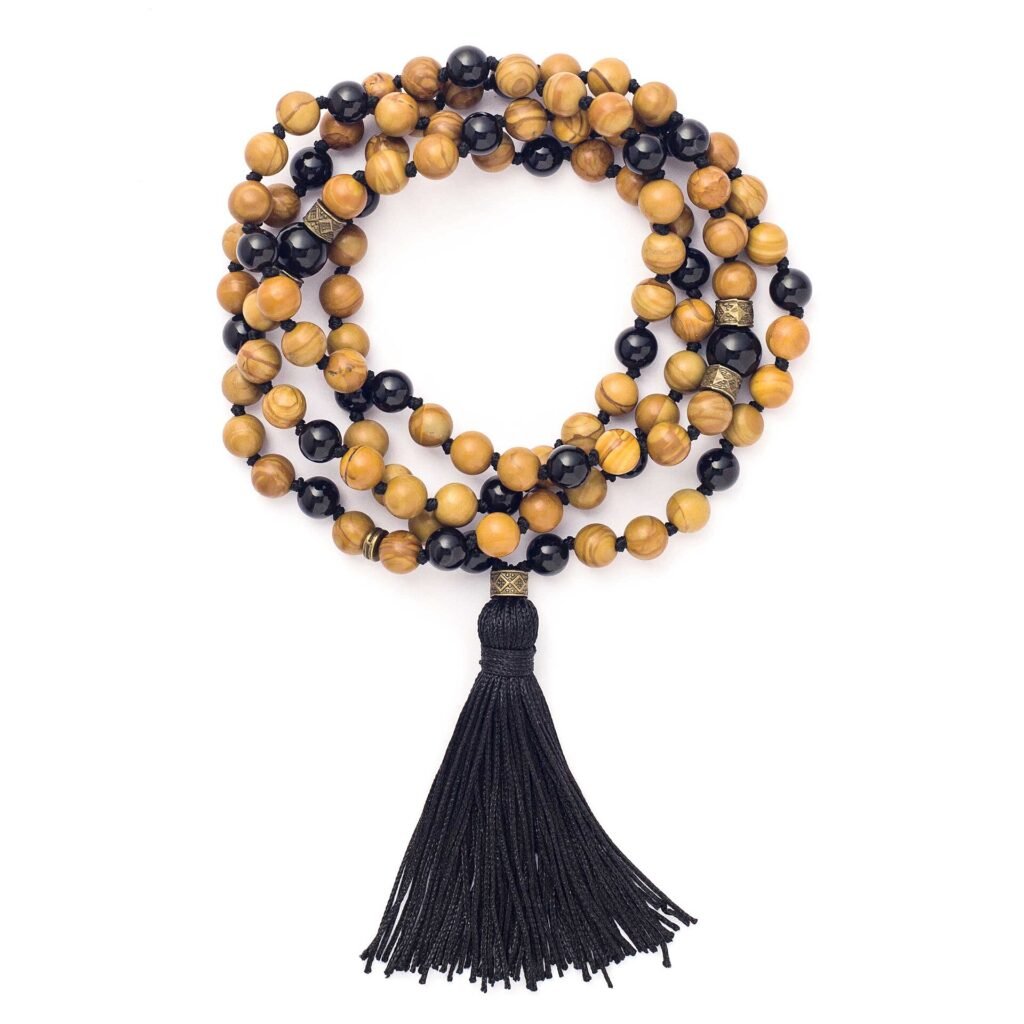
The short answer
- The classic texts do not assign planets or rashis to rudraksha. The Devi Bhagavata (Book 11, ch. 7) and the Rudrakshajabala Upanishad describe 1 to 14 faces in terms of deities, not planets (Devi Bhagavatam).
- Planet charts come from sellers and astrologers, and they differ. One large seller, for example, pairs 4 and 5 mukhi both with Jupiter, 6 mukhi with Mars and 7 mukhi with Venus (Rudra Centre).
- Rashi charts usually work through the planet that rules each sign, so they inherit the same differences.
- “Best for money”, “for students” and “for health” are beliefs. No rudraksha has a tested effect on income, exams or health.
- A practical way to decide: choose what your own tradition or teacher recommends, prefer common, well-documented beads (5 mukhi is the most common), and buy on evidence: mukhi count, origin, size and, for valuable beads, a report.
What the texts say about each face
The two most cited sources describe faces by deity:
| Mukhi | Devi Bhagavata, Book 11, ch. 7 (Vijnanananda translation) | Rudrakshajabala Upanishad (summary) |
|---|---|---|
| 1 | “Reveals Paratattva”, the highest truth | Shiva as Brahman |
| 2 | Ardhanarishvara | Ardhanarishvara |
| 5 | “The five faced Śiva Himself” | Pancha-Brahman |
| 6 | Kartikeya; “some Pundits take Gaṇapati” | Kartikeya and Ganesha |
| 7 | The seven Matrikas, the Sun and the seven Rishis | Seven Matrika goddesses |
| 8 | Brahmi, the eight Matrikas; pleases the eight Vasus and the Ganges | Eight Matrika goddesses |
| 13 | Kamadeva | Kamadeva |
| 14 | “Destroys all diseases and gives eternal health” | Shiva as Rudra |
Sources: Devi Bhagavatam, Book 11, ch. 7; Rudrakshajabala Upanishad (summary). Our 1 to 21 mukhi guide covers every face.
Neither source contains a planet column or a rashi column.
What one large seller’s planet chart says
Rudra Centre’s product pages, checked on 11 October 2026, list a “ruling planet” for each face:
| Mukhi | “Ruling deity” (Rudra Centre) | “Ruling planet” (Rudra Centre) |
|---|---|---|
| 2 | Ardhanareshwara | Moon |
| 3 | Agni Dev | Sun |
| 4 | Brahaspati | Jupiter |
| 5 | Kalagni Rudra | Jupiter |
| 6 | Kartikeya | Mars |
| 7 | Goddess Lakshmi | Venus |
| 8 | Ganesha | Ketu |
| 9 | Goddess Durga | Rahu |
| 10 | Krishna | “All planets” |
| 11 | The eleven Rudras | “All planets” |
| 12 | Surya | Sun |
| 13 | Kamadeva | Venus |
| 14 | Hanuman | Mars |
Source: Rudra Centre product pages for each mukhi (for example 5 mukhi and 14 mukhi), checked 11 October 2026.
Three things stand out:
- Some planets appear twice (Jupiter for 4 and 5; Sun for 3 and 12; Venus for 7 and 13; Mars for 6 and 14), and Saturn and Mercury do not appear at all for 2 to 14 mukhi on these pages (the 1 mukhi page lists no planet).
- Some deities differ from the texts. For 7 mukhi, the Devi Bhagavata names the seven Matrikas, the Sun and the Rishis; the seller names Lakshmi. For 14 mukhi, the Upanishad summary names Shiva as Rudra; the seller names Hanuman.
- Other sellers and astrologers use other pairings. There is no single standard.
None of this means one chart is “right”. It means a planet chart is a convention, and you should know whose convention you are following.
Rashi charts
Rashi charts usually start from the planet that rules each sign (Mars for Mesha and Vrishchika, Venus for Vrishabha and Tula, and so on) and then pick a rudraksha paired with that planet. Because the rudraksha–planet pairings differ, the rashi recommendations differ too. Our gemstones for each rashi guide shows the same structure for gemstones.
“By date of birth” recommendations go a step further and depend on a full birth chart reading. That is an astrological consultation, with the same limits as any other; see our guide to astrological gemstone consultations.
“Best for money”, “for students”, “for health”
These are among the most searched questions. The honest answer:
- The texts associate certain faces with prosperity, knowledge or health (for example, the Devi Bhagavata says the seven-faced bead increases prosperity and the fourteen-faced bead “gives eternal health”).
- These are religious statements. There is no controlled evidence that any rudraksha changes income, exam results or health.
- Do not replace medical care with a bead, and do not buy a more expensive bead because of a financial promise.
A practical way to decide
- Follow your own tradition or teacher, if you have one. Their recommendation is the context that gives a chart meaning.
- If you have no teacher, many people start with a 5 mukhi bead or mala. It is the most common face, is described in the texts as Shiva himself, and is inexpensive enough not to need a report.
- Be cautious with rare faces recommended by a seller who also sells them. Ask for the recommendation and the reasons in writing.
- Buy on evidence: mukhi, origin, size and weight in writing; for valuable beads, an X-ray-based report you can verify (how to verify a report).
See our rudraksha buying guide for the practical checks.
FAQ
Which rudraksha is for which planet?
The classic texts do not say; they describe faces by deity. Planet pairings come from sellers and astrologers and differ between them. One large seller, for example, pairs 6 mukhi with Mars, 7 mukhi with Venus and 8 and 9 mukhi with Ketu and Rahu.
Which rudraksha is associated with Saturn?
It depends on the chart. Some sellers pair a particular mukhi with Saturn; the classic texts do not. Ask which tradition a recommendation follows.
Which rudraksha suits my rashi?
Rashi charts usually use the ruling planet of your sign, then a seller’s planet-to-mukhi pairing. Because those pairings differ, so do the recommendations. Follow a teacher you trust, and buy on evidence.
Which rudraksha is best for money?
Texts and sellers associate some faces with prosperity, but these are beliefs. No rudraksha has a demonstrated effect on income.
Is there a rudraksha for students?
Some traditions associate certain faces with knowledge. These are beliefs; study, sleep and support matter more.
Sources
- Srimad Devi Bhagavatam, Book 11, chapter 7, trans. Swami Vijnanananda: sacred-texts.com, checked 11 October 2026.
- Wikipedia: Rudrakshajabala Upanishad (summary of face–deity associations), checked 11 October 2026.
- Rudra Centre (seller): product pages for 2 to 14 mukhi (“ruling deity” and “ruling planet”), checked 11 October 2026.
Related reading
- 1 to 21 mukhi rudraksha: a guide to faces, beliefs and authenticity
- Gemstones for each rashi: the traditional table, substitute stones and the caveats
- Astrological gemstone consultations: how they work, what they cannot show, costs and what to check (with GemsShastra as an example)
- Rudraksha buying guide: mukhi, origin, size, testing and custom jewellery