The short answer
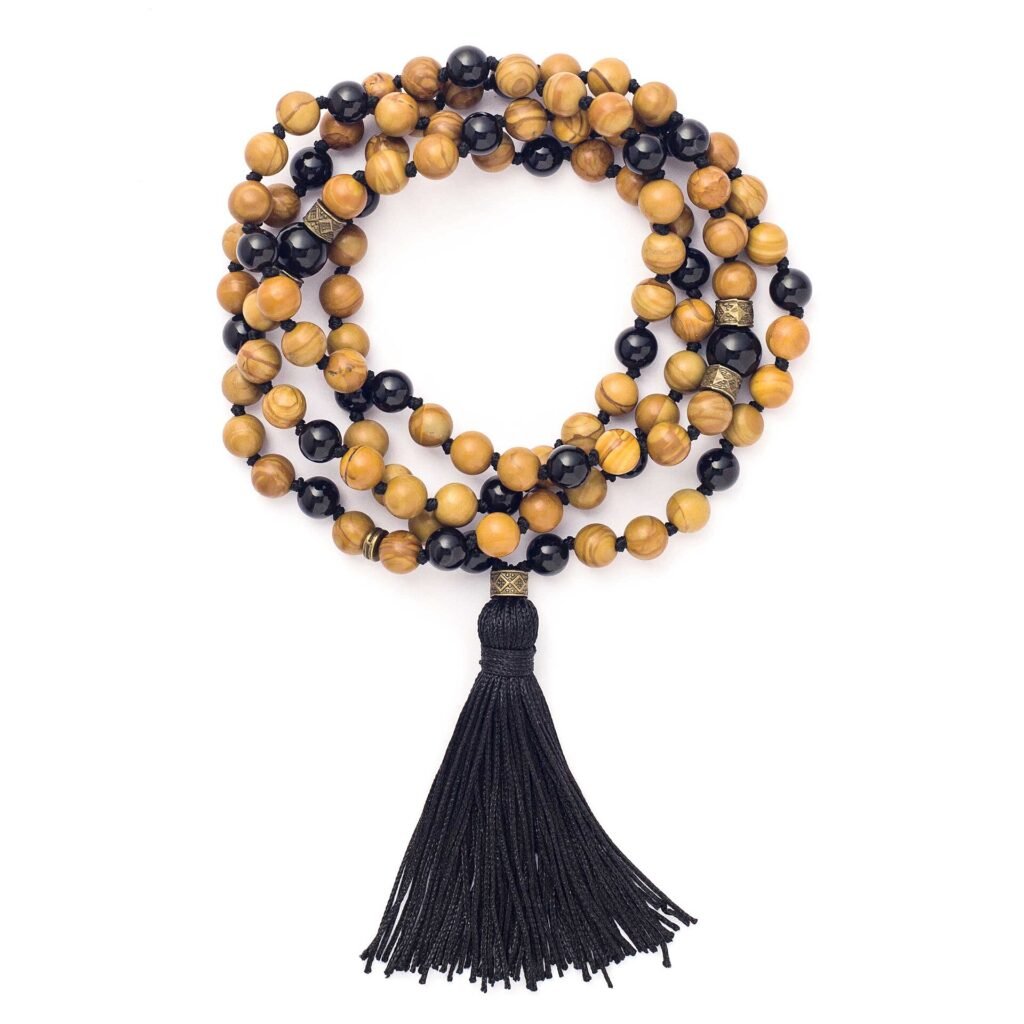
- Specify everything in writing: bead count (27, 54 or 108 plus a guru bead), bead size in mm, mukhi and origin, stringing (thread, knotted thread or wire), capping metal, length and the guru bead.
- Ask what the report covers. One report for the whole strand, or one per bead? Which laboratory, and can you verify the number online?
- Get an itemised invoice: beads, stringing or capping, metal weight and rate if silver or gold, report, any ritual charge, delivery and GST.
- Know the return terms for custom items before paying. Most custom malas cannot be returned for a change of mind; items not as described must still be taken back under the E-Commerce Rules.
- If the report contradicts the seller (for example “Indonesian” where you were told “Nepali” or “Himalayan”), raise it in writing at once, with the report.
What to specify
| Choice | Options | Why it matters |
|---|---|---|
| Bead count | 27, 54 or 108 plus a guru (sumeru) bead | Traditional counts for japa; affects cost and length |
| Bead size | Commonly about 5–10 mm for japa; larger for kanthas | Size drives price and weight; see our size guide |
| Mukhi and origin | Usually 5 mukhi for japa; Nepali or Indonesian | Price and appearance differ widely; see Nepali vs Indonesian |
| Stringing | Thread, knotted thread, wire | Knots stop beads rubbing and keep the strand if it breaks |
| Capping | None, German silver, 925 silver, gold | Metal value and authenticity; capping can hide lines or repairs |
| Guru bead and tassel | Rudraksha, sphatik or gemstone guru bead; tassel colour | Small cost, but part of the specification |
| Mixed malas | Rudraksha with crystals or gemstones | Each material should be named |
Our guides to custom japa mala configurations and how a custom kantha is built explain these choices in detail.
An example of a builder’s options
GemKrishna’s online builders, checked on 11 October 2026, illustrate how custom malas are specified:
- Its Jaap Mala builder offers “27, 54 or 108 beads” in gemstone beads, with rudraksha available as a paid upgrade “priced per bead”, “not available with capping”. A site-wide section on the same page states that “customers are given a variety of Independent Laboratories to choose from” and that “the report supplied names the issuing lab”, listing GJSPC, IGI, GRS, IIGJ, GSI and GIA; ask before ordering which laboratory will report on your mala (GemKrishna Jaap Mala builder).
- Its Kantha builder offers a Siddh Mala (16 main beads: 1 to 14 mukhi, Ganesh and Gauri Shankar) or an Indra Mala (23 main beads: 1 to 21 mukhi, Ganesh and Gauri Shankar), in lengths from 18 to 36 inches, and states that each kantha includes a GJSPC report “documenting the identifying characteristics of the Rudraksha examined”, valued at ₹1,500 for a Siddh Mala and ₹3,000 for an Indra Mala (GemKrishna Kantha builder).
Other sellers offer different structures; our rudraksha seller comparison sets several side by side, and our Custom GemKrishna Builders guide covers all four GemKrishna builders in detail.
The documents to insist on
| Document | What it should show |
|---|---|
| Laboratory report | Laboratory name, report number verifiable online, bead count, mukhi, any modification, and whether it covers each bead or the strand |
| Itemised invoice | Bead count, mukhi, origin, size; stringing; capping metal and weight; ritual charges; report charge; GST; delivery |
| Photos before dispatch | The finished mala, to compare with what arrives |
| Return and remake terms | What happens if beads are not as described, or the length is wrong |
One report for many beads. A strand report may describe the mala as a whole rather than each bead. That is fine for a 108-bead 5 mukhi japa mala, where individual reports would cost more than the beads. For a kantha with rare faces, ask for per-bead identification of the valuable beads. See how to verify a report online.
What makes up the total cost
| Component | How it is priced | What to watch |
|---|---|---|
| Beads | Per bead by mukhi, origin and size; or a strand price | The largest part for Nepali or rare beads |
| Stringing | Labour; knotting costs more | Knotted thread or wire for heavy beads |
| Capping | Metal weight × metal rate, plus making | 925 silver vs German silver is a big difference in value |
| Guru bead, spacers, tassel | Small extras | Material should be named |
| Report | Included by some sellers, charged by others | Ask what it covers |
| Ritual (energising, puja) | Optional service charge | Cannot be verified; ask for it as a separate line |
| Delivery and GST | As stated | Check the invoice |
For capping, our guide to rudraksha silver capping explains how 925 and German silver are priced.
If the report contradicts the seller
A common complaint is a bead described as “Nepali” or “Himalayan” that a report describes as Indonesian, or a mukhi count that differs.
- Write to the seller the same day, attaching the report and the listing or chat that described the bead.
- Ask for return and refund, or replacement with what was described.
- Cite the rule. A seller “shall not refuse to take back goods… or refuse to refund” goods “not of the characteristics or features as advertised or as agreed to” (E-Commerce Rules, rules 6 and 7).
- Escalate to the National Consumer Helpline (1915) and, if needed, a consumer commission.
“Himalayan” is a loose term, not an origin on a laboratory report. Ask the seller what country they mean.
Red flags
- No bead count, size or origin on the listing or invoice.
- “Certified” without a laboratory name or a number you can check.
- A single photo used for every listing.
- Ritual charges presented as the main value of the mala.
- Promises of health, wealth or success.
- No written return terms for custom items.
FAQ
Where can I buy an original rudraksha mala online?
From a seller you can identify, who states bead count, size, mukhi and origin in writing, provides a laboratory report with a verifiable number, and has clear return terms. Many established sellers and spiritual organisations sell malas online; judge each on that evidence.
Can I buy a rudraksha mala from Isha Foundation?
Isha’s online store (IshaLife) lists rudraksha malas and beads, including “energized panchamukhi malas”. As with any seller, check the specification, documentation and return terms for the item you choose.
What is the price of an original 108-bead rudraksha mala?
It depends mostly on bead size and origin. Small 5 mukhi Indonesian beads make an inexpensive mala; large Nepali beads cost many times more. Compare quotes for the same bead size, origin, stringing and documentation.
What should a custom mala invoice list?
Bead count, mukhi, origin and size; stringing; capping metal and weight; any ritual charge; the report and its number; delivery; GST; and the seller’s details.
Can I return a custom mala?
Usually not for a change of mind. If the beads or construction are not as described, the seller must take it back and refund under the E-Commerce Rules.
Sources
- GemKrishna (seller): Custom Jaap Mala builder and Custom Rudraksha Kantha builder, checked 11 October 2026.
- IshaLife: Rudraksha (store listing), checked 11 October 2026.
- Ministry of Consumer Affairs: Consumer Protection (E-Commerce) Rules, 2020 (gazette copy via LiveLaw), rules 6 and 7, checked 11 October 2026.
- National Consumer Helpline: consumerhelpline.gov.in, checked 11 October 2026.