The short answer
Ruby and sapphire are the same mineral, corundum, and both are very hard (9 on the Mohs scale). Emerald is a different mineral, beryl. It is softer (7.5–8), less tough, and almost always included. Treatments are normal for all three: most rubies and sapphires are heated, and most emeralds have their fractures filled with oil or resin. That is acceptable when it is disclosed. The things to watch for are undisclosed treatment, lead-glass-filled “ruby” sold as ordinary ruby, and origin claims treated as fact. A good report states identity, natural or laboratory-grown, and treatment. Any origin it gives is the laboratory’s opinion. Our guide to oiled and resin-filled emerald explains how laboratories grade clarity enhancement.
This guide builds on our gemstone buying guide and on how to judge coloured gemstone quality. Here we treat the three stones separately, because the rules that apply to one often do not apply to the others.
Species and varieties
| Ruby | Sapphire | Emerald | |
|---|---|---|---|
| Mineral species | Corundum (aluminium oxide) | Corundum | Beryl |
| What makes it this variety | Red colour, caused by chromium (GIA) | Any corundum that is not ruby red (GIA) | Bluish green to green beryl (GIA) |
| Colour-causing elements | Chromium | Blue: iron and titanium; “only a few hundredths of a percent” (GIA) | Chromium and/or vanadium (GIA) |
| Mohs hardness | 9 | 9 | 7.5–8 |
| Toughness | Good | Good | Fair to good (GIA) |
| Typical inclusions | Fine needles (“silk”), crystals, fingerprints | Silk, colour zoning, crystals | The jardin: fractures, fluid and crystal inclusions |
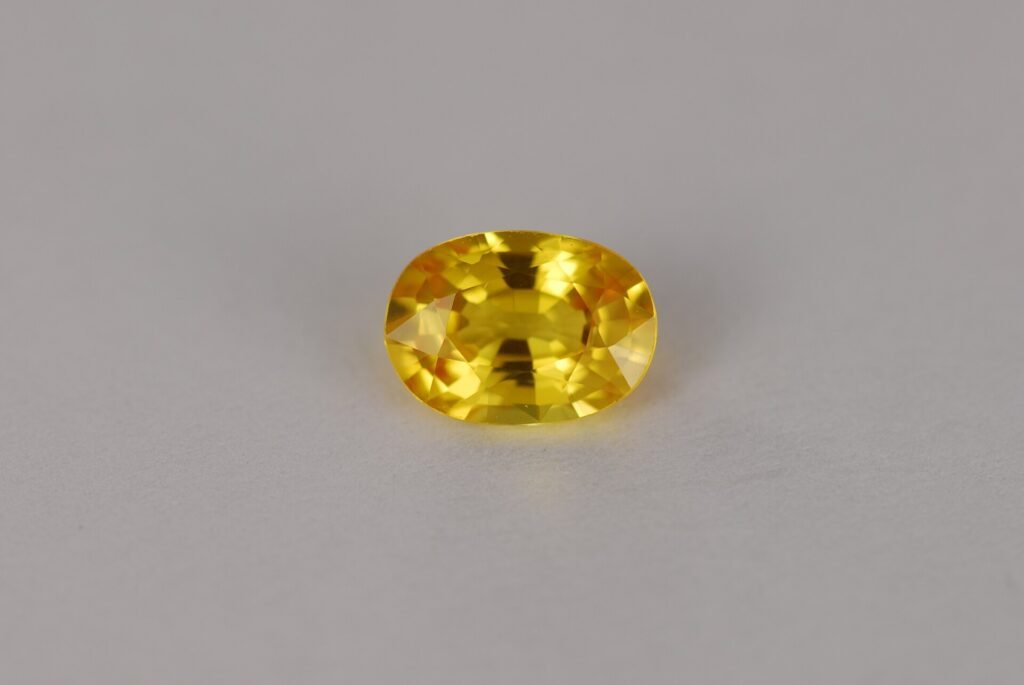
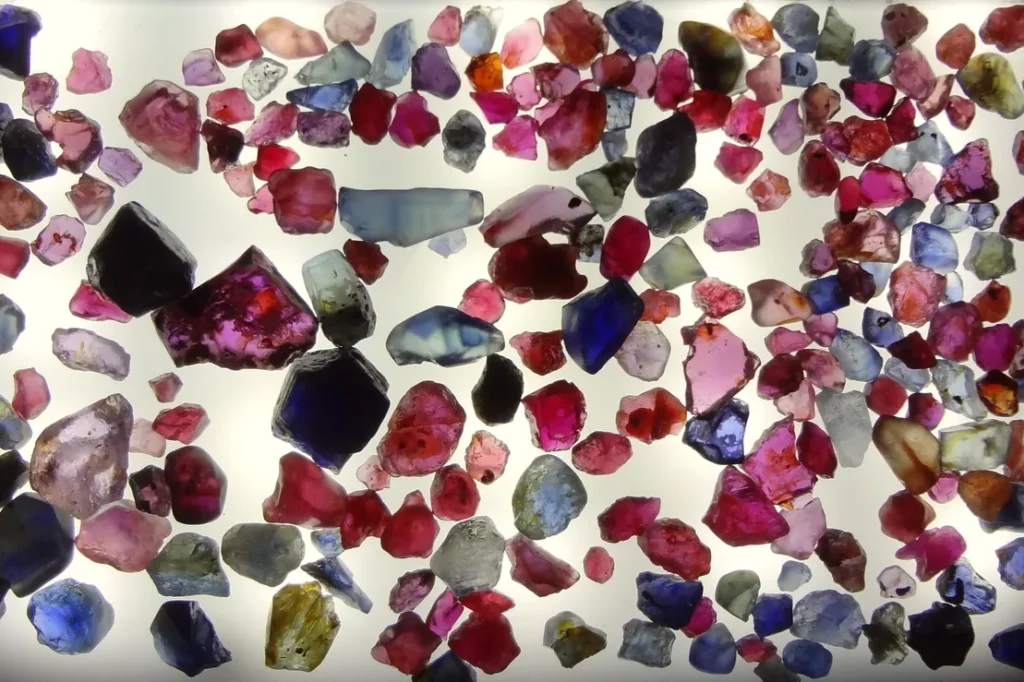
Because ruby and sapphire are both corundum, the line between “pink sapphire” and “ruby” is a matter of colour judgement, and laboratories and markets do not always draw it in the same place. Sapphire comes in every colour except ruby red: blue, yellow, pink, orange, green and violet, plus the pinkish-orange padparadscha (GIA).
Colour: what quality looks like, stone by stone
- Ruby. GIA calls colour “the most significant factor affecting a ruby’s value”. The finest is a pure, vibrant red to slightly purplish red. Too dark, too brownish or too pink lowers value (GIA).
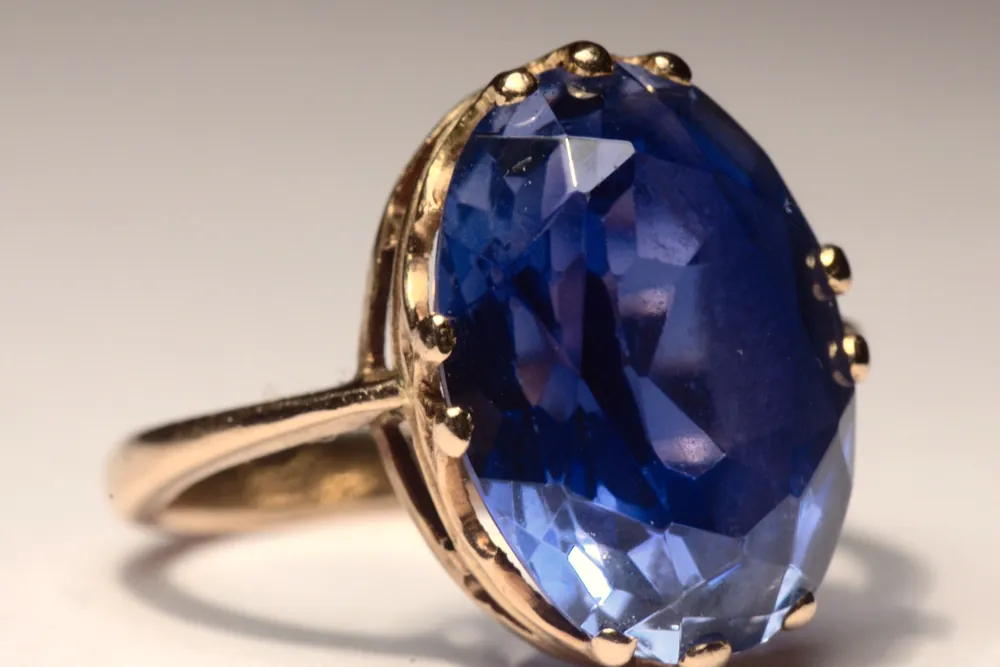
- Sapphire. GIA describes the preference as “strong to vivid color saturation, regardless of hue” (GIA). For blue, a rich, even blue that is not inky is the classic ideal. More iron darkens the stone (GIA).
- Emerald. The ideal is bluish green to pure green with vivid saturation (GIA). Colour leads value even when inclusions are visible.
Look in daylight and under the lighting you will wear the stone in. Rubies can look better under warm light and sapphires under daylight. Ask for video, not just a photograph.
Clarity and inclusions
Clarity standards are not the same across the three:
| What is normal | When to be cautious | |
|---|---|---|
| Ruby | Some inclusions are expected; fine rubies with high clarity are rare. GIA notes that inclusions affecting transparency or brilliance “significantly reduce value” | Unusually clean, large, cheap stones; flattened bubbles or glassy patches in fractures (signs of glass filling) |
| Sapphire | Blue sapphires “generally have better clarity than rubies” (GIA); silk is common | Large clean stones at low prices; colour concentrated only near the surface |
| Emerald | Inclusions are expected; the jardin is part of its character | A suspiciously clean emerald (consider synthetic or heavy filling); surface-reaching fractures that look “glassy” |
Heat treatment: normal for corundum
Heating improves colour and clarity in corundum, for example by dissolving silk or intensifying blue, and it is widely accepted when disclosed.
- Ruby: GIA’s buyer advice is to “assume your ruby is heated”. Rubies with a report confirming no evidence of heat command a premium (GIA FAQ).
- Sapphire: GIA calls heating an accepted treatment. For fine sapphire, a laboratory’s confirmation of no evidence of heat adds to rarity and value (GIA FAQ).
- Detection is not always easy. GIA research notes that some low-temperature heating, in Mozambique ruby for example, is difficult to detect, and that a combination of inclusion study and infrared spectroscopy gave consistent results (GIA research).
Diffusion treatments also exist, for example beryllium diffusion of sapphire. They are disclosed differently and valued lower than heat alone. Ask any seller directly: “Heated only, or any other treatment?” Our guide to heated vs diffusion-treated sapphire explains how laboratory reports describe each.
Emerald fracture filling and ruby glass filling: not the same thing
These two treatments are often confused. Both fill cracks, but they differ greatly in durability and value.
| Emerald clarity enhancement | Lead-glass-filled “ruby” | |
|---|---|---|
| What it is | Oil, resin or polymer worked into surface-reaching fractures to reduce their visibility | Low-grade, heavily fractured corundum filled with a high-lead glass, sometimes in large proportion |
| How common | GIA cites estimates that “90 percent or more” of emeralds are fracture-filled (GIA) | Widespread in low-cost “ruby” |
| Accepted in trade? | Yes, when disclosed; the degree (minor, moderate, significant) matters | Must be disclosed. A US trade advisory said it may be improper to call it simply “ruby”, and GIA has used the term “manufactured product” for such material (JCK) |
| Durability | Fillers can be affected by heat, steam, ultrasonic cleaning, light and chemicals (GIA) | Can be damaged by heat, by acids as mild as lemon juice, and by ultrasonic cleaning (GIA ruby care) |
| Price | Lower than untreated; the degree of filling matters | Far below heated or untreated ruby |
GIA’s research on lead-glass-filled ruby covers how it is identified and tested for durability (Gems & Gemology, 2006). Our comparison of glass-filled, heated and untreated ruby explains how laboratories describe each and what it means for value.
If a low-priced “ruby” is large, transparent and vividly red, ask specifically whether it is glass-filled.
Durability and cleaning
| Safe cleaning | Avoid | |
|---|---|---|
| Ruby and sapphire (untreated or heat-only) | Warm, soapy water and a soft brush; generally robust | Hard knocks to pointed corners; harsh cleaning if any filling is present |
| Glass-filled ruby, or any fracture- or cavity-filled corundum | A damp cloth only (GIA) | Ultrasonic, steam, acids (even mild ones), jeweller’s torch heat |
| Emerald | Warm, soapy water with gentle scrubbing, which GIA calls “the safest way” | Ultrasonic (“risky”), steam (can make oil or unhardened resin “sweat out”), heat (GIA) |
Tell your jeweller the treatment before resizing, retipping or repairing a ring. The heat of a torch can damage filled stones.
Origin claims and what reports can prove
“Burmese ruby”, “Kashmir sapphire” and “Colombian emerald” carry big premiums. GIA devoted a 2019 issue of Gems & Gemology to the limits of origin determination. It explains that the trade wants laboratories to pinpoint origin with complete accuracy and to agree with each other, but that science cannot always deliver this, because inclusions and trace elements reflect geology, not borders (Gems & Gemology, Winter 2019).
What that means for you:
- An origin statement is an opinion, based on the laboratory’s reference data and methods.
- Not every stone can be assigned an origin. GIA says it offers origin reports for certain species but will not be able to give an origin “in every instance” (GIA FAQ).
- Laboratories can differ. If origin drives the price, consider a report from a laboratory widely recognised for origin work, and verify the report number online. Our laboratory comparison explains the options available in India.
Price: what moves it
We do not print price lists. Ruby, sapphire and emerald prices vary by orders of magnitude, and published “per carat” figures rarely match a specific stone. These are the factors that move a quote, roughly in order of impact:
- Identity: natural, laboratory-grown or imitation.
- Treatment: none, heat only, minor filling, or significant filling or glass.
- Colour: hue, tone and saturation, judged per stone as above.
- Size: fine rubies over one carat are very rare, and GIA notes that ruby prices rise significantly with size (GIA).
- Clarity and cut, judged by each stone’s own standards.
- Report: the laboratory, the scope (treatment, origin) and whether it can be verified.
- Origin opinion, where one is given and accepted by the buyer.
Two stones of the “same” weight can differ in price for any of these reasons. Compare like with like.
Three buying checklists
Ruby
- Identity stated as natural corundum, ruby, with “laboratory-grown” ruled out.
- Treatment stated: heat only, none, or glass-filled. If glass-filled, it is priced and named as such.
- Colour judged in daylight video. Dark, brownish or very pink stones are priced lower.
- Inclusions inspected for glassy fractures or flattened bubbles.
- Report number verified online. Any origin is read as an opinion.
Sapphire
- Colour named (blue, yellow, pink, padparadscha), with natural or laboratory-grown stated.
- Treatment stated: heat, diffusion or none.
- For blue, check the colour is even and not too dark. For yellow (pukhraj), confirm it is sapphire, not yellow topaz or citrine.
- Report verified. A premium for “unheated” only with a report that says so.
Emerald
- Identity stated as natural beryl, emerald, with laboratory-grown ruled out.
- Clarity enhancement stated, with its degree if the report gives one.
- Setting and use chosen for a less tough stone (see below).
- Care plan: no ultrasonic, no steam.
- Report verified.
Setting and wear
- Ruby and sapphire suit rings worn every day. Protect pointed corners (pear and marquise tips) with claws or a V-tip.
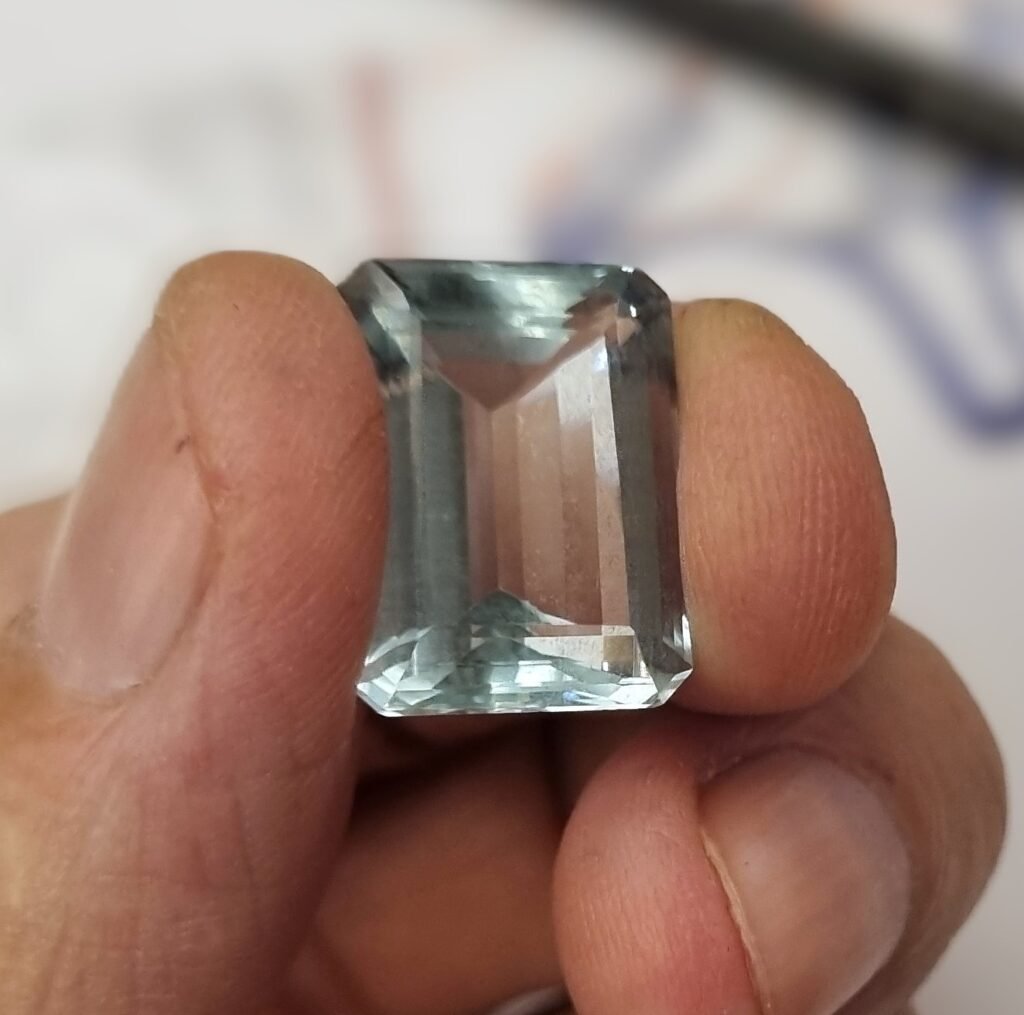
- Emerald is best in a protective setting: bezels, guarded corners, or a cut such as the emerald (step) cut with cut corners. For everyday rings, many buyers choose a pendant or earrings instead. Our article on gold jewellery covers the metal side.
Buying through a seller who discloses
Whatever the seller, insist on the treatment statement in writing and a report that you can verify. GemKrishna is one seller whose FAQ states that certain gemstones “may be heated, treated, dyed or otherwise enhanced” and that known treatments are disclosed. It says certification is generally through GJSPC by default, with IGI, GIA or GRS available on request before ordering, and additional laboratory charges payable by the customer (FAQs, checked 9 October 2026). The point to take from this, with any seller: choose the laboratory before you buy, because origin and treatment conclusions depend on the laboratory, and its scope should match the stone’s value.
FAQ
Does “natural” mean “untreated”?
No. “Natural” means the stone formed in nature rather than in a laboratory. A natural ruby can still be heated, and a natural emerald can still be oiled. Ask for the treatment separately: “natural and heated”, “natural, no indication of heating”, and so on.
Is a heated sapphire “real”?
Yes. It is natural corundum whose colour or clarity has been improved by heat, a long-established and widely accepted treatment when disclosed. Unheated fine sapphire with a report is rarer and priced higher.
Can emerald go in an ultrasonic cleaner?
GIA calls it risky. Most emeralds have filled fractures, and ultrasonic vibration can weaken fractured stones, while steam can draw out oil or unhardened resin. Use warm, soapy water and gentle scrubbing.
Why are ruby prices so different?
Because identity, treatment, colour, size and report all vary. A glass-filled stone, a heated one and an unheated one of the same size and colour belong to different price categories. Fine rubies over one carat are rare, and prices rise steeply with size.
Can a certificate prove the mine of origin?
No report “proves” a mine. Some laboratories give a country-of-origin opinion for certain species, based on inclusions, chemistry and spectroscopy compared with their reference data, but not every stone can be assigned, and laboratories can differ. Treat an origin statement as an expert opinion.
Are laboratory-grown rubies, sapphires and emeralds fake?
They are real corundum or beryl, made in a laboratory, and should be sold as laboratory-grown or synthetic. They are not natural, and they cost far less. Undisclosed laboratory-grown stones sold as natural are a misrepresentation.
Is yellow sapphire the same as yellow topaz?
No. Yellow sapphire (pukhraj) is corundum. Yellow topaz is a different mineral, and citrine is yellow quartz. All three are sold in yellow, and some listings blur the names. Ask for the species on the report.
Sources
- GIA gem encyclopedia: Ruby, Sapphire, Sapphire description, Emerald, checked 9 October 2026.
- GIA: Ruby heat treatment FAQ, Sapphire heat treatment FAQ, Low-temperature heat treatment of Mozambique ruby.
- GIA: Emerald care and cleaning, Ruby care and cleaning, Gübelin Gem Project: beryl.
- Gems & Gemology: The geographic origin dilemma, Winter 2019; lead-glass-filled ruby identification and durability, 2006 (PDF); GIA country-of-origin report FAQ.
- JCK: Beware glass-filled ruby, trade warns.
- GemKrishna (seller): FAQs, checked 9 October 2026.
Next steps
Read our gemstone buying guide, learn how to judge colour, clarity and cut, or compare testing laboratories in India.