The short answer
- Most emeralds are clarity-enhanced. Fissures that reach the surface are filled with oil (traditionally cedarwood oil), a resin such as Opticon, or epoxy, to make them less visible. GIA notes that these fillers have “varying degrees of stability” and that the amount used “can range from insignificant to major amounts” (GIA, gem treatments).
- Laboratories grade the degree: GIA uses minor (F1), moderate (F2) and significant (F3). Other labs follow the same harmonised terms, sometimes adding “insignificant”.
- What should worry you: coloured (green) fillers, heavy resin filling described as a “manufactured product”, or no disclosure at all.
- Care: warm soapy water only. No ultrasonic, no steam, no heat, because fillers can “sweat out” and fractures can extend (GIA).
- Value: untreated or minor-enhanced emeralds with a report command a large premium. Significant enhancement lowers value sharply. “Natural emerald” alone does not mean untreated.
Why emeralds are treated
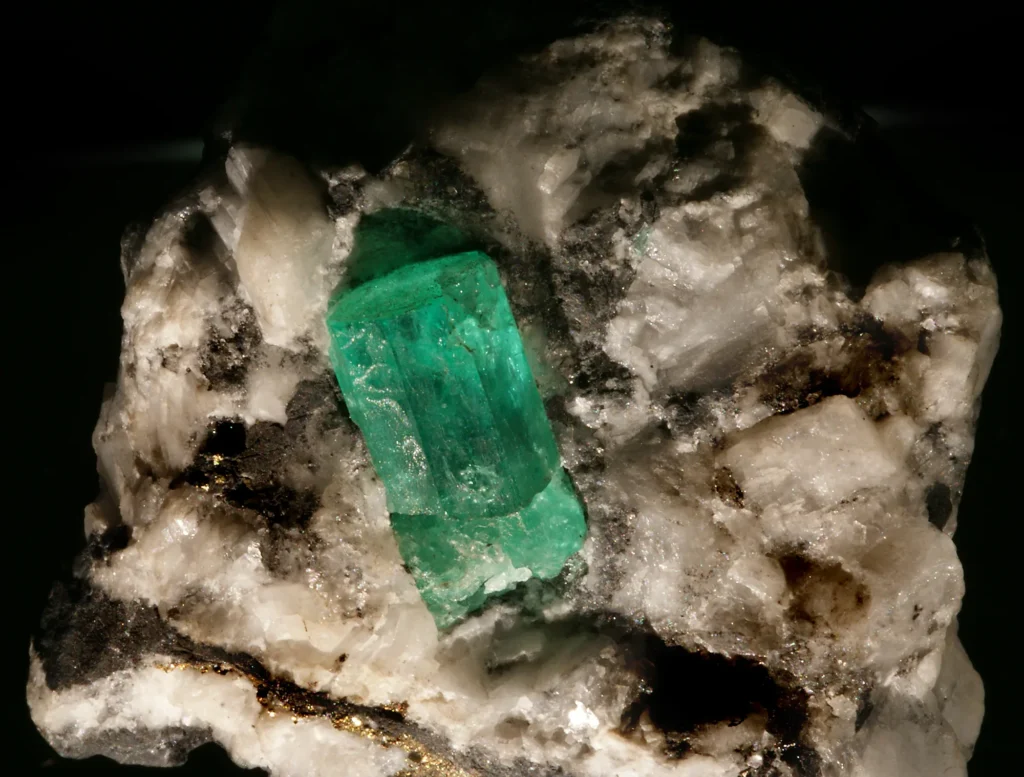
Emerald is the green to bluish-green variety of beryl (GIA). Unlike ruby or sapphire, emerald almost always contains fissures and inclusions. The trade calls them jardin (French for “garden”) for their mossy look (Wikipedia).
Where those fissures reach the surface, they scatter light and make the stone look cloudy or cracked. Filling them with a substance of similar refractive index makes them far less visible. Cedar oil, “having a similar refractive index, is often used in this widely adopted practice” (Wikipedia).
Hardness is 7.5–8, but toughness is only “fair to good”. GIA notes this makes emerald “a stone that requires more care in wearing than ruby or sapphire” (GIA, emerald care). The fissures that treatment hides are also weaknesses.
The fillers
| Filler | What it is | Stability | Trade acceptance |
|---|---|---|---|
| Colourless oil (cedarwood, mineral) | Traditional | Can dry out or leak over time; can be re-oiled | Widely accepted when disclosed |
| Resins / polymers (for example Opticon) | Synthetic fillers, sometimes hardened | Hardened resins are less prone to drying out than oil; unhardened resin can “sweat out” (GIA) | Accepted when disclosed; degree matters |
| Epoxy resins | Used on “the least expensive emeralds” (Wikipedia) | Variable | Low-value material |
| Green-tinted oil or resin | Adds colour as well as clarity | Colour can leak or fade | “Not acceptable in the trade” (Wikipedia); a separate disclosure category for labs |
How laboratories describe treatment
Major laboratories harmonised their emerald wording through the Laboratory Manual Harmonisation Committee (LMHC). Its Information Sheet #5 (Version 4, December 2012) sets out the standard categories (LMHC IS #5):
| Category | What the report says |
|---|---|
| No fissures, or no filling | “None”, “No fissure filling” or “No indications of clarity enhancement” |
| Colourless filler in fissures | “Fissure filling” or “Indications of clarity enhancement”, plus the amount and, where identified, the filler |
| Filled cavities | “Cavity filling”, plus amount and filler |
| Coloured filler | “Coloured fissure filling”, i.e. clarity and colour enhancement |
| Heavily resin-filled | “Emerald with/and resin (manufactured product)” |
The amount is graded F1 / minor, F2 / moderate or F3 / significant (LMHC IS #5). GIA describes the scale as “a judgment of the degree of clarity enhancement: minor (F1), moderate (F2), and significant (F3)”. “Minor” means the treatment has only a slight effect on face-up appearance; “significant” means an obvious effect (GIA FAQ).
Two details matter:
- This is a treatment grade, not a clarity grade. An F1 stone can still be heavily included, and an F3 stone can look clean because of the filler.
- Residues: the LMHC sheet asks labs to note opaque oil or resin residues left in fissures after cleaning or drying. A report remark such as “(oil/resin) residues present” tells you the stone has been cleaned or has dried out.
Comparing three emeralds
| Untreated (no indications) | Minor (F1) | Significant (F3) | |
|---|---|---|---|
| Face-up appearance | As nature made it, inclusions visible | Little change from filling | Filling makes a large difference |
| What happens if filler is lost | Nothing | Small visible change | Large change: the stone may look cloudy or cracked |
| Care | Still careful: emerald’s toughness is only fair | Gentle, no heat or steam | Very gentle; avoid heat, solvents and pressure changes |
| Value (same size and colour) | Highest; needs a report to prove it | Moderately reduced | Strongly reduced |
| Report you need | Independent lab: “No indications of clarity enhancement” | Lab report with degree | Lab report with degree and filler |
Wikipedia summarises the market view that oil-treated emeralds are worth much less than untreated stones of similar quality, and that untreated emeralds “must also be accompanied by a certificate from a licensed, independent gemology laboratory”. We do not publish per-carat prices; they vary too widely with colour, size, origin and treatment.
Can you see the treatment yourself?
Mostly not, reliably. Some signs under a 10× loupe and good light:
- Flashes of colour along fissures can indicate a filler.
- Dried, whitish lines along fissures can mean oil has dried or leaked out.
- Green colour concentrated in cracks is a warning sign of coloured filler.
- Bubbles or flow marks in a fissure suggest filler.
A laboratory confirms filling and its degree with magnification, lighting techniques and spectroscopy. For any meaningful purchase, get the report. See how to verify a report online.
Care: what fillers cannot tolerate
From GIA’s emerald care guidance (GIA):
- “Using warm, soapy water coupled with gentle scrubbing is the safest way to clean emeralds.”
- Ultrasonic and steam are “risky”. “Ultrasonic vibrations can weaken already-fractured stones”, and “hot steam can cause oil or unhardened resin to sweat out of fractures”.
- “Heat can damage emeralds, especially by extending existing fractures.”
Practical rules:
- Remove emerald rings for cooking, hot water, cleaning products and gym work.
- Tell any jeweller doing repairs, resizing or re-tipping that the stone is filled. Torch heat and pickling solutions can damage fillers.
- GIA also advises keeping filled emeralds away from changes in air pressure, such as in an aircraft cabin, and from hot dishwashing water (GIA, gem treatments).
- Re-oiling is a professional job. Do not try it at home with household oils, which can discolour or leave residues.
- If a stone suddenly looks cloudier after cleaning or heat, filler may have been lost. A gem lab or experienced jeweller can advise on re-treatment.
Emerald (panna) in Indian astrology
Emerald (panna) is one of the Navratna stones; see our Navratna guide. Astrological buyers often ask for “untreated” or “natural” panna. Two practical notes:
- “Natural” on a seller’s card usually means “not synthetic”. It does not tell you whether the stone is oiled. Ask for the clarity-enhancement degree in writing.
- Whether treatment matters for astrological purposes is a belief question on which traditions and astrologers differ. Gemmologically, a filled emerald is natural emerald with a treatment. A report is the only way to know which you have.
Buying checklist
- Ask in writing: is it clarity-enhanced, with what, and to what degree?
- Get an independent laboratory report that states fissure filling and its degree (F1–F3 or minor–significant), and the filler where identified.
- Reject or re-price stones with coloured filler or “manufactured product” wording unless that is what you knowingly want.
- Match weight and measurements to the report, and verify the report number online.
- Ask about after-care and re-treatment, and the return policy if a second lab disagrees.
- Choose a protective setting (bezel or halo) for rings worn daily; see gold settings for gemstones.
Mistakes and misconceptions
- “Oiled emeralds are fake.” They are natural emeralds with a common, accepted treatment.
- “Untreated is always better value.” Only if a report proves it and the price reflects it. Otherwise you may pay an untreated price for a treated stone.
- “F1 means a clean stone.” F1 grades the treatment, not the clarity.
- “Emerald is hard, so it is tough.” Hardness 7.5–8 resists scratching, but fissures make emerald vulnerable to knocks and heat.
- Cleaning in an ultrasonic machine. It can drive out fillers and weaken fissures.
FAQ
What is an oil-treated emerald?
An emerald whose surface-reaching fissures have been filled with oil, traditionally cedarwood oil, to make them less visible. It is the most common emerald treatment.
Are oiled emeralds less valuable?
Yes, compared with untreated emeralds of similar quality. The difference depends on the degree: minor enhancement affects value less than significant enhancement.
What do F1, F2 and F3 mean on an emerald report?
They are GIA’s grades for the degree of clarity enhancement: minor (F1), moderate (F2) and significant (F3).
Can I clean an emerald with soap and water?
Yes, warm soapy water with gentle scrubbing is the safest method according to GIA. Avoid ultrasonic and steam cleaners and heat.
Is resin better than oil?
Hardened resins are less prone to drying out than oil, but heavily resin-filled stones can be described as “manufactured product”. The degree and disclosure matter more than the filler type.
Can an emerald be re-oiled?
Yes, by a professional. Lost oil can make fissures visible again, and re-oiling can restore the appearance. Disclosure still applies afterwards.
Sources
- GIA: Emerald description, An introduction to gem treatments, Emerald care and cleaning and FAQ: F1, F2 and F3 on treated emerald reports, checked 11 October 2026.
- Laboratory Manual Harmonisation Committee: Information Sheet #5, Standardised gemmological report wording: Emerald, Version 4, December 2012, checked 11 October 2026.
- Wikipedia: Emerald (treatments section, citing Gems & Gemology 1991, Kiefert 2001 and the FTC Jewelry Guides), checked 11 October 2026.
Related reading
- Ruby, emerald and sapphire: treatments, quality and value
- Gemstone treatments explained: heating, filling, dyeing, diffusion and how they should be disclosed
- Navratna gemstones: the nine stones, their traditions and a buying checklist
- How to verify a gemstone or rudraksha report online (GJSPC, IGI, GIA, GRS, IIGJ)