
The short answer
Navratna means “nine gems”. In the Indian astrological tradition, each of the nine is linked to one of the nine Navagraha:
- ruby (Sun) and pearl (Moon)
- red coral (Mars) and emerald (Mercury)
- yellow sapphire (Jupiter) and diamond (Venus)
- blue sapphire (Saturn)
- hessonite garnet (Rahu) and cat’s eye chrysoberyl (Ketu)
In the classic setting, the ruby sits in the centre and the other eight surround it. Those links are belief, not measurable effects. What you can check is the material. The nine stones range from very hard (diamond, ruby, sapphire) to soft and organic (pearl, coral), several are routinely treated, and most have common imitations. Each stone needs its own identity and treatment check.
If you are considering a single astrological stone rather than a Navratna, our article on astrology-based gemstone advice explains how to turn a recommendation into a sensible purchase.
What Navratna means
Nava is “nine” and ratna is “gem”. The Navratna arrangement is found across South and South-East Asia, in India, Nepal and Sri Lanka, and in Thailand, Myanmar and Indonesia among other places. Names and customs vary by region (Wikipedia: Navaratna).
The planet–gem pairings usually cited go back to astrological texts such as the Brihat Jataka, as quoted in later works including Sourindro Mohun Tagore’s Mani-mala (1879). The Garuda and Agni Puranas are cited for the requirement that gems be fine and free of flaws (Wikipedia, citing these sources). We have not checked these attributions against the original texts. Treat the details as tradition summarised by secondary sources.
The nine stones and their traditional planets
| Planet (Navagraha) | Gem | What it is mineralogically | Mohs hardness |
|---|---|---|---|
| Sun (Surya) | Ruby (Manik) | Red corundum (aluminium oxide coloured by chromium) | 9 |
| Moon (Chandra) | Pearl (Moti) | Organic gem made by a mollusc; nacre of calcium carbonate | 2.5–3 |
| Mars (Mangala) | Red coral (Moonga) | Organic gem; calcium carbonate skeleton of marine coral | 3–4 |
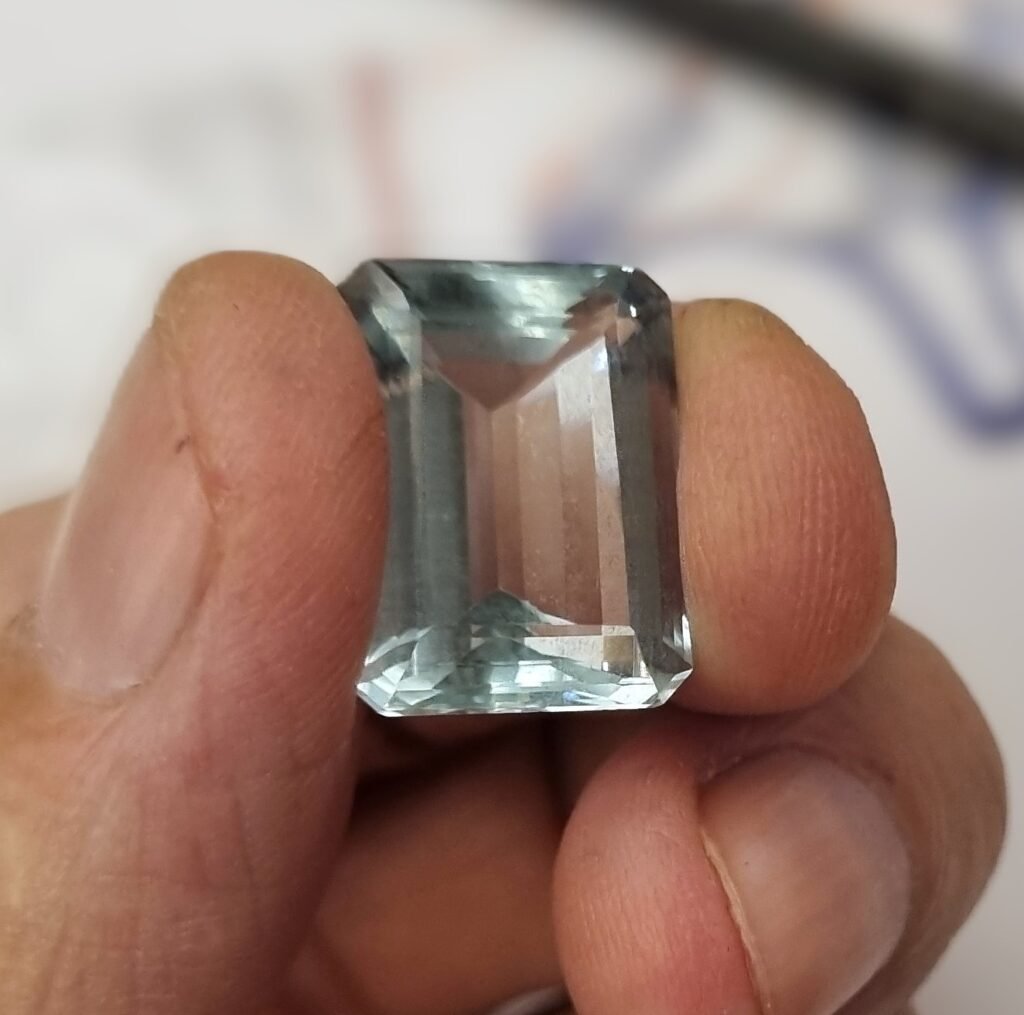
| Mercury (Budha) | Emerald (Panna) | Green beryl (coloured by chromium and/or vanadium) | 7.5–8 |
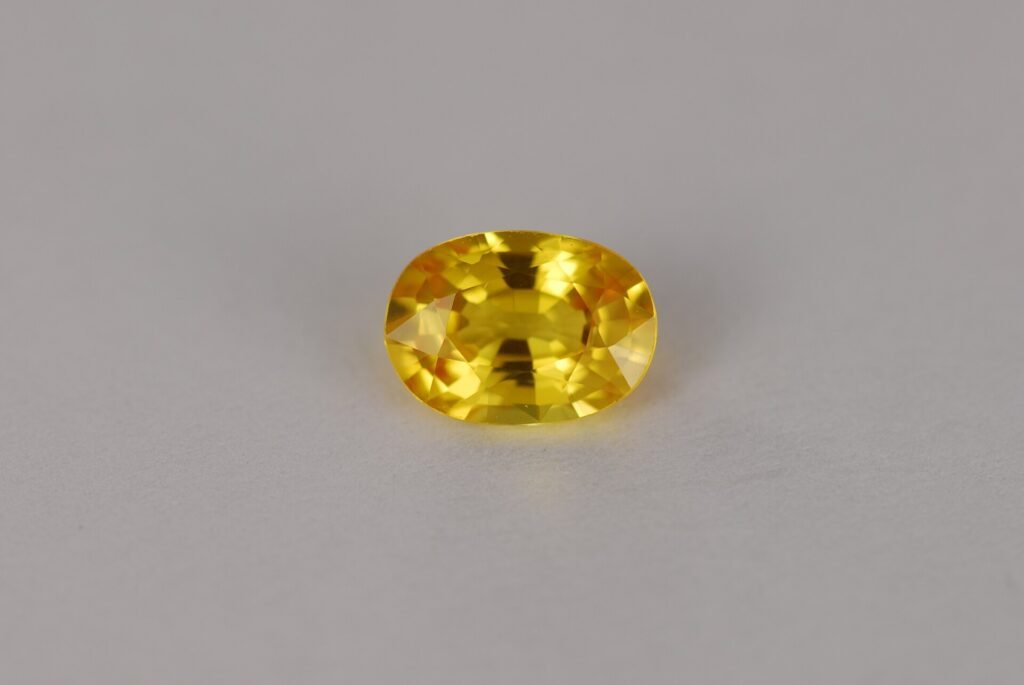
| Jupiter (Brihaspati) | Yellow sapphire (Pukhraj) | Yellow corundum | 9 |
| Venus (Shukra) | Diamond (Heera) | Carbon | 10 |
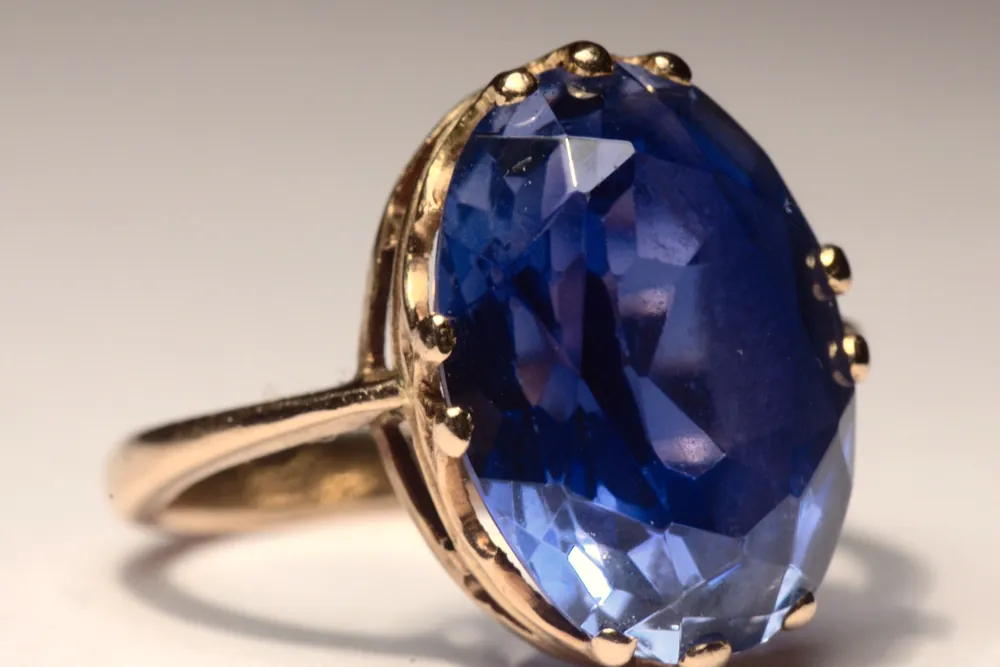
| Saturn (Shani) | Blue sapphire (Neelam) | Blue corundum (iron and titanium) | 9 |
| Rahu (ascending lunar node) | Hessonite (Gomedh) | Orange-brown variety of grossular garnet | about 6.5–7.5 |
| Ketu (descending lunar node) | Cat’s eye (Lehsunia) | Chatoyant chrysoberyl | 8.5 |
The hardness figures are standard Mohs values from the GIA gem encyclopedia and gemmological references: ruby, sapphire, emerald and pearl, and coral (about 3.5) per Precious coral. On the colour causes, GIA says chromium causes ruby’s red and that iron and titanium make blue sapphire (GIA). GIA’s Gübelin Gem Project notes that emerald is coloured by chromium or vanadium (GIA).
Three of the nine are corundum: ruby, yellow sapphire and blue sapphire. Two are organic: pearl and coral. That mix explains why a Navratna piece needs careful construction and care.
Variations in tradition and naming
- Arrangement. The commonly described layout puts the ruby in the centre. Going clockwise from the top are diamond, pearl, red coral, hessonite, blue sapphire, cat’s eye, yellow sapphire and emerald (Wikipedia). Some traditions accept a red spinel in the centre. Regional pieces vary.
- Translation. Hindi and Sanskrit names do not map one-to-one onto modern species. Pukhraj is usually yellow sapphire, but in trade it is sometimes used loosely for yellow topaz, which is a different mineral. Gomedh is hessonite garnet, and lehsunia is cat’s eye chrysoberyl, though other chatoyant stones are sold under the same name.
- Substitutes (uparatna). Astrologers often suggest lower-cost alternatives for one or more stones. Typical examples are a red garnet or red spinel for ruby, a yellow topaz or citrine for yellow sapphire, or a white sapphire or zircon for diamond. Whether a substitute is “acceptable” is a matter for the astrological adviser. It must still be described accurately: a citrine is not a yellow sapphire.
Natural, synthetic and simulant
Every Navratna stone except pearl and coral has a laboratory-grown counterpart, and every one has imitations.
| Gem | Synthetic exists? | Common simulants or look-alikes |
|---|---|---|
| Ruby | Yes (laboratory-grown corundum since the late 19th century) | Red glass, garnet, spinel, glass-filled corundum |
| Blue and yellow sapphire | Yes | Glass, blue spinel, yellow topaz, citrine |
| Emerald | Yes | Green glass, doublets, green quartz |
| Diamond | Yes (laboratory-grown diamond) | Cubic zirconia, moissanite, white sapphire, glass |
| Cat’s eye | Laboratory-grown chrysoberyl exists | Fibre-optic glass (“cat’s eye glass”), chatoyant quartz |
| Hessonite | Rarely synthesised | Orange glass, other garnets, zircon |
| Pearl | Not synthesised; almost all pearls sold are cultured | Coated glass or plastic beads |
| Coral | Not synthesised | Dyed marble and dyed bone, both documented by GIA (1981, 2014); glass and plastic imitations are also sold |
The word natural on a listing should mean the stone formed in nature. That is not the same as untreated (see below). For pearls, honest listings say cultured. Natural pearls, formed without human intervention, are very rare and costly (GIA, pearl).
Treatments: assume, then verify
| Gem | Typical treatments to ask about | Why it matters |
|---|---|---|
| Ruby | Heat is widespread; GIA advises buyers to “assume your ruby is heated” (GIA FAQ). Lead-glass filling of fractures exists | Heat is accepted if disclosed; glass-filled material is far less durable and much less valuable |
| Sapphires | Heat is an accepted, common treatment (GIA FAQ); diffusion treatments also exist | Unheated fine sapphire with a report commands a premium |
| Emerald | Filling of fractures with oil or resin; GIA cites estimates that “90 percent or more” of emeralds are fracture-filled (GIA) | Affects cleaning, durability and price |
| Diamond | Clarity treatments (laser drilling, filling); colour treatments; laboratory-grown stones | Must be disclosed; affects value greatly |
| Pearl | Bleaching, dyeing, coatings | Affects colour stability |
| Coral | Dyeing; polymer filling; composite pieces | GIA notes composite and imitation red coral are on the rise |
| Hessonite and cat’s eye | Generally less often treated, but imitations are common | Identity is the main question |
Colour, cut and transparency
There is no single “Navratna grade”. Each stone is judged by its own standards:
- Ruby: colour is the most important value factor; GIA describes the finest as pure, vibrant red to slightly purplish red (GIA).
- Sapphires: strong to vivid saturation is preferred, whatever the hue (GIA).
- Emerald: inclusions (the jardin) are expected; colour leads value (GIA).
- Cat’s eye: look for a sharp, straight “eye” that moves across the cabochon as you turn it under a single light.
- Hessonite: a swirled internal texture, sometimes called “whisky in water”, is typical.
- Pearl: lustre, surface, shape and nacre quality.
- Coral: even colour, polish and soundness.
Our guide to judging coloured gemstone quality explains colour, clarity and cut in more detail.
Pearl and coral need different handling
Pearl and coral are soft, organic carbonates, so they react to things the mineral gems ignore:
- Acids and cosmetics. GIA warns that pearl “can be damaged by many chemicals and all acids”, listing hair spray, perfume, cosmetics and even perspiration (GIA pearl care). So put pearl jewellery on last and take it off first. Coral, also calcium carbonate, is similarly vulnerable to acids.
- No ultrasonic or steam for pearls (GIA).
- Scratching. Coral is about 3.5 on the Mohs scale (Precious coral), so store it in its own pouch. Pearl is softer still. In a Navratna, both sit beside diamond and corundum, which can scratch them.
- Acid “tests” mislead. A fizz with acid shows only that a material is a carbonate. GIA has documented dyed marble beads that fizzed like coral (GIA Lab Notes, Winter 1981: “A coral substitute, dyed marble”). It is also destructive. Leave identification to a laboratory.
The astrological-advice caveat
Navratna jewellery is often bought on astrological advice. Some astrologers recommend the full nine as a balanced piece, and others caution against wearing particular stones without a chart reading. These are matters of belief and practice. There is no scientific evidence that gemstones affect health, fortune or planets, and nothing in this guide is health or financial advice. If you follow an adviser:
- ask what the recommendation is based on, and get it in writing
- ask for the stone’s identity, not a supplier’s product, as the recommendation
- keep your budget; a recommendation should not require a larger stone than you can afford
- buy the stone itself on evidence, as below
Setting layout, size and comfort
Do the stones need to be the same size? Tradition values fine, flawless stones. It does not, in the sources summarised here, require identical carat weights. In practice, a balanced piece uses stones of similar visual size. Because the gems differ in density, equal carat weights look different: a 1 ct diamond looks larger than a 1 ct ruby.
| Design choice | Practical advice |
|---|---|
| Ring or pendant | Pendants are kinder to pearl, coral and emerald, which suffer in rings from knocks |
| Settings | Bezel or rubbed-over settings protect soft and organic stones better than claws |
| Pearl and coral position | Set them where they are least likely to hit hard surfaces |
| Metal | Gold is traditional; heavier construction holds nine stones more securely |
| Stone shape | Cabochon for cat’s eye (required to show the eye); faceted for most others; round for pearl |
| Comfort | Nine stones make a large ring; check finger width and the height of the setting |
For the gold side of the design, our article on buying gold jewellery covers purity and hallmarks.
Stone-by-stone report checklist
For each stone in a Navratna, or for the most valuable ones at least, ask for the following:
- Identity: the species and variety (for example “natural corundum, ruby”), not just “ruby”.
- Natural or laboratory-grown, stated explicitly.
- Treatment: heat, filling, dye, coating or diffusion, or “no indication”.
- Weight and dimensions, matching the stone you receive.
- A unique report number you can look up on the laboratory’s own website. See our laboratory comparison.
- Pearls: natural or cultured, and any treatment.
- Coral: natural coral (not glass or plastic), and dyed or not.
- Cat’s eye: that it is chrysoberyl if you are paying a chrysoberyl price.
An origin claim, such as “Burmese ruby” or “Ceylon sapphire”, is a laboratory opinion where it is given, and not every stone can be assigned an origin (GIA FAQ on origin reports).
Where custom Navratna work fits
Sellers who supply loose stones and set them to order let you control each of these points. GemKrishna, for example, lists natural ruby, emerald, yellow and blue sapphire, red coral and pearls among its gemstones. Its FAQ says that its GemKraft craftsmen can create a setting around a selected stone, or that you can buy the loose stone and have it set by your own jeweller. It also says known treatments are disclosed, and that certification is generally through GJSPC by default, with other laboratories (IGI, GIA, GRS) on request before ordering at the customer’s cost (FAQs, checked 9 October 2026). Whichever seller you use, ask for a report on each significant stone before it is set: a report on a finished ring is harder to obtain and to interpret.
Storage and care by stone
| Gem | Cleaning | Avoid |
|---|---|---|
| Diamond, ruby, sapphire | Warm soapy water and a soft brush | Ultrasonic if fracture- or glass-filled; check treatment first (GIA ruby care) |
| Emerald | Warm soapy water, gentle | Ultrasonic, steam, heat (GIA) |
| Hessonite, cat’s eye | Warm soapy water | Hard knocks; sudden temperature changes |
| Pearl | Wipe with a soft cloth after wearing | Acids, cosmetics, perfume, ultrasonic, steam |
| Coral | Damp soft cloth | Acids (even lemon juice), heat, harder stones rubbing against it |
Store a Navratna piece on its own in a soft pouch, so that the hard stones of other jewellery cannot scratch the pearl and coral.
FAQ
Can I wear Navratna without astrological advice?
Many people wear Navratna as traditional jewellery without a chart reading, and others follow an astrologer’s advice about particular stones. That is a matter of personal practice and belief. Materially, the questions are the same either way: identity, treatment, quality and construction.
Is every Navratna stone a “precious” gem?
In the traditional sense all nine are ratna, gems. In modern trade terms they vary widely. Diamond, ruby, emerald and the sapphires are high-value. Hessonite and many cat’s eyes cost much less. Pearl and coral are organic. Price depends on quality within each stone.
How do I check each stone?
Ask for a laboratory report per stone. It should state the identity (species and variety), whether the stone is natural or laboratory-grown, any treatment, and the weight and dimensions, with a number you can verify online. For pearls, it should say cultured or natural. For coral, natural and whether dyed.
Do all nine stones need to be the same size?
The traditional sources summarised here stress fine, flawless stones rather than identical weights. For appearance and balance, jewellers usually match visual size, which means different carat weights, because the gems differ in density.
Are substitute stones acceptable?
Astrologers often allow alternatives, such as red spinel or garnet for ruby, or yellow topaz for yellow sapphire. Whether that is acceptable is a matter for your adviser. What matters for a buyer is that the substitute is named accurately and priced as what it is.
Is heated ruby or sapphire acceptable in a Navratna?
Heat treatment is widely accepted in the trade when it is disclosed. GIA advises assuming that a ruby is heated. Whether a heated stone suits a traditional piece is a personal or advisory decision. What should not be accepted is undisclosed treatment, or glass-filled stones sold as ordinary ruby.
Why are pearl and coral set differently?
They are soft and organic and react to acids and cosmetics. Jewellers often bezel-set them, or place them where they are least likely to be knocked. Owners should put the piece on after cosmetics and store it separately.
Sources
- Precious coral, Wikipedia (hardness and composition), checked 10 October 2026.
- GIA gem encyclopedia: Ruby, Sapphire, Sapphire description, Emerald, Pearl, checked 9 October 2026.
- GIA: Ruby heat treatment FAQ, Sapphire heat treatment FAQ, Emerald care and cleaning, Ruby care and cleaning, Country-of-origin report FAQ.
- GIA: Gübelin Gem Project: beryl; pearl care and cleaning; GemNews 2014: dyed bone as a red coral imitation; Lab Notes: dyed marble imitating coral (PDF).
- Navaratna, Wikipedia, for the traditional pairings and arrangement and the texts it cites, checked 9 October 2026.
- GemKrishna (seller): FAQs, checked 9 October 2026.
Next steps
Read our gemstone buying guide, learn how to judge colour, clarity and cut, or see how to use an astrological recommendation sensibly.
Related reading
- Gemstones for each rashi: the traditional table, substitute stones and the caveats
- Gemstone treatments explained: heating, filling, dyeing, diffusion and how they should be disclosed
- Glass-filled ruby vs heated ruby vs untreated ruby: what each is, how labs report it and what it is worth
- Gemstone prices per carat and ratti in India: how quotes work and how to compare them