

The short answer
- A carat is fixed: 200 milligrams (the metric carat, adopted in 1907) (Carat (mass)).
- A ratti is not. The traditional goldsmith’s (sunari) ratti is 121.5 mg, while the “pakki ratti” used for astrological gemstones is 1.5 times that, 182.25 mg, about 0.91 carat (Ratti (unit)). Some sellers round to 0.90 carat or use other factors.
- Always ask for the weight in carats, and which ratti the seller uses. A “5 ratti” stone can be about 3.0 or about 4.6 carats depending on the convention.
- There is no single “price list”. Price per carat depends on species, treatment, colour, clarity, cut, size, origin and documentation, and it usually rises with size.
- To compare quotes, convert to carats, match the treatment status and report, then compare the total price.
Carat, ratti and gram
| Unit | Weight | In carats | Note |
|---|---|---|---|
| Carat (ct) | 200 mg | 1 | The international unit for gemstones and pearls; 100 points per carat |
| Gram (g) | 1,000 mg | 5 | |
| Sunari (goldsmith’s) ratti | 121.5 mg | 0.6075 | From the traditional gold-weight system: 1 tola = 96 ratti = 11.664 g |
| Pakki ratti (for astrological gemstones) | 182.25 mg | about 0.91 | 1.5 × sunari ratti; often rounded to 0.90 ct |
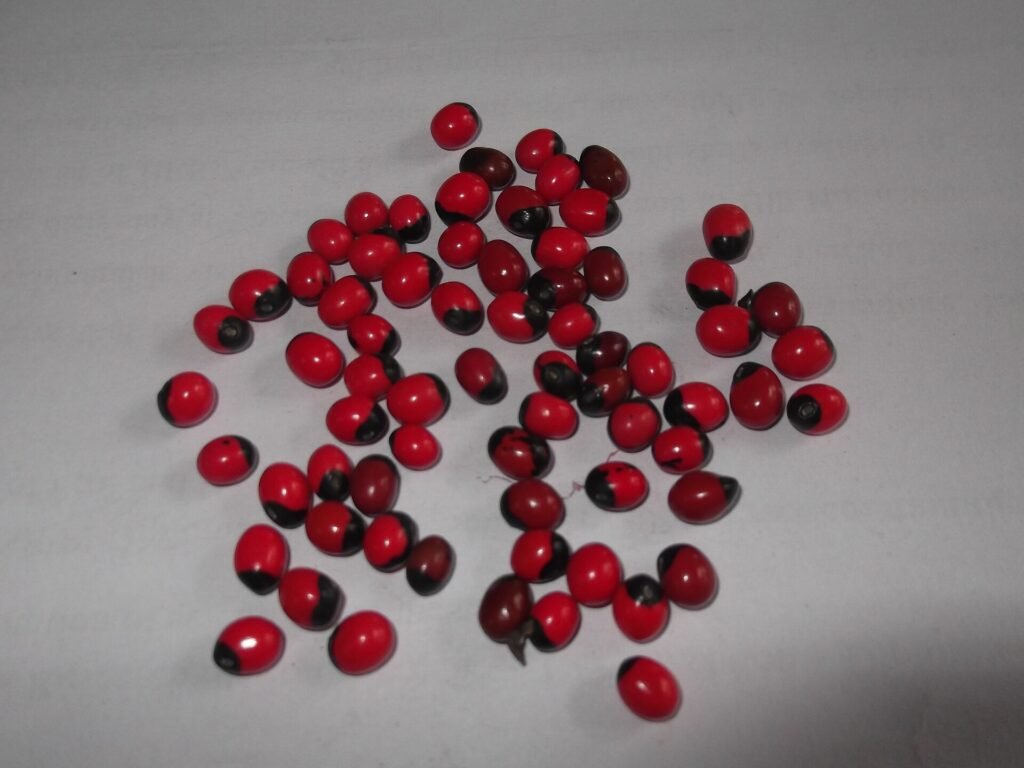
Sources: Wikipedia, Carat (mass); Wikipedia, Ratti (unit), which also explains that the ratti originated as the weight of a gunja seed (Abrus precatorius).
Converting a ratti quote
| Quoted weight | At 0.91 ct per ratti | At 0.6075 ct per ratti | At 0.90 ct per ratti |
|---|---|---|---|
| 3 ratti | 2.73 ct | 1.82 ct | 2.70 ct |
| 5 ratti | 4.55 ct | 3.04 ct | 4.50 ct |
| 7 ratti | 6.37 ct | 4.25 ct | 6.30 ct |
| 10 ratti | 9.10 ct | 6.08 ct | 9.00 ct |
The two conventions differ by half again. That is why a recommendation of “5 ratti” from an astrologer and a “5 ratti” stone from a seller may not be the same weight. Agree the weight in carats before you pay.
Why there is no gemstone “price list”
Gemstones are priced individually. The main factors, roughly in order of influence:
| Factor | Why it matters |
|---|---|
| Species and variety | Emerald, ruby and sapphire are priced on a different scale from quartz or garnet |
| Natural, synthetic or imitation | A lab-grown stone of the same species costs far less; an imitation less still |
| Treatment | Unheated, minor-enhanced or untreated stones with reports command premiums; heavy filling or diffusion cuts value sharply |
| Colour | The single biggest factor among natural stones of one species |
| Clarity and cut | Clean, well-cut stones show their colour better |
| Size | For many gems, the price per carat rises with size, because larger stones are rarer |
| Origin | Some origins carry premiums, but only a laboratory origin opinion supports the claim |
| Documentation | A verifiable laboratory report adds cost but protects value |
GIA’s guidance on judging quality explains colour, clarity and cut in more detail; see our gemstone quality guide. For treatment wording, see our gemstone treatments guide.
Emerald, yellow sapphire and ruby: what to ask
| Stone | Questions that change the price most |
|---|---|
| Emerald (panna) | Is it clarity-enhanced, and to what degree (minor, moderate, significant)? Is any filler coloured? Is there a report? |
| Yellow sapphire (pukhraj) | Is it heated? Was it tested for beryllium diffusion? What is the colour (pale lemon to strong golden)? |
| Ruby (manik) | Is it heated, and with what residues? Is it glass-filled? Is the “ruby” actually a composite? |
| Blue sapphire (neelam) | Heated or unheated? Any diffusion? Colour zoning visible face up? |
GIA notes, for example, that emeralds “typically contain inclusions that are visible to the unaided eye” (GIA, emerald quality), which is why clarity enhancement is so common, and that “most citrine on the market is the result of heat treatment of amethyst” (GIA, citrine). Treatment status is often worth more questions than the headline price.
How to compare two quotes: a worked example
Two sellers offer a yellow sapphire. Illustrative figures.
| Seller A | Seller B | |
|---|---|---|
| Quoted | “5 ratti” at ₹6,000 per ratti | 4.20 ct at ₹7,500 per carat |
| Ratti used | Pakki (0.91 ct) | – |
| Weight in carats | 4.55 ct | 4.20 ct |
| Stone price | ₹30,000 | ₹31,500 |
| Treatment (from report) | Heated | Heated; tested, no beryllium detected |
| Report | Seller’s own certificate | Independent laboratory, verifiable online |
| Price per carat | ₹6,593 | ₹7,500 |
Seller A looks cheaper per carat, but Seller B’s stone has an independent report that rules out a major treatment. They are not the same product. Compare only like with like: same species, same treatment status, a similar report and similar quality.
A checklist for any quote
- Weight in carats, with the ratti convention if ratti is quoted
- Species and variety, natural or lab-grown
- Treatment, from a report, not only the seller’s description
- Report: laboratory name and a number verifiable online (how to verify a report)
- Dimensions in millimetres, so you can compare apparent size
- Setting and metal, priced separately
- Return terms, especially if a second laboratory disagrees
- The total price, including report, setting, delivery and tax
Are gemstones cheaper in India?
India is a major cutting and trading centre for some gems, and many stones are traded through Jaipur and other markets. That can mean a wide choice and competitive prices. It does not make any particular stone cheap, and it does not reduce the need for identification and treatment disclosure. A low price for a “natural, untreated, certified” stone is the classic warning sign; see our buying guide and our checklist for buying gemstones online.
FAQ
How many carats is one ratti?
It depends on the convention. The pakki ratti used for astrological gemstones is 182.25 mg, about 0.91 carat. The goldsmith’s (sunari) ratti is 121.5 mg, about 0.61 carat. Some sellers round to 0.90 carat. Ask for the weight in carats.
What is the price of a natural certified panna (emerald)?
There is no single price. It depends on colour, clarity enhancement, size, origin and the report. Compare stones of similar quality and treatment, priced per carat, with independent reports.
Why do sellers quote different ratti-to-carat ratios?
Because more than one ratti has been used historically, and sellers round differently. That is why the carat weight should always be stated.
Is there a gemstone price list in India?
Not a reliable one. Gemstones are priced individually by quality, treatment, size and documentation. Treat any fixed “price per ratti” for a species as a starting point at best.
Does price per carat stay the same for bigger stones?
Often not. For many gemstones, larger stones are rarer and the price per carat rises with size.
Sources
- Wikipedia: Carat (mass) (200 mg metric carat, adopted 1907) and Ratti (unit) (sunari ratti 121.5 mg; pakki ratti 182.25 mg; gunja seed origin), checked 11 October 2026.
- GIA: Emerald quality factors and Citrine, checked 11 October 2026.
Related reading
- How to judge a coloured gemstone’s quality: colour, clarity, cut and carat weight
- Buying gemstones: natural, lab-grown and imitation stones, treatments and lab reports
- Navratna gemstones: the nine stones, their traditions and a buying checklist
- Best places to buy natural gemstones online in India: an evidence checklist