The short answer
- Chain strength depends on construction more than style name. Solid, well-soldered links of adequate thickness last; very fine or hollow chains bend, kink and break more easily.
- Clasps often fail before chains. Lobster clasps are generally more secure than spring rings; S-hooks and simple hooks can slip.
- 925 silver is precious metal: valued by weight, hallmarkable, repairable by a jeweller, but softer and it tarnishes.
- Stainless steel (such as 304 or 316L) is harder and does not tarnish, but it has little metal value and is harder to resize or repair. DermNet lists “hypoallergenic” stainless steel among materials that should be safe for most nickel-allergic people (DermNet).
- Check the findings. A 925 chain with a plated-base-metal clasp, or a “silver” bracelet with a steel lock, is common. Ask what every part is made of.
Common silver chain types
| Chain | Construction | Strengths | Watch for |
|---|---|---|---|
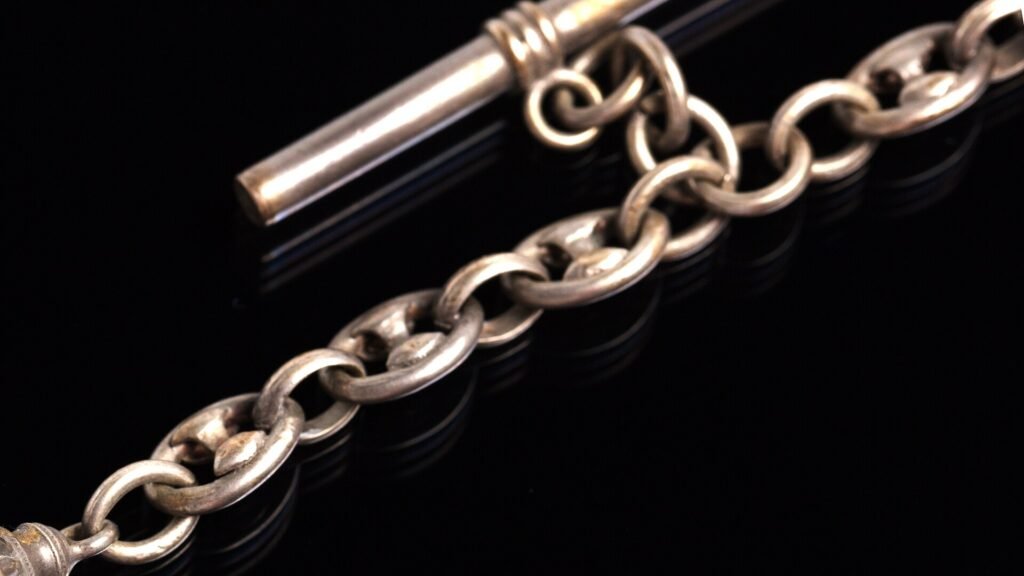
| Cable | Round or oval links joined one through the next | Simple, easy to repair | Very fine cable chains break easily |
| Curb | Twisted links that lie flat | Robust in heavier weights | Flattened (diamond-cut) versions can wear thin |
| Figaro | Curb-style pattern of short and long links | Decorative, reasonably strong | Long links can catch |
| Rope | Many small links twisted into a spiral | Looks substantial | Hard to repair if a section breaks |
| Box | Square links | Strong for its weight; smooth | Kinks if bent sharply |
| Snake | Tight, flexible tube of plates | Smooth, elegant | Kinks permanently if bent or knotted; hard to repair |
| Wheat (spiga) | Interwoven oval links | Strong, resists tangling | Heavier pieces cost more |
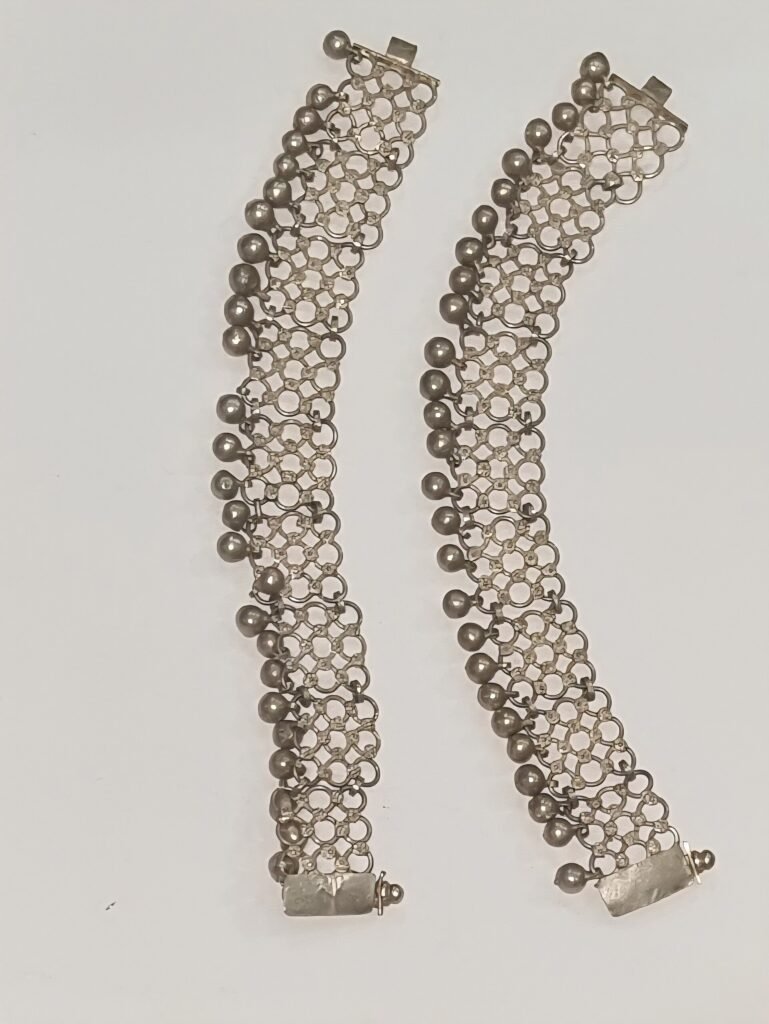
| Ball (bead) | Small spheres on a wire | Light, inexpensive | Fine versions pull apart at the clasp |
| Hollow chains | Any style made with hollow links | Look larger for the weight | Dent and break more easily; hard to repair |
Thickness matters. For any style, a thicker wire and a heavier chain for its length usually last longer. Compare weight per length between two chains of the same style: the heavier one usually has thicker links. Ask for the weight in grams. For gold, see gold chain types: hollow vs solid.
Clasps and locks
| Clasp | Security | Notes |
|---|---|---|
| Lobster claw | Good | A spring-loaded lever; the most common secure clasp |
| Spring ring | Moderate | Small and light; the spring can weaken |
| Box clasp (tongue and box) | Good, especially with a safety catch | Common on bracelets |
| Toggle (bar and ring) | Moderate | Can open if the piece is loose |
| S-hook | Low to moderate | Traditional; can slip; often used on Indian chains |
| Magnetic | Variable | Convenient; can open under tension. A magnetic clasp can affect implanted medical devices, so ask your doctor if you have one |
| “Kunda” or hook-and-eye | Moderate | Traditional Indian styles |
What to ask: is the clasp 925 silver, or plated base metal or steel? Is it soldered to the chain or attached with an open jump ring? A soldered, closed jump ring is stronger than an open one.
Repairs
- A broken link in a cable, curb or figaro chain can usually be soldered by a jeweller.
- Rope, snake and hollow chains are harder: a repair can show, and kinks in snake chains are often permanent.
- Replacing a clasp is a routine repair. Ask for a 925 silver clasp to match the chain, so that the whole piece stays silver.
- Restringing is a different job: bead bracelets and malas are restrung, not soldered.
- After a repair on a hallmarked piece, the hallmark on the original parts still describes those parts. A new clasp is a new component; ask what it is made of.
925 silver vs stainless steel
| 925 sterling silver | Stainless steel (304 or 316L) | |
|---|---|---|
| What it is | 92.5% silver, usually with copper | Iron alloyed with chromium and nickel; 316 grades add molybdenum |
| Metal value | Valued by silver weight; resale at silver rates | Little metal value |
| Hallmarking in India | HUID-based hallmarking for silver (voluntary) | Not hallmarked as a precious metal |
| Hardness and wear | Softer; scratches and dents more easily | Harder; resists scratches and dents |
| Tarnish | Tarnishes (silver sulphide); can be polished | Does not tarnish in normal wear |
| Skin | Generally low-risk if genuinely 925 and the findings are too | DermNet lists “hypoallergenic” stainless steel among materials that should be safe; it can contain nickel in the alloy, held within the metal |
| Repairs and resizing | Easy for a jeweller | Difficult; often not repairable by a local jeweller |
| Typical uses | Fine jewellery, gifts, traditional pieces | Fashion jewellery, men’s chains, magnetic bracelet locks |
On the alloys: 304 is described as “the most common stainless steel”, an alloy of iron, carbon, chromium and nickel (SAE 304). 316 grades contain molybdenum to resist corrosion, which is why they are called “marine grade” (marine grade stainless). “316L” is a lower-carbon version of 316.
On nickel: both 304 and 316 contain nickel as part of the alloy. DermNet notes that stainless steel “does not usually cause dermatitis unless it is nickel-plated”, and lists “hypoallergenic” stainless steel as an option that should be safe (DermNet). People with severe nickel allergy should still test a piece first; see our silver allergy guide.
The mixed piece. Many bracelets combine materials: 925 silver beads or charms on a stainless-steel chain, or a silver chain with a steel magnetic lock. That is fine if disclosed. It matters for value (only the silver parts carry silver value) and for skin (if one part is plated base metal).
How to check what you are buying
- Look for the hallmark on silver: the BIS mark with “SILVER”, the grade and a HUID. A “925” stamp alone is a maker’s claim; see how to identify genuine 925 silver.
- Ask what the clasp is made of. Get it in writing for a valuable chain.
- Weigh it. Silver is priced by weight; ask for gross weight and whether it includes non-silver parts.
- Try a magnet. Silver is not magnetic. Some stainless steels (and plated iron) are. A magnetic clasp will, of course, attract a magnet, so test the chain itself.
- Check the joins. Smooth, closed, soldered jump rings are stronger than open rings.
FAQ
Is 925 silver the same as stainless steel?
No. 925 silver is a precious metal, 92.5% silver, valued by weight and hallmarkable. Stainless steel is an iron alloy with chromium and nickel; it is harder and does not tarnish but has little metal value.
Which is better, a silver chain or a stainless-steel chain?
Silver for value, tradition and repairability; stainless steel for scratch resistance and no tarnish. Many people choose silver for gifts and fine pieces, and steel for heavy everyday fashion wear.
What types of silver chain last longest?
Solid, well-made chains of adequate thickness, such as curb, wheat, box and cable in heavier weights. Very fine, hollow, snake and rope chains are more fragile or harder to repair.
How is a silver bracelet lock repaired?
A jeweller can replace or re-solder most clasps. Ask for a 925 silver replacement so the piece stays silver throughout.
Which stainless steel is used in jewellery?
Commonly 304 and 316L. 316 grades contain molybdenum for extra corrosion resistance.
Sources
- DermNet: Nickel allergy (“hypoallergenic” stainless steel, solid gold of 12 carat or more and silver jewellery “should be safe”; stainless steel and nickel plating), checked 11 October 2026.
- Wikipedia: SAE 304 stainless steel and Marine grade stainless (alloy composition; molybdenum in 316), checked 11 October 2026.
- SCC Online: BIS launches HUID-based hallmarking for silver jewellery and articles, checked 11 October 2026.