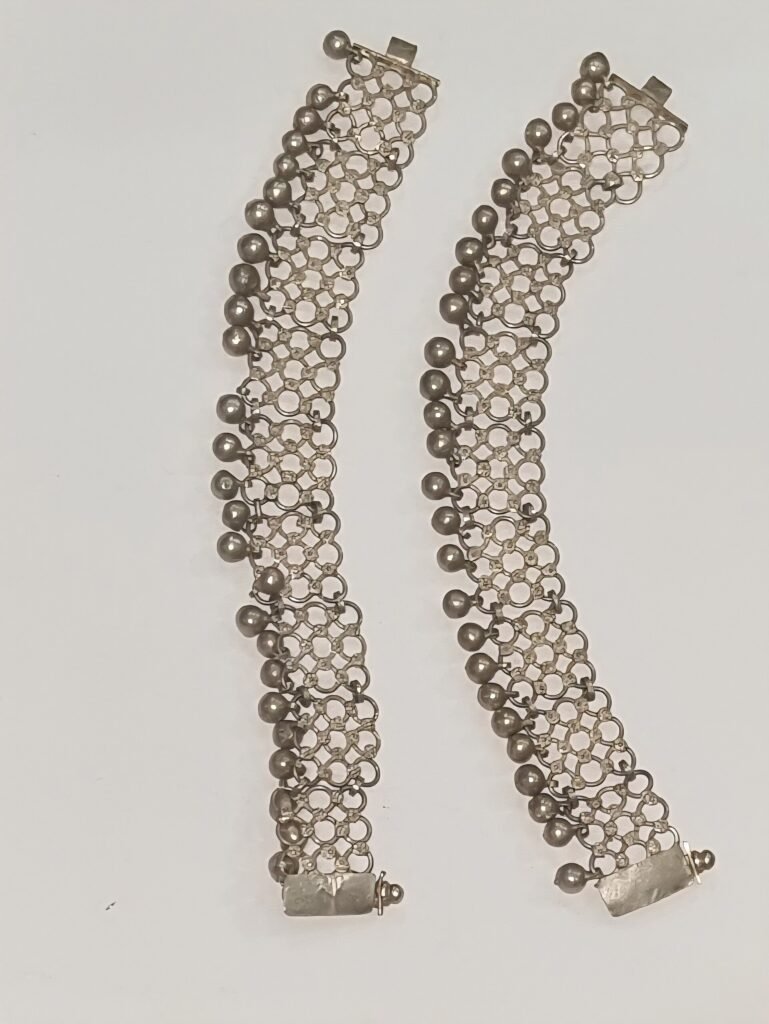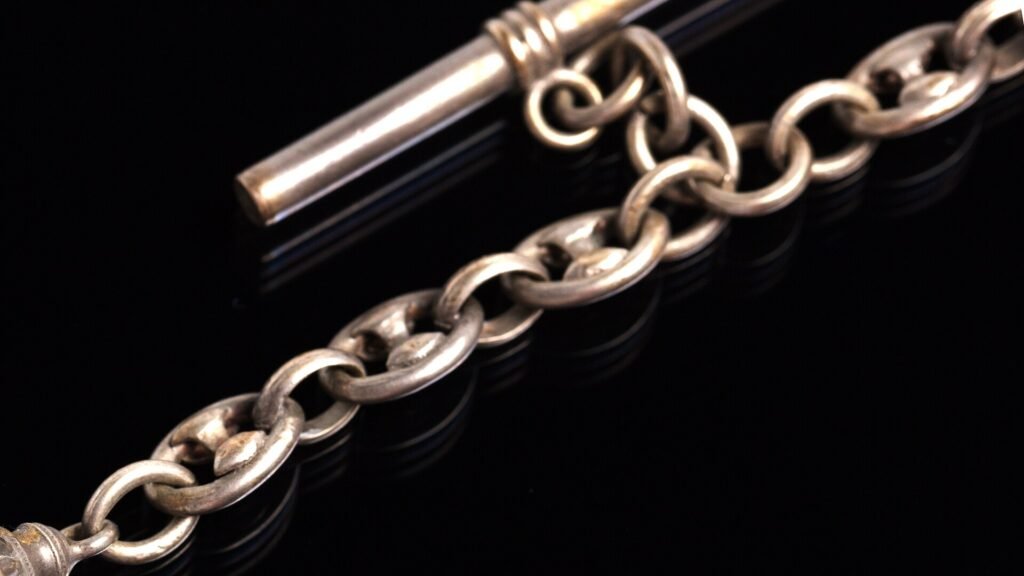
The short answer
- 925 (sterling) silver is 92.5% real silver by weight, usually alloyed with copper.
- German silver, also called nickel silver or alpaca, contains no silver at all. It is an alloy of copper, nickel and zinc that only looks like silver.
- Silver-plated jewellery is a base metal, often brass, copper or German silver, with a thin coat of silver on the surface.
Sterling is priced mainly by its silver weight and holds metal value. The other two are inexpensive and have little or none. German silver contains nickel, a common cause of skin reactions. A “925” stamp is only a claim; in India, a BIS hallmark with a HUID is independent and can be checked.
Our silver jewellery guide covers silver hallmarking and construction in general. This article compares the three materials side by side, because listings often blur them.
What each material is
| 925 sterling silver | German silver (nickel silver, alpaca) | Silver-plated | |
|---|---|---|---|
| Silver content | 92.5% by weight (925 parts per thousand) | None | A thin surface layer only |
| Typical make-up | 92.5% silver, the rest mostly copper | Copper, nickel and zinc; a usual formula is about 60% copper, 20% nickel, 20% zinc | A base metal (brass, copper, German silver or steel) with electroplated silver |
| Colour | Bright white-grey; darkens with tarnish | Silvery to slightly yellowish grey | Silver on the surface; the base metal appears where it wears through |
| Hallmarkable in India? | Yes, as grade 925 | No: not a silver alloy | No |
| Metal value | Yes, by silver weight | Negligible | Negligible |
Sources: the US jewellery guides define “sterling” as at least 925/1,000 pure silver, and require silver-coated items to be qualified as coated (16 CFR §23.5). The Museum of Fine Arts, Boston’s CAMEO database describes German silver as a copper–nickel–zinc alloy (CAMEO). The common 60/20/20 formula is described in standard references on nickel silver (Wikipedia).
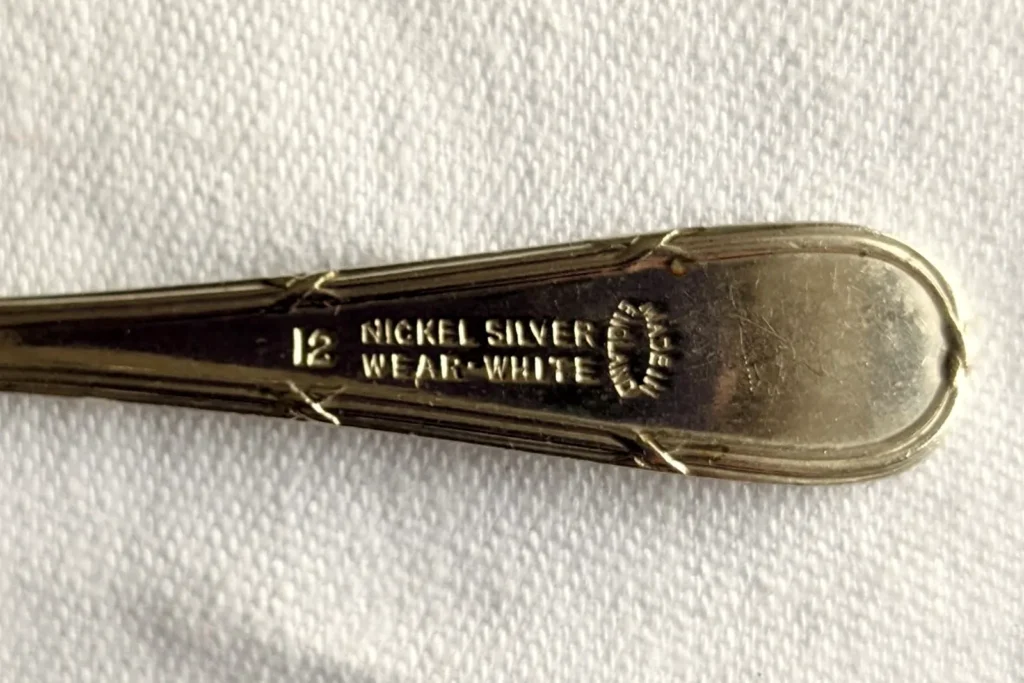
“EPNS”, seen on older cutlery and some devotional items, stands for electroplated nickel silver: German silver with a silver coating. It is silver-plated, not sterling.
Why “German silver” is so often misunderstood
The name is historical. European metallurgists in the 19th century developed the alloy as an imitation of a Chinese copper–nickel alloy, and “silver” described its colour, not its content. In Indian markets, German silver is widely used for inexpensive jewellery, puja items, and fittings such as bead caps. That is perfectly legitimate when it is named clearly. It becomes a problem only when “German silver” is shortened to “silver”, or when a listing says “silver” without a purity.
Good practice to look for: a seller that names German silver as a separate material and prices it separately. GemKrishna’s builders, for example, offer German silver and 925 silver capping as distinct options. Its jaap mala builder states that German silver contains no silver, while 925 is 92.5% silver (builder, checked 9 October 2026). Its German silver rings are also listed in a separate collection from its 925 rings (collection). If a German silver piece is described anywhere as having a “silver band”, ask the seller to clarify. The metal should always be named in full.
Plated base metal versus sterling
Silver plating puts a layer of silver over a cheaper metal. It can look identical to sterling when new. The differences show up over time:
- Wear-through. On rings, bracelet clasps and the underside of pendants, the layer rubs away and the base metal shows, often yellowish (brass) or pinkish (copper).
- Polishing. A silver polishing cloth removes a little metal each time. On sterling, this is harmless. On plating, it can polish through the layer.
- Repairs. Sizing or soldering a plated piece usually damages the plating, and it must be replated.
- Resale. Plated items have little scrap value. Sterling is valued by its silver weight.
Plating is not only used on cheap metal. Sterling is itself often plated, with rhodium for a bright white, non-tarnishing surface, with fine silver, or with gold. A rhodium- or gold-plated sterling piece is still sterling underneath. It should be described as “925 silver, rhodium-plated”, not “silver-plated”.
How each one tarnishes or discolours
| Material | What happens | Can it be restored? |
|---|---|---|
| 925 sterling | Darkens with silver sulphide tarnish, from yellowish to brown to black, faster in humidity and with sweat and cosmetics | Yes: tarnish can be cleaned off; see how to clean silver |
| German silver | Dulls and can develop yellowish, brownish or greenish discolouration from its copper | Can be cleaned, but colour and lustre differ from silver; plating may have been added and may wear |
| Silver-plated | The silver layer tarnishes like silver; underneath, the base metal shows where the plating wears | Light tarnish can be cleaned gently; worn plating needs replating |
So “it went black” does not prove a piece is fake. Real sterling tarnishes. “It went green or yellow” suggests a copper-rich base metal showing through.
Nickel and sensitive skin
German silver contains a substantial amount of nickel, often around a fifth of the alloy. Nickel is one of the most common causes of allergic contact dermatitis, the itchy rash some people get where metal touches their skin. Plated jewellery may also hide a nickel-containing base metal under the plating, which can be exposed as it wears. For signs of a reaction and what to ask before buying, see our guide to silver jewellery allergy.
- This is not medical advice. If you react to jewellery, see a doctor or dermatologist. A patch test is the way to confirm a nickel allergy.
- Sterling silver is normally made with copper, not nickel. Many people who react to costume jewellery tolerate sterling, but individual reactions vary, and some sterling pieces are plated or have findings in other metals.
- Regulation differs by country. In the European Union, REACH restricts how much nickel jewellery may release in prolonged contact with skin. Release is measured with the EN 1811 test (TÜV SÜD summary). We did not find an equivalent nickel-release limit for jewellery in India, so ask Indian sellers directly what the metal and findings are.
How the prices differ
- Sterling is priced on two things: the silver weight (at the day’s silver rate, adjusted for 92.5% purity) and making charges for design and labour. Two similar-looking rings can differ in price simply because one is heavier.
- German silver and plated pieces are priced on design, labour and finish. The metal itself is worth little.
A quick sense-check: if a “silver” ring costs less than its weight in silver would, it is probably not sterling. Ask for the weight in grams and the purity.
Stamps versus hallmarks
- A “925” or “Sterling” stamp is a mark applied by the maker or seller. It is a claim. Anyone can stamp a base-metal piece “925”.
- A BIS hallmark in India is applied after testing at a BIS-recognised Assaying and Hallmarking Centre. Since 1 September 2025, silver hallmarking with a six-character HUID has been available on a voluntary basis under the revised standard IS 2112:2025. The hallmark has three components: the BIS Standard Mark with the word “SILVER”, the purity grade (for example 925), and the HUID. The standard lists seven grades: 800, 835, 925, 958, 970, 990 and 999 (PTI report, 4 September 2025).
- You can check the HUID in the BIS Care app for silver hallmarked after 1 September 2025. It shows article type, purity, hallmarking date, testing centre and jeweller registration. Older silver may carry the earlier four-mark hallmark under IS 2112:2014.
Because silver hallmarking is voluntary, many genuine sterling pieces are not hallmarked. A missing hallmark does not prove a piece is fake. But a verifiable hallmark is the strongest evidence you can get at the point of sale. Our silver jewellery guide explains how to read a hallmark.
Magnet and ice tests: why they are weak
| “Test” | What it shows | Why it misleads |
|---|---|---|
| Magnet | Silver is not magnetic, so a strong pull suggests steel or iron | Brass, copper and German silver are also not attracted to a magnet, so “not magnetic” proves nothing. Magnetic clasps and springs confuse the result |
| Ice cube | Silver conducts heat very well, so ice melts quickly on a thick silver bar | Works poorly on small, thin jewellery; copper and aluminium also conduct well; a plated piece may behave like its base |
| Bleach or “rub test” | Silver tarnishes quickly in bleach | Damaging; tells you about the surface only; can ruin a plated or stone-set piece |
| Acid scratch test | Professional test of the metal at the scratch | Destructive, needs a trained person, and a plated surface can mislead if the scratch is shallow |
The non-destructive way is a hallmark you can verify, or testing at an assaying centre or a jeweller with an XRF analyser. Even XRF reads mainly the surface, so a jeweller should test a discreet filed spot on suspected plated items.
Care and storage
- Sterling: wipe after wearing, store in a closed bag or box with anti-tarnish strips, and clean gently. Oxidised (deliberately blackened) finishes need extra care. See how to clean and care for silver jewellery.
- German silver: keep it dry and wipe it clean; avoid harsh chemicals. If skin reacts, stop wearing it.
- Silver-plated: clean only lightly, with a soft cloth; avoid abrasive polishes and dips, which remove plating.
Value for money by use
| If you want… | Choose | Why |
|---|---|---|
| Jewellery to keep for years, with metal value | 925 sterling, ideally BIS-hallmarked | Durable, repairable, valued by weight |
| A ring or bracelet worn every day by someone with sensitive skin | 925 sterling, after checking findings and plating | Normally nickel-free alloy; avoid German silver |
| An inexpensive puja item or a short-term fashion piece | German silver, named as such | Low cost; know that it is not silver |
| The look of silver on a large, heavy design at low cost | Silver-plated brass or copper | Affordable; expect replating or wear |
| A white, low-tarnish finish on real silver | 925 sterling, rhodium-plated | Real silver underneath; the plating wears over time on rings |
Buyer’s checklist
- The listing states the metal in full: “925 sterling silver”, “German silver (no silver content)” or “silver-plated brass”.
- For sterling: the weight in grams and whether it is BIS hallmarked with a HUID, which you can check in BIS Care.
- Any plating is named: rhodium, gold or fine silver.
- Findings are named: clasps, ear wires and caps, which may be in a different metal (see silver chains, clasps and findings).
- The invoice repeats the metal, purity and weight.
- Return terms are clear if the metal turns out not to match.
FAQ
Does German silver contain any silver?
No. German silver, also called nickel silver or alpaca, is an alloy of copper, nickel and zinc. The “silver” describes its colour. It cannot be hallmarked as silver and has little metal value.
Does 925 silver tarnish?
Yes. Sterling silver reacts with sulphur compounds in the air and on skin and darkens over time, especially in humid weather. Tarnish is a sign of real silver, not a sign of a fake, and it can be cleaned off. Rhodium-plated sterling resists tarnish until the plating wears.
Does a hallmark prove purity?
A BIS hallmark is applied after testing at a recognised centre, so it is strong evidence. For silver hallmarked from 1 September 2025 with a HUID, you can check the details in the BIS Care app. A “925” stamp alone is only the maker’s claim.
Which is safest for sensitive skin?
Many people with a nickel allergy tolerate sterling silver, which is normally alloyed with copper, better than German silver, which contains a lot of nickel. Reactions vary, and plated items can hide a nickel-containing base. If you react, stop wearing the piece and seek medical advice.
What is silver-plated brass?
Brass, an alloy of copper and zinc, coated with a thin layer of silver. It looks like silver when new, but the plating wears through on high-contact areas and the yellowish brass shows. It has little metal value.
Is “alpaca silver” real silver?
No. “Alpaca” is another trade name for German (nickel) silver, a copper–nickel–zinc alloy without silver.
Can German silver be gold- or silver-plated?
Yes, and it often is. The plating changes the surface, not what the piece is made of. It should still be described as plated German silver.
Sources
- US Federal Trade Commission jewellery guides: 16 CFR §23.5, silver content (US terminology; cited for definitions).
- Museum of Fine Arts, Boston, CAMEO: German silver; Nickel silver, Wikipedia.
- PTI via The Week: Govt introduces voluntary silver jewellery hallmarking with digital traceability, 4 September 2025.
- BIS: Hallmarking FAQs and BIS Care app.
- TÜV SÜD: EU adopts EN 1811:2023 for nickel release under REACH.
- GemKrishna (seller): jaap mala builder and German silver rings, checked 9 October 2026.
Next steps
Read our silver jewellery guide, learn how to clean and store silver, or check a seller with our buying online safely checklist.