The short answer
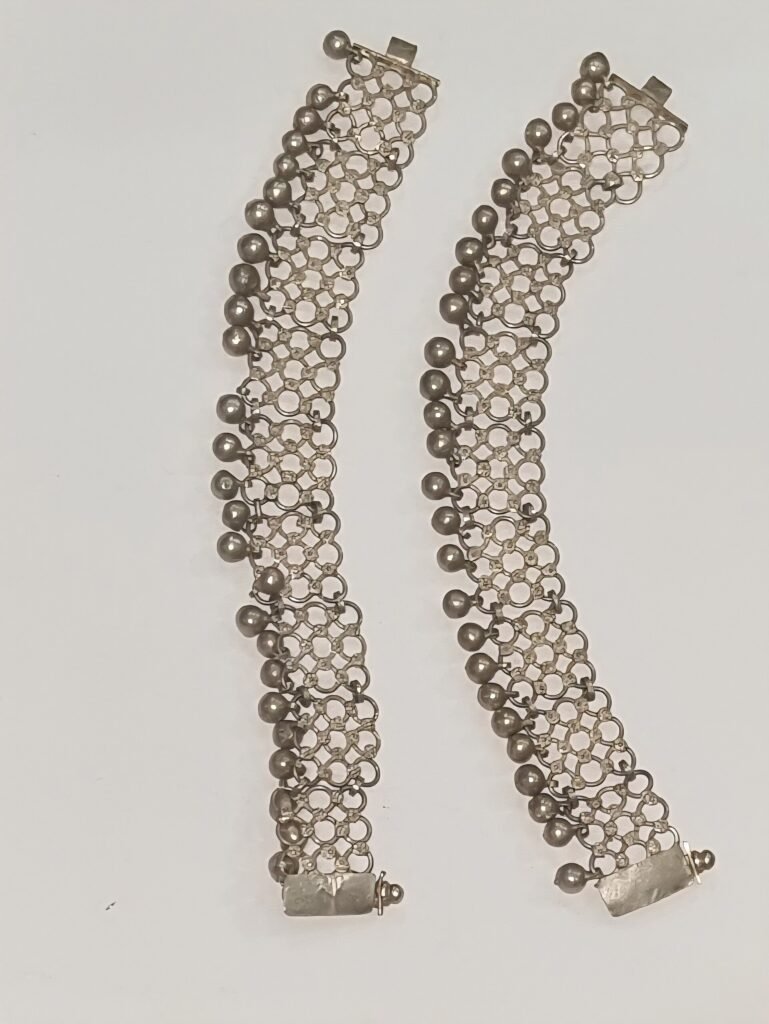
- Payal are anklets; bichhiya are toe rings. Toe rings are traditionally worn by married Hindu women, often on the second toe of both feet (Wikipedia, Toe ring).
- Most of the price is silver by weight. Ask for the weight in grams and the purity, and compare the price per gram after making charges.
- Look for the hallmark: India’s HUID-based silver hallmark shows the BIS mark with “SILVER”, the purity grade and a HUID. Silver hallmarking is voluntary, so many pieces are not hallmarked; then purity rests on the seller’s word or a test.
- German silver contains no silver. It is a copper-nickel-zinc alloy and is cheaper; it should never be sold as silver.
- For babies: choose smooth, secure designs without small detachable bells or beads, and check fit often.
Purity and the hallmark
Traditional payal and bichhiya are made in a range of purities. Under IS 2112:2025, India’s silver hallmark grades are 800, 835, 925, 958, 970, 990 and 999, and a hallmarked piece carries the BIS mark with “SILVER”, the grade and a HUID (SCC Online, 2025). A HUID can be verified in the BIS CARE app for pieces hallmarked from 1 September 2025.
| What you see | What it means |
|---|---|
| BIS mark + “SILVER” + grade + HUID | Hallmarked; verify the HUID in BIS CARE |
| A stamp such as “925” or “92.5” only | A maker’s claim, not a hallmark; see how to identify genuine 925 silver |
| No mark | Purity is unknown until tested |
| “German silver”, “white metal” | Not silver |
Why purity matters for payal. Heavy traditional anklets are worth mostly their metal. A difference between, say, 80% and 92.5% silver on a 100 g pair is 12.5 g of silver. Ask for the purity in writing.
Price: how to check it
Price = (weight × silver rate for the purity) + making charges + GST. Our guide to how silver jewellery prices are calculated walks through the arithmetic.
Worked example (illustrative). Silver rate ₹200 per gram of 999.
| Pair of payal, 925, 60 g | Pair of bichhiya, 925, 8 g | |
|---|---|---|
| Silver value (60 × 200 × 0.925) | ₹11,100 | 8 × 200 × 0.925 = ₹1,480 |
| Making (example) | ₹20 per gram = ₹1,200 | ₹50 per gram = ₹400 |
| Before GST | ₹12,300 | ₹1,880 |
| GST 3% | ₹369 | ₹56.40 |
| Total | ₹12,669 | ₹1,936.40 |
Making charges on small, intricate pieces such as toe rings are often a larger share of the price than on heavy payal. Compare the price per gram between sellers for similar designs. The IBJA reference rate for 999 silver is published per kilogram, excluding GST and making charges (IBJA).
Payal: fit and design
| Feature | What to check |
|---|---|
| Length | Should rest just above the ankle bone without sliding over the heel |
| Clasp | A screw, hook or S-hook; check that it closes firmly |
| Ghungroo (bells) | Traditional; check that each bell is securely attached |
| Weight | Heavier payal last longer but can be uncomfortable for daily wear |
| Construction | Solid links last; hollow or very thin chains break and are hard to repair |
Bichhiya: fit and comfort
- Adjustable open rings are common; they should be bent gently, not repeatedly, or the metal will crack.
- Fit should be snug but not tight; feet swell during the day and in heat.
- Smooth inner edges prevent rubbing. Ask for a rounded finish on the inside.
- Daily wear means constant contact with floors, water and soap; solid silver of a known purity holds up better than plated pieces.
For babies and children
- Choose smooth designs without small bells, beads or charms that could come off and be swallowed.
- Check fit regularly. Children grow quickly; tight anklets can mark the skin.
- Avoid sharp or rough edges and open hooks.
- Silver bangles for babies follow the same rules: smooth, secure and the right size.
Care
Payal and bichhiya are exposed to water, soap, sweat and dust every day, so they tarnish. Rinse with clean water and dry them after bathing when you can, wipe off sweat, and polish gently with a silver cloth. Silver tarnishes because it reacts with sulphur compounds in the air, faster in humid conditions; see silver and water and our silver care guide.
Buying checklist
- Weight in grams and purity, in writing
- Hallmark and HUID if hallmarked; otherwise a test or a written purity statement
- Price per gram compared after making charges
- Not German silver or white metal, unless that is what you want and the price reflects it
- Secure clasps and firmly attached bells
- For children, smooth designs without small detachable parts
FAQ
What is a bichiya in English?
A toe ring. In India, toe rings (bichhiya or bichiya) are traditionally worn by married Hindu women, often on the second toe of both feet.
How is a silver payal priced?
By weight and purity at the day’s silver rate, plus making charges and 3% GST. Ask for the weight in grams and compare the price per gram.
Are payal and bichhiya covered by silver hallmarking?
They can be. Silver hallmarking is voluntary, so some pieces carry the BIS mark, grade and HUID and many do not. If there is no hallmark, ask for the purity in writing or have the piece tested.
Is a silver anklet safe for a baby girl?
Choose smooth, secure designs without small bells or beads that could come off, and check the fit often as the child grows.
Why do silver payal turn black?
Silver reacts with sulphur compounds in the air, sweat and water residues to form black silver sulphide (tarnish). Clean, dry and polish gently.
Sources
- SCC Online: BIS launches HUID-based hallmarking for silver jewellery and articles (IS 2112:2025 grades; three-part mark; voluntary), checked 11 October 2026.
- India Bullion and Jewellers Association: published rates (silver 999 per kg, excluding GST and making), checked 11 October 2026.
- Wikipedia: Toe ring (toe rings in India; symbol of married status) and Nickel silver (German silver contains no silver), checked 11 October 2026.
- Directorate of Commercial Taxes, West Bengal: FAQ on Gems & Jewellery under GST, checked 11 October 2026.