The short answer
Citrine and amethyst are both quartz. Natural citrine, which is yellow straight from the ground, is rare. Most citrine sold today is amethyst that has been heated until its purple turns yellow to orange, and GIA says so plainly. Heated amethyst is still natural quartz and is legitimately called citrine, but it is treated citrine and should be described that way. Colour alone cannot tell the two apart, and even laboratories often cannot say for certain whether a citrine’s colour is natural. So buy on disclosure: ask whether the stone is heated, get the answer in writing, and pay a premium for “untreated” only if a report actually supports it.
If you are new to treatments in general, our gemstone buying guide explains the difference between natural, treated, laboratory-grown and imitation stones. This article looks at one case that affects almost every citrine buyer.
Quartz, amethyst and citrine
Quartz is silicon dioxide and one of the most common minerals on Earth. It is hard and durable, rated 7 on the Mohs scale (GIA, citrine). Several gem varieties are simply quartz in different colours:
| Variety | Colour | What causes the colour (simplified) |
|---|---|---|
| Rock crystal (clear quartz) | Colourless | No significant colour-causing impurities |
| Amethyst | Purple | Traces of iron combined with natural radiation in the ground, which creates “colour centres” |
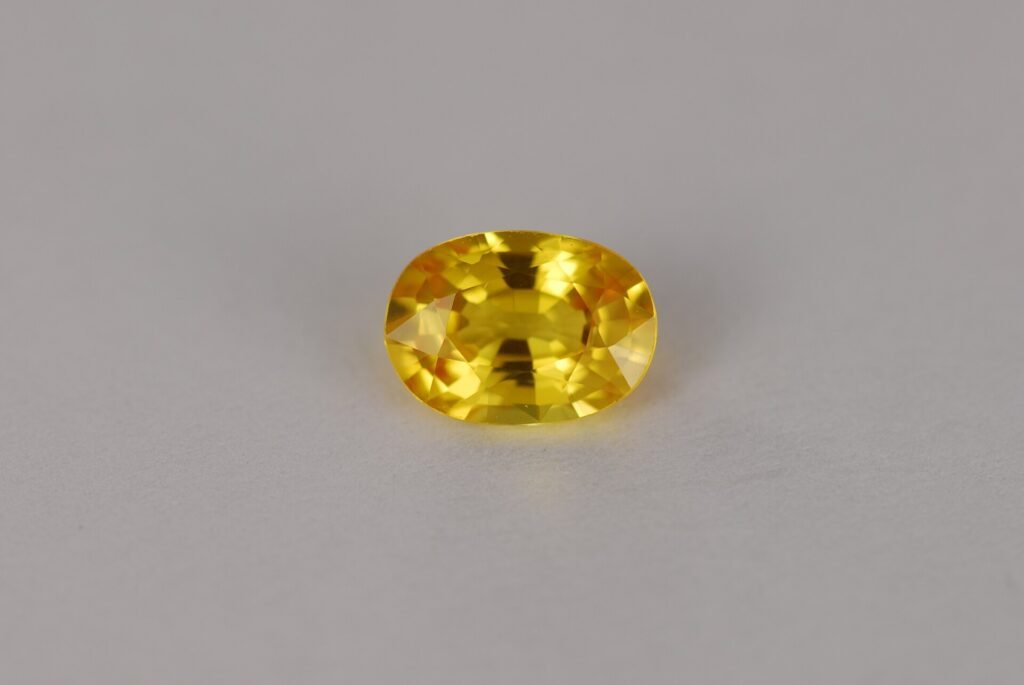
| Citrine | Pale yellow to orange to brownish orange | A trace of iron (GIA) |
| Smoky quartz | Brown to grey | Colour centres linked to aluminium and natural radiation |
| Ametrine | Purple and yellow in one crystal | Both colours zoned in the same crystal; GIA notes it occurs naturally in Bolivia (GIA, amethyst) |
Colour causes are simplified from GIA and from the Gems & Gemology research on amethyst–citrine colour listed in the sources.
The important point is that the purple of amethyst is fragile to heat. Heating destroys the purple colour centre, and depending on the material and the temperature, what remains is yellow to orange. GIA puts it directly: “most citrine is the result of heating”, which converts less valuable purple amethyst to golden shades. It also notes that the amethyst’s original hue affects how rich the resulting yellow is (GIA FAQ, treated citrine; GIA, citrine description).
How much citrine is heated?
Most of it. GIA describes natural citrine as “rare in nature” and says most citrine on the market comes from heat-treated amethyst (GIA). We have not found a reliable published percentage, so we do not quote one. What matters for a buyer is the default assumption: unless a seller has evidence otherwise, assume a citrine is heated amethyst.
That is not a scandal in itself. Heating amethyst to citrine is long established and the colour is considered stable in normal wear (Jewelers of America, citrine). The problem is only when it is not disclosed, or when “natural citrine” is used to imply untreated colour and to justify a higher price.
Labelling: what is honest
| Listing says | Is it accurate for heated amethyst? | What to ask |
|---|---|---|
| “Citrine” | Yes, as a variety name, but it says nothing about treatment | “Is it heated?” |
| “Natural citrine” | Ambiguous: true that it is natural quartz, but often read as “natural colour” | “Natural colour, or heated? In writing, please” |
| “Citrine (heated)” or “heat-treated citrine” | Yes. Clear and honest | Nothing more needed for treatment |
| “Untreated” or “unheated citrine” | Only if the seller can support it | “On what evidence? Which report says so?” |
| “Golden quartz” or “lemon quartz” | Trade names; may be citrine or other treated quartz | “What is the mineral and the treatment?” |
GIA’s general position on treatments is that disclosure matters to everyone selling gems. Our gemstone buying guide quotes GIA on this. In practice, the honest description of most citrine is “citrine, heated”.
Why colour cannot prove natural citrine
You will see confident rules online: natural citrine is pale and lemony, heated citrine is orange or reddish, natural citrine shows pleochroism, heated material shows zones. Each contains a grain of truth, and none is a test.
- Natural citrine can be orange, and heated citrine can be pale. GIA describes the colour range of citrine as pale yellow to brownish orange (GIA), and treatment results depend on the starting amethyst and the temperature used. GIA shows an orangy citrine produced by low-temperature heating.
- Colour zoning is ambiguous. Some heated stones keep visible traces of the amethyst’s colour zoning. A well-chosen, well-cut stone may show none, and natural quartz is zoned too.
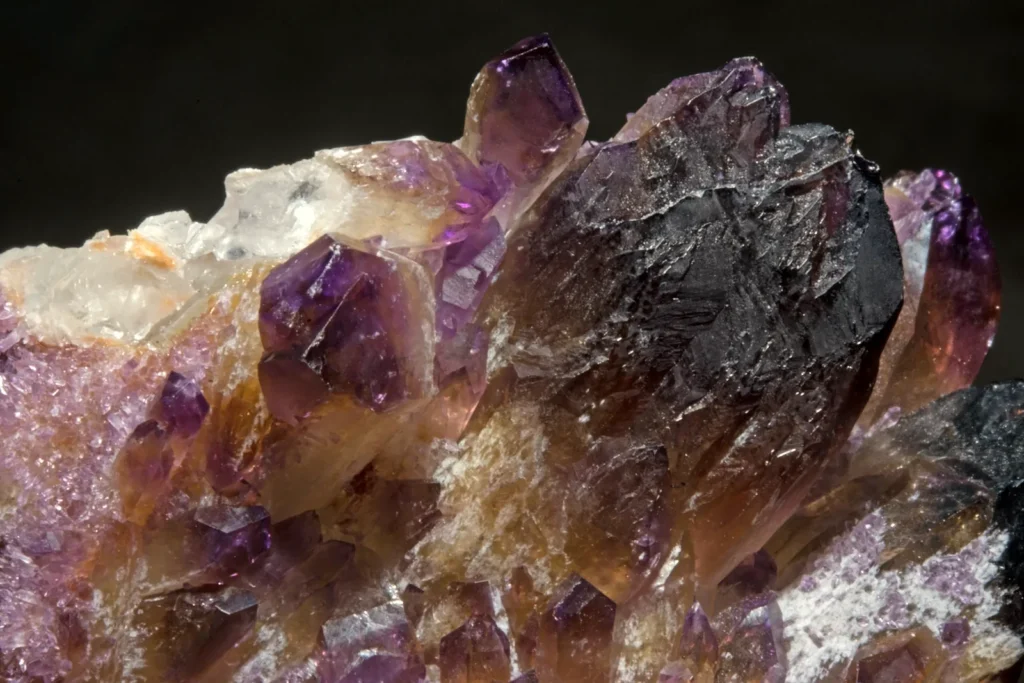
- “Burnt” tips on clusters (orange crystal points on a white base) suggest heated amethyst geode pieces, but this applies to clusters, not faceted stones or beads. It is a dealer’s rule of thumb, not an identification.
- Lighting changes hue. Warm indoor light pushes any citrine towards orange. Compare stones in daylight.
What a laboratory can and cannot tell you
A gem laboratory can readily confirm that a stone is quartz, and therefore citrine rather than a yellow glass or a different gem. It can also separate natural from laboratory-grown quartz in many cases. The difficult question is whether a citrine’s colour is natural or heat-induced.
GIA’s own research shows why that is hard:
- 1981: an article on colour in amethyst–citrine quartz concluded that there were then “no known tests” to distinguish natural material heated in the ground from amethyst heated by people, or from equivalent synthetic material (Gems & Gemology, Spring 1981).
- Later work. Synthetic amethyst and citrine are grown hydrothermally and share the properties of natural quartz, so separating them usually needs advanced laboratory testing, and some stones cannot be resolved with standard methods (Amethyst, Wikipedia, summarising the gemmological literature).
Methods have improved since 1981, but the practical lesson holds. A report may identify a stone as natural citrine without being able to say whether it was heated. Read the wording carefully:
| Report wording (typical forms) | What it means for you |
|---|---|
| “Natural quartz, variety citrine” with no comment on treatment | Identity confirmed; the colour origin may not have been determined. Ask the laboratory or seller |
| “Heated” or “indications of heating” | Treated; price it as heated citrine |
| “No indications of heating” | The laboratory found no evidence of treatment. Note that “no evidence” is not always the same as “proven untreated” |
| “Undetermined” or a general comment that treatment cannot be determined | Honest limitation; do not pay an untreated premium on this basis |
| “Synthetic quartz” | Laboratory-grown; value is much lower |
Reports differ in scope between laboratories. Our laboratory comparison explains how to look up a report number on the laboratory’s own site.
Home tests that do not work
- Magnets, ice, breath or “warmth” tests say nothing about whether citrine is heated, and little about whether it is quartz.
- Scratching damages the stone and can’t separate quartz from many look-alikes.
- UV torches are not diagnostic for heated citrine.
- Price alone: cheap citrine is not necessarily fake, and expensive citrine is not necessarily untreated.
Two things a careful buyer can do at home: look at the stone in daylight next to a white card to judge colour, and use a 10× loupe to look for bubbles or swirl marks, which suggest glass rather than quartz. Neither tells you about heating.
Price and quality
Citrine is one of the most affordable coloured gems, and stones of good size are easy to find. GIA notes that stones up to about 20 carats are readily available in jewellery (GIA). Value depends on:
- Colour: GIA describes the finest citrine as a saturated yellow to reddish orange without brownish tints (GIA).
- Clarity: citrine is usually expected to be eye-clean. Visible inclusions lower value more than they would in an emerald.
- Cut: a well-proportioned cut gives even colour without a washed-out centre. See how to judge coloured gemstone quality.
- Treatment: heated material is the norm. Untreated natural citrine, where a report supports it, is scarcer, and sellers charge more for it.
We do not give prices: they change with market and quality. Compare quotes on the same specification: weight, dimensions, colour, clarity, cut, treatment statement and report.
A specimen-level buying checklist
- The listing states the mineral (quartz) and variety (citrine), the weight and dimensions, and a treatment statement.
- If it says “natural” or “untreated”, ask on what evidence, and expect a laboratory report that actually addresses heating.
- You have daylight photos or video of the actual stone, not a stock image.
- For beads, ask whether the strand is heated amethyst, because most citrine beads are, and whether any are dyed or glass.
- The report names the issuing laboratory and has a number you can look up online.
- You know the return terms if the report and the stone do not match.
Example: what a bead builder discloses
Bead builders show how much they disclose, and how much you still need to ask. GemKrishna’s custom bracelet builder lists Citrine (Sunela) among its included stones (checked 9 October 2026), with no treatment note on that card. The page states that beads are natural unless a card says otherwise. Elsewhere it labels treatments plainly: its howlite option is described as “high-quality dyed magnesite”, and dyed and natural red coral are listed separately. The builder states that a free GJSPC report identifies each gemstone in the bracelet and discloses any treatment, with a unique report number. Customers can also choose another laboratory, such as IGI, GRS, IIGJ, GSI or GIA, and the report names the issuing laboratory.
For citrine, the useful step is the same with any seller. Ask whether the citrine beads are heated amethyst, and check what the report says about treatment before you pay. Its FAQ states that certain gemstones “may be heated, treated, dyed or otherwise enhanced”, and that known treatments are disclosed.
Cleaning bracelets and rings
Citrine is durable, but heat and harsh cleaning are the risks:
- Warm, soapy water and a soft brush are safe for citrine and amethyst (GIA, citrine care; GIA, amethyst care).
- Avoid steam and heat. GIA advises against steam cleaning and heat for both. Sudden temperature changes can fracture quartz.
- Ultrasonic cleaners are usually safe for untreated or heat-treated quartz, but not for dyed or fracture-filled stones (GIA), and never for bead bracelets on elastic or thread.
- Light: GIA notes that some amethyst colour can fade with prolonged exposure to intense light, so store amethyst out of direct sun.
- Bead bracelets: wipe with a barely damp cloth and dry at once. Do not soak the cord. See how to care for a crystal bead bracelet.
Comparison at a glance
| Natural (untreated) citrine | Heated amethyst sold as citrine | Synthetic citrine | Yellow glass | |
|---|---|---|---|---|
| Mineral | Quartz | Quartz | Laboratory-grown quartz | Glass (not a mineral) |
| How the colour formed | In the ground | Heat applied by people | In the laboratory | Added colourant |
| How common | Rare | The majority of citrine sold | Exists; less common in jewellery | Common as an imitation |
| Honest name | Citrine (no indication of heating, if a report supports it) | Citrine, heated | Synthetic or laboratory-grown citrine | Glass |
| Lab can confirm identity | Yes | Yes | Usually | Yes |
| Lab can confirm colour origin | Not always | Not always | — | — |
| Value | Highest, if documented | Moderate; the market norm | Lower | Lowest |
FAQ
Is heated amethyst “fake citrine”?
No. It is natural quartz, and once it is yellow to orange it is citrine by colour. It is treated citrine, and it should be sold as heated. “Fake” would be glass or another material sold as citrine.
Can a laboratory always tell natural citrine from heated amethyst?
Not always. A laboratory can confirm that a stone is quartz and often whether it is natural or synthetic. Whether the colour is natural or heat-induced is frequently difficult, and some reports will say so or will not comment. Do not pay an “untreated” premium unless the report specifically supports it.
Why does some citrine look orange or reddish?
Citrine’s natural colour range runs from pale yellow to brownish orange. Heated amethyst often produces deeper orange to reddish tones, but the hue depends on the starting material and the temperature, and lighting changes how it looks. Hue alone is not proof either way.
Is heat treatment of citrine permanent?
It is considered stable under normal conditions of wear. Like any quartz, citrine should still be kept away from high heat, steam and sudden temperature changes, which can damage the stone.
Does untreated citrine cost more?
Generally yes, because natural-colour citrine is rare. That premium is only justified when there is evidence, a laboratory report that addresses heating, and not just the word “natural” on a listing.
Is “lemon quartz” citrine?
It is a trade name for pale yellow quartz. Some is citrine and some is quartz with treated colour. Ask for the mineral identity and the treatment in writing.
Can I clean a citrine ring in an ultrasonic cleaner?
Usually, if the citrine is untreated or heat-treated and the setting is sound. Avoid it for dyed or fracture-filled stones and for bead bracelets. Warm, soapy water and a soft brush are always the safest choice.
Sources
- GIA: Citrine, Citrine description, Treated citrine FAQ, Citrine care and cleaning, Amethyst, Amethyst care and cleaning, checked 9 October 2026.
- Gems & Gemology, Spring 1981: article on artificially induced colour in amethyst–citrine quartz.
- Amethyst, Wikipedia (synthetic amethyst and its identification), checked 10 October 2026.
- Jewelers of America: Citrine.
- GemKrishna (seller): custom bracelet builder and FAQs, checked 9 October 2026.
Next steps
Read our gemstone buying guide, learn how to judge colour, clarity and cut, or compare testing laboratories.