The short answer
- Rinse the beads briefly in clean, lukewarm water. Do not soak a strung mala.
- Brush dirt out of the grooves with a soft toothbrush.
- Dry on a towel, away from direct sun and heat.
- Oil very lightly with a plain oil, then wipe off the excess.
Avoid detergents, bleach, ultrasonic cleaners, boiling water and harsh sun. Take the mala off for bathing and swimming. Most “damage” to a rudraksha piece is to the thread, elastic or silver, not the beads, so care for those too.
Why rudraksha needs gentle care
A rudraksha bead is the woody stone of a fruit. It is:
- porous, so it absorbs sweat, oil and soap;
- grooved, so dirt collects in the mukhi lines;
- organic, so repeated soaking and drying can make it swell and shrink, which can open cracks.
The beads themselves are tough. The weak points are:
- thread, which is weakened by water and sweat;
- elastic, which perishes;
- silver caps and wire, which tarnish;
- the glue in some caps.
The routine, step by step
1. Prepare
- Work over a towel, in case the thread breaks.
- Check the strand first. Look for frayed thread, stretched elastic and loose caps. If it is weak, restring before cleaning (see below).
2. Rinse
- Hold the mala under a slow tap of clean, lukewarm water for a few seconds, rubbing the beads gently with your fingers.
- For a bracelet on elastic, keep it as short as possible: water and heat shorten elastic’s life.
3. Brush
- Use a soft toothbrush or a natural-bristle brush and work along the grooves, not across them.
- For stubborn grime, a needle or toothpick wrapped in cotton can clear a single groove. Go gently.
- Care guides disagree. AstroVed says not to use soap water at all (AstroVed). Rudra Centre allows a little mild soap for oily beads, and suggests soaking overnight in lukewarm water and scrubbing the grooves with a hard plastic brush (Rudra Centre). The beads can take that, but thread and elastic often cannot, which is why the routine here is gentler. If you want a deep clean, do it when the mala is being restrung and the beads are loose.
4. Dry
- Pat dry, then lay the mala flat on a towel, in shade, at room temperature.
- Avoid an oven and harsh sun. Rapid drying can crack beads. Rudra Centre allows a hairdryer; if you use one, keep it on a cool setting.
- Make sure the thread is completely dry before wearing or storing it. Damp thread rots and stains.
5. Oil (optional)
- When fully dry, rub a drop of plain oil over the beads with a soft cloth or brush, then wipe off the excess. Care guides suggest olive, almond or sandalwood oil; plain sesame or mustard oil is also used traditionally.
- Oiling keeps the bead from drying out. Too much oil attracts dust and stains thread, so use a little.
- Traditional conditioning (soaking beads in ghee, then milk, for a day each) is recommended by some sellers, such as AstroVed. Others, such as Rudra Centre, call it unnecessary and say it can dull the beads. It is a custom, not a necessity. If you do it, do it only with the beads unstrung, or with thread you are prepared to replace.
Special cases
| Piece | What to do differently |
|---|---|
| Silver-capped (925) | Keep water off the caps where possible, and dry them well. Polish caps with a silver cloth, not dips: silver dips are acidic and can attack the bead. See our silver care guide |
| German silver capping | German silver contains no silver; it is a copper-nickel-zinc alloy. A dry cloth is best; avoid soaking |
| Elastic bracelet | Clean quickly and dry fast. Expect to replace the elastic periodically; do not roll it on and off over the hand more than you must |
| Steel-core or wire | Dry thoroughly. Wire does not rot, but water trapped in the bead holes can still stain |
| Mixed with gemstones | Some stones should not get wet (for example pyrite, malachite or turquoise). See our crystal bracelet care guide |
| Dyed or polished beads | If colour runs on the brush, the beads were dyed or coloured. That is worth knowing, and it should have been disclosed |
How often?
- Daily wear: a quick wipe with a dry cloth after wearing.
- Monthly, or when grimy: the full rinse, brush, dry and oil routine.
- Thread check: every few months for a mala in daily use.
When to restring
Restring when you see:
- fraying, especially at the guru bead and the knots nearest it;
- gaps opening between beads that were knotted tight;
- elastic that no longer springs back;
- loose caps or kinks in wire.
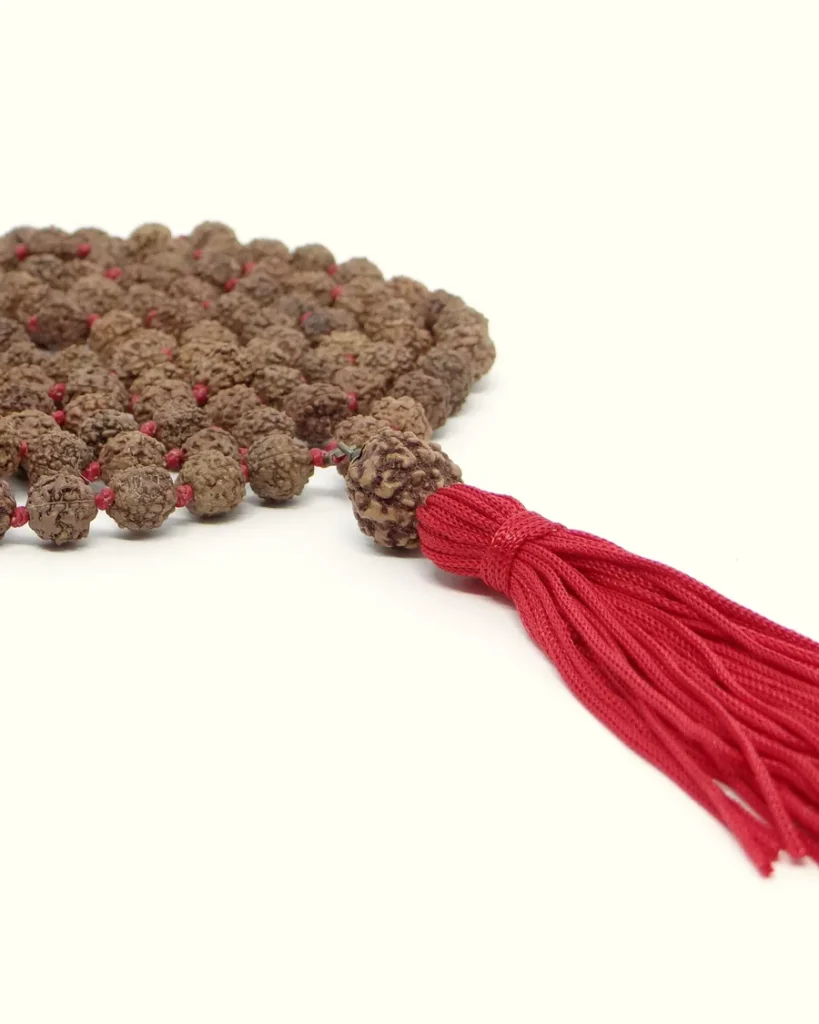
A knotted mala breaking during use scatters only one bead at a time; an unknotted one can scatter all of them. For a valuable mala, restring with knots.
Storage
- Keep it in a cloth pouch or a closed box, away from perfume, sprays and heat.
- Store it dry, never in a sealed bag while damp.
- Keep silver-capped pieces with an anti-tarnish strip if your climate is humid.
What not to do
- Do not use detergent, bleach, hand sanitiser or chemical jewellery dips.
- Do not use ultrasonic or steam cleaners.
- Do not boil the beads or dry them in an oven.
- Do not leave a strung mala soaking in water or oil.
- Do not scrub with wire brushes. They damage the natural surface, the very texture that helps show a bead is genuine.
FAQ
Can I wear my rudraksha in the shower?
Most guides advise removing it. Soap and water weaken thread and elastic, and soap residue builds up in the grooves.
Which oil is best for rudraksha?
Any plain, unscented oil works. Olive, almond and sandalwood oil are suggested by sellers’ care guides. The amount matters more than the type: a thin film, wiped off.
My rudraksha changed colour after cleaning. Is it fake?
Natural beads darken with oil and handling, and may lighten slightly after washing. If colour comes off on the brush or cloth, the beads were dyed or coloured. That does not prove they are fake, but it should have been disclosed.
Should I clean a new rudraksha before wearing it?
A quick rinse, brush and dry removes dust and any loose colouring from the sale. Religious customs around first wearing vary; follow your own teacher or tradition.
Can I use lemon or vinegar on silver caps?
Avoid acids near the beads. Clean silver caps with a dry silver-polishing cloth.
Sources
- AstroVed, How to clean rudraksha, checked 10 October 2026.
- Rudra Centre, Tips for care (seller article), checked 10 October 2026.