
The short answer
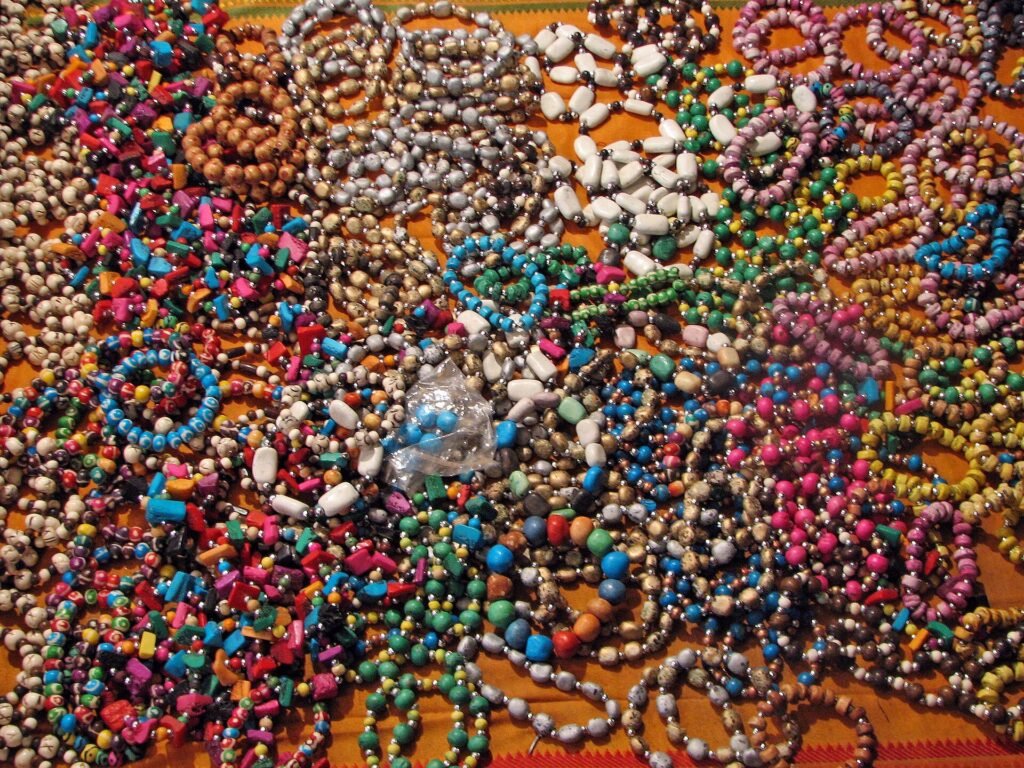
- The material sets the floor. Common quartz-family stones (amethyst, rose quartz, clear quartz, aventurine, tiger’s eye) are inexpensive as beads. Fine natural turquoise, lapis, ruby, emerald or natural coral are not.
- The rest of the price is everything around the beads: bead size and count, a 925 silver lock or spacers, stringing and labour, a laboratory report, any ritual or “energising” charge, packaging, delivery, payment fees, tax and the seller’s margin.
- A verified reference point: on 11 October 2026, one custom builder priced a made-to-wrist bracelet from ₹999 with 8 mm beads or ₹1,249 with 10 mm, including a GJSPC laboratory report, with a 925 silver lock and engraving extra (GemKrishna). That is a fair benchmark for common stones; it is not a ceiling or a floor for every stone.
- Warning signs: a “natural ruby” or “natural turquoise” bracelet for a few hundred rupees; a high price for common quartz justified mainly by energising or by promised benefits; and no named material or report.
What you are paying for
| Component | What it covers | How much it moves the price |
|---|---|---|
| The beads | The material, its quality (colour, clarity), size and how many | Usually the biggest single factor for valuable stones; often small for common quartz |
| Bead size and count | Larger beads use more material; a wrist needs about 18 to 24 beads of 8 mm, fewer of 10 mm | 10 mm costs more than 8 mm for the same stone |
| Findings | Elastic, a stainless-steel magnetic lock, 925 silver lock, spacers, charms | Elastic adds little; silver adds metal value and labour |
| Labour | Sorting, matching, stringing, knotting, sizing to the wrist | Higher for custom-sized, knotted or wire-strung pieces |
| Documentation | A laboratory report naming the stones | A real cost to the seller; included by some, charged by others |
| Ritual or “energising” | Puja or energisation services | Pure service cost; cannot be verified by a laboratory |
| Packaging and delivery | Box, pouch, insured courier | Small per piece, but visible in “free delivery” pricing |
| Payment and platform fees | Gateway fees, marketplace commissions | A few per cent of the price |
| Tax | GST on the sale | Check the rate and HSN code on the invoice |
| Margin | Overheads, marketing, returns, profit | The most variable part between sellers |
For how bead size changes bead count and weight, see our bead size guide.
The material: common, uncommon and expensive
| Group | Examples | What a fair bracelet price looks like |
|---|---|---|
| Common quartz family | Amethyst, rose quartz, clear quartz, green aventurine, tiger’s eye, citrine (usually heated amethyst) | Low hundreds to low thousands of rupees, depending on quality, findings and service |
| Other common beads | Agate, onyx, black tourmaline, howlite (often dyed), hematite-type beads | Similar, but check for dye and imitations |
| Fine or treated-sensitive materials | Natural turquoise, fine lapis lazuli, natural red coral | Considerably higher; dyed and reconstituted imitations are common |
| Precious gemstones | Ruby, emerald, sapphire beads | Wide range; low-grade, heavily treated beads can be cheap, fine beads very expensive |
GIA describes the “affordability it shares with most other quartz”, and notes that “most citrine on the market is the result of heat treatment of amethyst” (GIA, citrine). Our guide to whether a crystal bracelet is real explains the common imitations and trade names.
Worked example: two 8 mm rose quartz bracelets
Illustrative figures, except where a seller price is cited.
| Bracelet A: plain, elastic | Bracelet B: custom-sized, 925 lock, report | |
|---|---|---|
| Beads (about 22 × 8 mm rose quartz) | Low; common material | Same material |
| Stringing | Elastic, standard length | Elastic or wire, sized to the wrist |
| Lock | None | 925 silver lock (adds metal value and labour) |
| Report | None | A laboratory report naming the stone |
| Delivery | Paid or free | Free or paid |
| What to expect | A few hundred rupees | Around a thousand to a few thousand rupees |
| One verified example | – | GemKrishna’s builder: from ₹999 (8 mm) with a GJSPC report; 925 silver locks add their listed price |
Both can be fair. Bracelet B costs more because you get more: sizing, a silver lock and a report you can verify. Neither price says anything about the stone’s spiritual effect.
Why some crystal bracelets are expensive
Legitimate reasons:
- Rarer or finer material, such as natural turquoise or fine lapis.
- Larger, better-matched beads: even colour, good clarity, well-polished and well-drilled.
- Precious metal: 925 silver locks, spacers or wire.
- Custom work: sized to your wrist, with a chosen arrangement.
- A verifiable laboratory report that names each stone.
- Service: approval photos, after-sales restringing and clear returns.
Reasons that should make you look more closely:
- “Energised”, “abhimantrit” or “siddh” as the main justification. A ritual is a personal or religious choice, but it cannot be verified by a laboratory, so ask for it to be priced as a separate line.
- Promised outcomes, such as health, money or love. No stone can guarantee them.
- “Certified” without a named laboratory or a report number you can check yourself; see authenticity guarantees.
- Prices inflated by a “discount” from a high “original price”.
Why some are suspiciously cheap
- Glass or plastic sold under a stone’s name (“opalite”, “cherry quartz”, “crystal”).
- Dyed stone sold as a more valuable one (dyed howlite as turquoise, dyed quartz as rose quartz).
- Reconstituted material: crushed stone bonded with resin.
- Very low-grade beads with cracks, chips and uneven holes.
Cheap is not wrong when the seller names the material honestly. It is wrong when a low-cost material is sold as a valuable one.
How custom-bracelet sellers price
Custom bracelet sellers in India typically use one of three models:
- A base price for the bracelet, with common stones included and premium beads, silver locks and extras added. GemKrishna’s builder is an example: elastic and its magnetic stainless-steel GemSnap lock are free, 925 sterling-silver locks “add the price shown”, engraving costs ₹249, delivery in India is free, and every bracelet includes a GJSPC report that it says “identifies every gemstone in your bracelet and discloses any treatment”. Custom bracelets are “not eligible for a standard full refund” (GemKrishna, checked 11 October 2026).
- A price per crystal or design, where each stone or combination has its own price.
- A price per bead, common for loose-bead sellers and for rudraksha.
Our comparison of custom crystal bracelet brands sets out several sellers’ models and what each includes.
How to compare two bracelet prices
- Name the material for every bead, and any treatment (dye, heat, stabilisation).
- Match the bead size and the approximate bead count.
- Match the findings: elastic vs stainless steel vs 925 silver.
- Check the report: named laboratory, number you can verify, every bead or a sample.
- Separate the extras: energising, engraving, gift packaging, express delivery.
- Read the returns policy, especially for custom-sized pieces; see our online buying checklist.
- Compare the final total, including delivery and tax.
FAQ
How much should a crystal bracelet cost?
For common quartz-family stones, a plain elastic bracelet can fairly cost a few hundred rupees, and a custom-sized one with a silver lock and a laboratory report around a thousand to a few thousand. Rarer or finer materials cost considerably more.
Why are crystal bracelets so expensive?
Legitimately, because of finer material, larger matched beads, silver findings, custom work, reports and service. Less legitimately, because of energising charges, promised benefits or inflated “original” prices.
How much does a real crystal bracelet cost compared with a fake?
A real bracelet in a common stone need not be expensive. The question is whether the material is named honestly. A very low price for an expensive-sounding stone is the warning sign.
Is a more expensive bracelet more effective?
Price reflects material, workmanship and service. It does not measure any spiritual or healing effect, which is a matter of belief.
Should I pay extra for energising?
That is a personal choice. A laboratory cannot test a ritual, so ask for it as a separate line and decide on it separately from the bracelet.
Sources
- GemKrishna (seller): Custom bracelet builder (base prices, included stones, lock and engraving charges, report, delivery and refund statements), checked 11 October 2026.
- GIA: Citrine (affordability of quartz; most citrine is heated amethyst), checked 11 October 2026.
- GIA: An introduction to gem treatments (dyeing of porous stones such as howlite and quartz), checked 11 October 2026.
Related reading
- Custom crystal bracelet brands in India: features, fit and reports
- How to tell if a crystal bracelet is real: 9 checks, dyes and trade names
- 6 mm vs 8 mm vs 10 mm beads: size, weight and bead count for bracelets
- Gemstone and jewellery authenticity guarantees in India: what “certified”, “lab-tested” and “money-back” really cover