
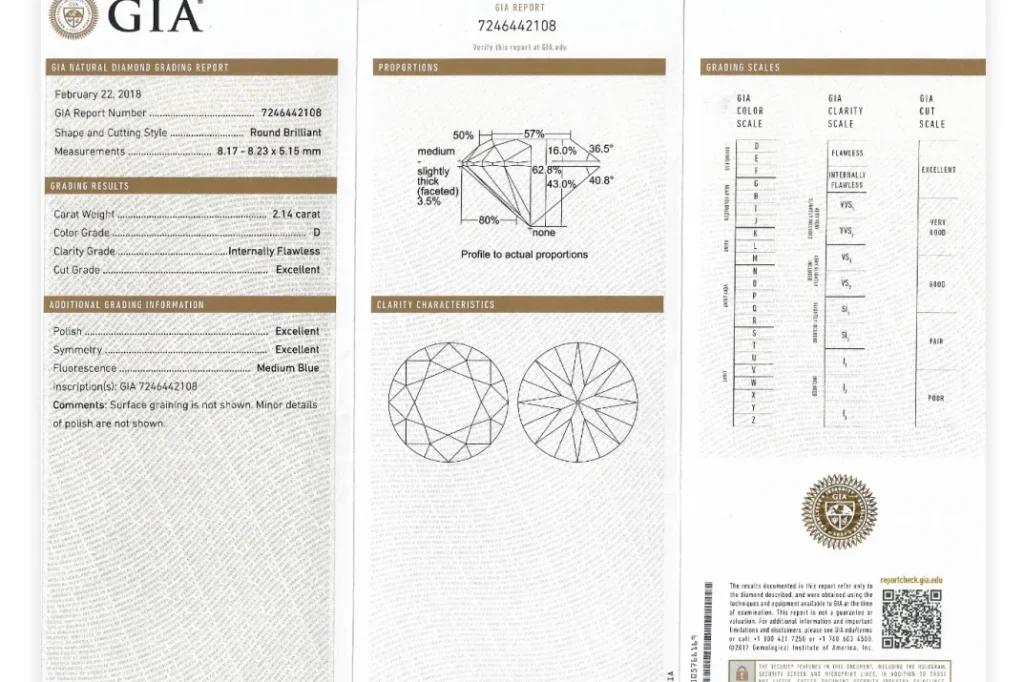

The short answer
A useful authenticity guarantee states four things in writing:
- what is guaranteed: identity, natural origin, treatment status, weight or purity;
- how it will be checked: which laboratory, and who pays;
- what you get if it fails: a full refund, a partial refund, an exchange or store credit;
- how long you have to claim.
“Certified”, “100% natural” and “lab-tested” on their own promise little.
Indian rules add protection. Misrepresenting quality is an unfair trade practice, e-commerce sellers must display return and guarantee terms, and hallmarked gold that tests below its mark carries BIS compensation. Keep the invoice, the report and screenshots of the listing. Our guide to gemstone and bracelet return policies in India compares five sellers’ published terms.
Common seller promises and what they mean
| Wording | What it usually means | What to ask |
|---|---|---|
| “Certified” / “with certificate” | A report or card exists, but often from an unnamed or in-house laboratory | Which laboratory? Can I verify the number on its own site? Does it cover my exact item? |
| “Lab-tested” | Something was tested at some point | Was this item tested, or a sample from the batch? |
| “100% natural” | A seller claim | Natural and untreated? Is that on the report? |
| “Money-back guarantee” | A refund under conditions | Full refund or minus charges? Within how many days? For which reasons? |
| “Lifetime guarantee” | Often covers workmanship, not authenticity | What exactly is covered, and who decides? |
Examples of published guarantees
These are sellers’ own published terms, checked on 10 October 2026, quoted as examples, not endorsements:
- GemKrishna states for its custom bracelets that if the laboratory report reveals a treatment contrary to its stated disclosure, it guarantees a full refund. It also states that custom items are not eligible for a standard full refund, and that making charges may be deducted when a return is accepted.
- GemPundit states a 10-day return and replacement policy, with 100% of the money paid for the gemstone returned within the 10-day period if its conditions are met.
- Rudra Centre and Navratan each state a 10-day return window; RudraKailash states 30 days.
Our rudraksha seller and gemstone seller comparisons set out more terms. Conditions apply in every case. Read the full policy, especially for custom pieces.
What Indian rules add
Unfair trade practice. The Consumer Protection Act, 2019 treats deceptive practices that promote a sale as unfair trade practices. That includes falsely representing goods as being of a particular standard, quality or grade (Consumer Protection Act, 2019). A stone sold as untreated that is in fact dyed or filled is a clear example to raise.
Online sellers. Under the Consumer Protection (E-Commerce) Rules, 2020, e-commerce entities must display “accurate information related to return, refund, exchange, warranty and guarantee”. They must also appoint a grievance officer who acknowledges complaints within 48 hours and resolves them within one month (summary by S.S. Rana & Co.).
Hallmarked gold. If a hallmarked article tests below its marked purity, BIS says the buyer is entitled to compensation of twice the difference, calculated on the shortfall in purity and the article’s weight, plus testing charges (BIS consumer protection). See our HUID guide.
Complaints. If a seller does not resolve a dispute, consumer commissions accept complaints, including online filing through the government’s e-Daakhil portal (edaakhil.nic.in).
How to get a guarantee you can use
- Get it in writing before paying. Screenshot the listing, the guarantee wording and the return policy, with the date.
- Name the laboratory. Prefer an independent laboratory whose reports can be checked online. See our report verification guide.
- Match the report to the item: weight, measurements, photo and treatment line.
- Record the unboxing on video. Many sellers require it for damage claims.
- Test promptly. If you want a second opinion, book it within the return window.
- Keep the invoice. It should name the stone, weight, treatment status and price.
Making a claim
- Write to the seller with the order number, the evidence (report, photos, video) and what you want: a refund or an exchange.
- Quote their own guarantee wording back to them.
- Escalate to the grievance officer named on the website.
- If unresolved, consider the consumer commission or e-Daakhil, and your payment provider’s dispute process.
Our online buying checklist covers payment protection.
FAQ
Does a certificate mean my stone is genuine?
Only if it comes from a real laboratory, the number checks out on the laboratory’s own site, and it describes your stone.
Can a seller refuse a refund on a custom piece?
Many custom pieces are excluded from change-of-mind returns. Misdescribed goods are different: if the item is not what was sold, raise it in writing and quote the listing.
What if a second laboratory disagrees with the first?
Laboratories can differ, especially on origin and some treatments. Ask both for their reasoning, and rely on established laboratories.
Is “lifetime guarantee” useful?
Only if it says what is covered. Often it covers workmanship, such as stringing and settings, not authenticity.
Is this legal advice?
No. It is general information. For a specific dispute, consult a lawyer or the consumer helpline.
Sources
- Consumer Protection Act, 2019 (WIPO Lex copy), checked 10 October 2026.
- S.S. Rana & Co., Consumer Protection (E-Commerce) Rules, 2020 comes into force, checked 10 October 2026.
- Bureau of Indian Standards, Consumer protection (hallmarking), checked 10 October 2026.
- GemKrishna, Custom Bracelet Builder and refund policy; GemPundit, returns and exchange; Rudra Centre, refund policy; Navratan, refund policy; RudraKailash, refund policy. All checked 10 October 2026.
Related reading
- How to assess a jewellery seller: a consistent evidence checklist
- Buying jewellery online safely: a checklist for listings, payment, delivery and returns
- How to verify a gemstone or rudraksha report online (GJSPC, IGI, GIA, GRS, IIGJ)
- HUID number: what it is, where to find it and how to verify it in BIS Care