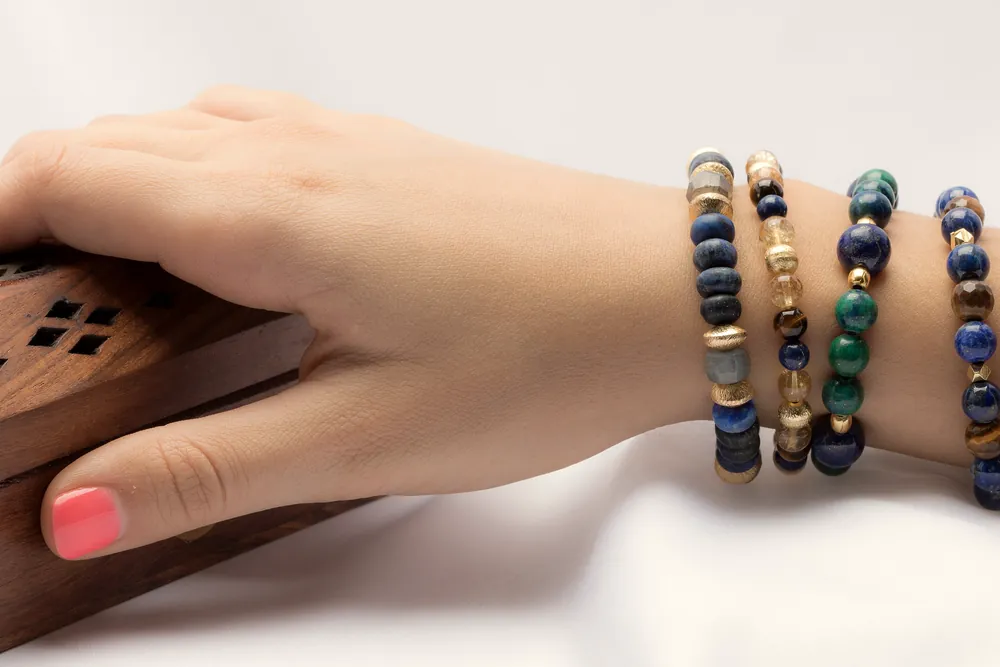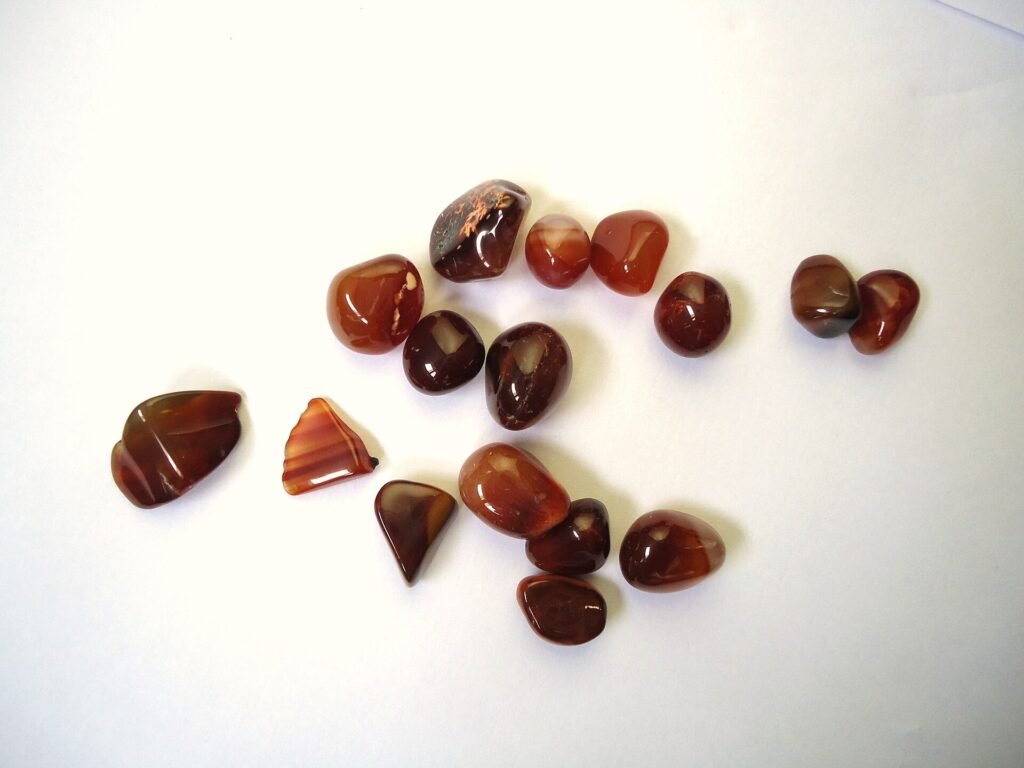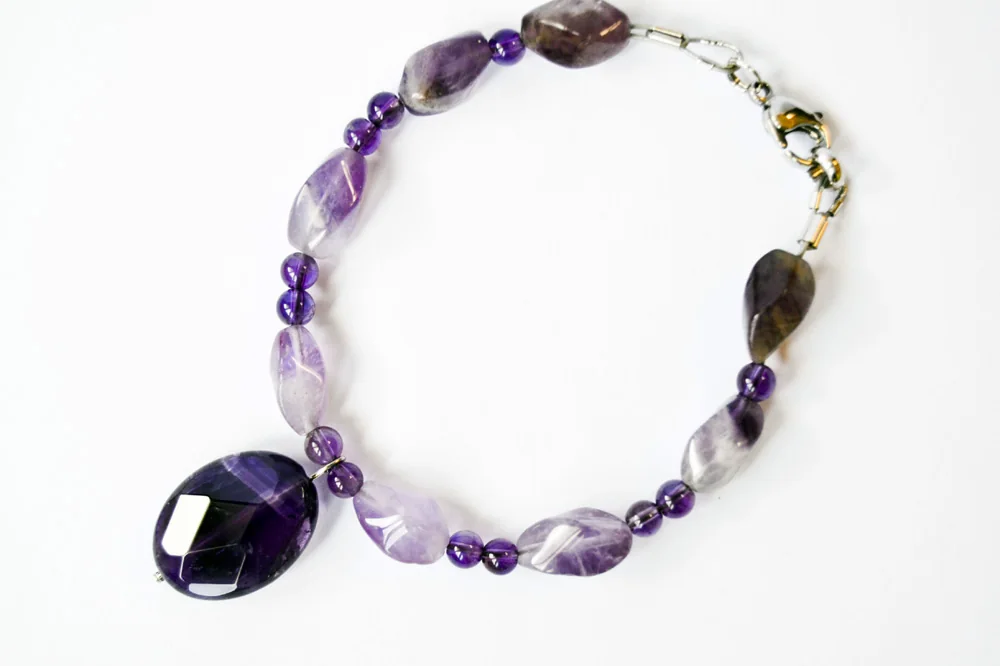
The short answer
A bracelet finder is a short questionnaire. It looks up your answers, such as a concern (“calm”), a Vedic rashi or a birth date, in a fixed table of stones, then suggests a combination and often sizes it for your wrist. It does not analyse you, and the associations it uses are traditions, not tested effects.
Used well, a finder is a quick way to get a colour palette and a list of named stones. Then judge those stones as you would any purchase:
- are they natural or dyed;
- is there a report;
- what bead size and fit;
- what price.
How finders work
Most finders use one of three routes:
| Route | What you enter | What the tool does | What to know |
|---|---|---|---|
| By concern | One or two goals: calm, focus, love, protection… | Looks up stones linked to each goal in modern crystal practice | Lists differ between sellers and books |
| By rashi (Vedic moon sign) | Your rashi, or date, time and place of birth | Maps the rashi to its ruling planet, then to that planet’s traditional stones or substitutes | Needs time and place of birth to calculate; a date alone is not enough |
| By birth date | Date of birth | Usually uses Western sun-sign date ranges, or birthstone months | Not the same as a Vedic rashi |
Our rashi gemstones guide explains why moon-sign and sun-sign lists differ.
A worked example: Find Your Bracelet
GemKrishna’s Find Your Bracelet is a clear example of the pattern. We read its question flow and its built-in tables on 10 October 2026.
- Choose a route: by concern (one or two of seven), by rashi, or by two birth dates. You can also ask for free help on WhatsApp, go straight to the builder, or ask about other jewellery.
- The concern tables. Calm: amethyst, blue lace agate, moonstone, lepidolite. Focus: clear quartz, fluorite, blue apatite, tiger’s eye. Love: rose quartz, rhodonite, peach moonstone, garnet. Protection: black tourmaline, hematite, black obsidian, smoky quartz. Abundance: citrine, pyrite, green aventurine, moss agate. Confidence: tiger’s eye, carnelian, sunstone, pyrite. Spiritual practice: 5 mukhi rudraksha, karungali, clear quartz, selenite. With two concerns it blends stones from both, and every suggestion has at least two bead types.
- The rashi route maps each rashi to its graha and suggests uparatna (substitute) stones. For example, Makar and Kumbh (Shani) map to amethyst and lapis lazuli. Its own FAQ advises against choosing a main ratna, such as blue sapphire, from the rashi alone.
- The birth-date route uses Western zodiac date ranges and says plainly that this is not a Vedic calculation.
- Fit and lock: you choose wrist size, bead size and lock. The bead count uses wrist inches × 25 ÷ bead mm, plus one comfort bead.
- Hand-off: “Continue in Bracelet Builder” opens the builder with your stones, wrist, bead size, lock and pattern already chosen. Price appears only in the builder.
See our Custom GemKrishna Builders guide for the builder steps.
What a finder’s suggestion does, and does not, establish
| It does | It does not |
|---|---|
| Turn a preference into concrete stone names | Show that any stone will produce calm, wealth or protection |
| Give a balanced, multi-colour design quickly | Check that the beads are natural or untreated |
| Size the bracelet for your wrist (if it asks) | Replace a reading by your own astrologer, if you follow Jyotish |
| Explain which tradition it used | Prove that its tradition is the “right” one; lists vary |
Research on crystal healing has found no effect beyond placebo (Crystal healing). Treat the suggestion as a starting point for choosing by colour, meaning and personal preference.
Turning a suggestion into a good order
- Check the stones are natural. Some common suggestions are often dyed or imitated, such as “turquoise”, lapis and black onyx. See our guide on telling if a crystal bracelet is real.
- Ask for a report that names each stone and any treatment, and verify its number.
- Check the size. Compare the bead count with your measurement; see our bracelet size chart.
- Check physical compatibility. Hard quartz beads can scratch soft stones like fluorite or malachite. See our combinations guide.
- See the full price in the builder before paying, including lock, spacers and any premium beads.
- Read the return policy. Custom bracelets are usually not returnable for a change of mind.
FAQ
Which crystal bracelet should I wear?
There is no evidence-based answer, so choose by what you like and what you can verify. Pick colours and stones you enjoy, use a finder or a traditional table if that tradition matters to you, then check that the stones are natural or honestly labelled, that the size fits, and that any report is verifiable. Our guide to telling if a crystal bracelet is real has the checks.
Are bracelet finders accurate?
They accurately apply their own tables. Whether a stone helps with a concern is a matter of belief, not something the tool can measure.
Why do two finders suggest different stones for the same rashi?
Traditions and sellers use different substitute-stone (uparatna) lists, and some tools use Western sun signs instead of Vedic rashi.
Can I change the suggested stones?
In most finders, yes. Treat the suggestion as a draft and edit it in the builder.
Should I choose a precious gem such as blue sapphire from a finder?
Astrologers generally advise choosing main gems from a full birth chart, not a quiz. One finder’s own FAQ says the same.
Does a finder-made bracelet come with a laboratory report?
That depends on the seller. Check what the report covers and verify its number on the laboratory’s site.
Sources
- GemKrishna, Find Your Bracelet (question flow, concern and graha tables, FAQ; read 10 October 2026).
- GemKrishna, Custom Bracelet Builder (hand-off and bead-count formula), checked 10 October 2026.
- Crystal healing, Wikipedia (evidence summary), checked 10 October 2026.