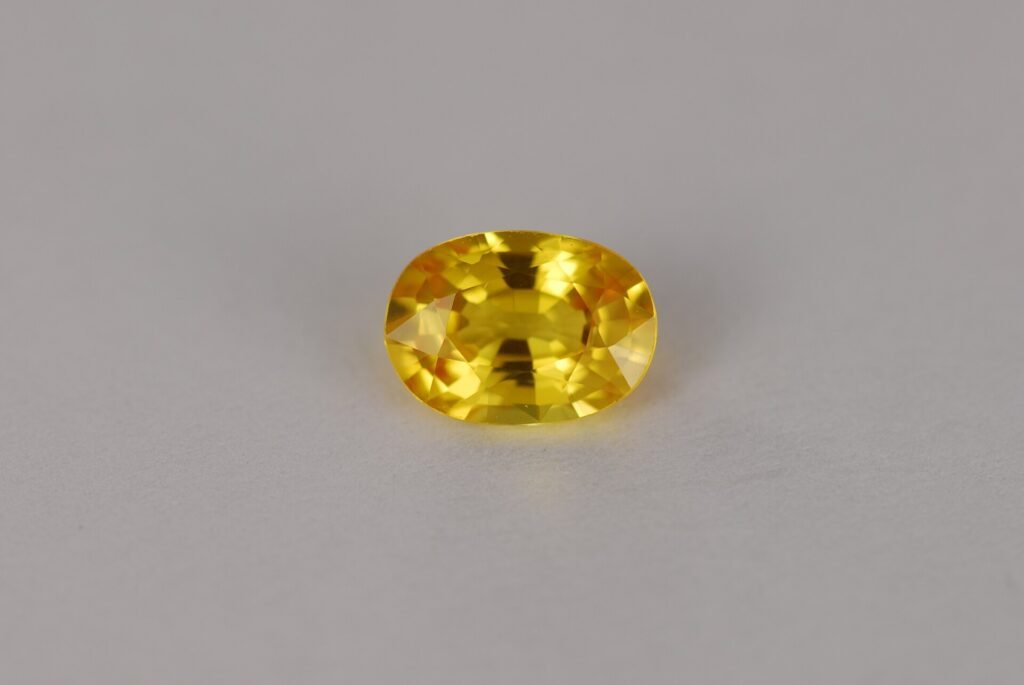
The short answer
- Heating is the most common sapphire treatment. GIA explains that heating “can intensify, or even induce, a blue coloration” and can remove fine “silk” inclusions. It is stable and widely accepted when disclosed (GIA, gem treatments).
- Lattice diffusion heats the stone with an added element, most notably beryllium, which can change the colour throughout the stone. GIA describes it as “extremely difficult to detect with certainty”, often needing an advanced laboratory.
- Surface or shallow diffusion adds colour in a thin layer. GIA warns that re-cutting or surface damage “can remove the color” from stones with shallow penetration (GIA, sapphire care).
- Report wording is standardised. Major laboratories use phrases such as “indications of heating” and “(lattice) diffusion of a chemical element from an external source” (LMHC Information Sheet #2).
- Value: for the same appearance, unheated with a report commands the highest price, heated is the main market, and diffusion-treated is worth much less. Assume a sapphire is treated unless a report from a capable laboratory says otherwise.
Four kinds of sapphire you will be offered
| Unheated | Heated | Lattice (beryllium) diffused | Shallow (surface) diffused | |
|---|---|---|---|---|
| What was done | Cut and polished only | Heated to improve colour or clarity | Heated with an element (usually beryllium) diffused in from outside | Heated with colour-causing elements that penetrate only near the surface |
| Typical report wording | “No indications of heating” | “Indications of heating” | “Indications of heating, colour modified by (lattice) diffusion of a chemical element from an external source” | As above, with “(shallow)” |
| Colour depth | Natural | Throughout | Often throughout; varies | A thin outer layer |
| Durability | Excellent | Excellent | Excellent | The colour can be polished or cut away |
| Detectable at home? | No | No | No | No; a laboratory confirms it |
| Value for the same look | Highest | Main market | Much lower | Lowest |
Sources: LMHC Information Sheets #1 and #2 (May 2025 versions); GIA, gem treatments; GIA, sapphire care.
Heating: what it does and how it is reported
Heat treatment of corundum (sapphire and ruby) is old and widespread. GIA notes that heating can turn pale sapphires “that were once discarded” into a desirable blue, remove silk to improve transparency, or recrystallise silk to strengthen a star (GIA, gem treatments). GIA considers heat treatment “durable and permanent under normal handling conditions”.
Heating does not only change colour. During heating, fractures can partly “heal”, leaving residues from the process. The Laboratory Manual Harmonisation Committee (LMHC), whose members include GIA, SSEF, DSEF, CISGEM and CGL, standardises how this is reported (LMHC IS #1):
- “Indications of heating” on a report means the laboratory found evidence of heat treatment.
- Residues in healed fissures are graded FAH 1 (minor), FAH 2 (moderate) and FAH 3 (significant), with a further category when residues fill cavities.
So two heated sapphires are not equal. A heated stone with minor residues is a different product from one with significant residues, and a good report tells you which.
Unheated vs heated: what you can and cannot see
Laboratories look at inclusions under magnification: changes to silk, crystals that show signs of having been heated, and healed fractures with residues. These are laboratory observations. A buyer with a loupe cannot reliably tell heated from unheated sapphire. “Unheated” is a claim that needs a report.
Diffusion: the step that changes the stone’s chemistry
GIA describes lattice diffusion as “the penetration of certain elements into the atomic lattice of a gemstone during heat treatment, with the objective of changing or accentuating its color” (GIA, gem treatments).
- Titanium and chromium diffusion (developed earlier) added colour only near the surface.
- Beryllium diffusion, recognised in 2003, uses a much smaller atom that “was able to diffuse all the way through a sapphire; even large sapphires, successfully changing their color”.
GIA rates diffusion-treated corundum as “widespread in the trade”, “extremely difficult to detect with certainty in many instances”, and detectable “only by qualified laboratories”. The treatment itself is permanent.
How a report describes diffusion
LMHC Information Sheet #2 sets two levels of wording (LMHC IS #2):
| Situation | Report wording (summarised) |
|---|---|
| Diffusion confirmed | Variety may read “(treated) sapphire”; “Indications of heating, (shallow) colour modified/altered by (lattice) diffusion of (a) chemical element(s) from an external source”, where the element may be named, for example beryllium |
| Diffusion suspected but not proven | “Indications of heating” plus “Further analyses are necessary to determine whether or not beryllium and/or other chemical element(s) from an external source is (are) present”, or “Heating may involve the diffusion of beryllium…” |
Two points matter for buyers:
- “Surface diffusion” is a trade term. LMHC says descriptions such as “surface diffusion treated” or “heated with the addition of beryllium” are “commonly used trading terms but are not used by LMHC members”. The report uses the standard wording above.
- “Shallow” is a warning. LMHC uses “shallow” when the created colour is shallow, and a report may caution against re-cutting.
Why shallow colour matters
GIA’s sapphire care guidance is direct: in lattice-diffused stones, treated colour may penetrate the whole stone or only a thin layer, and “surface damage or re-cutting can remove the color from lattice diffusion treated stones with shallow color penetration” (GIA, sapphire care). A chipped or re-polished stone can show a paler patch.
Other sapphire treatments to know
- Glass (fracture) filling. Less common in sapphire than in ruby, but it exists. GIA notes that high-lead glass fillers can be damaged by “even relatively mild substances like lemon juice”, and that in some sapphires the amount of filler “can be quite extensive” (GIA, sapphire care). LMHC Information Sheet #3 covers glass-filled corundum.
- Dyeing and coatings on low-grade material. These are cosmetic and not stable.
Our gemstone treatments overview explains these processes across stones.
Care by treatment
| Treatment | Ultrasonic and steam | Everyday care |
|---|---|---|
| Untreated, heated or lattice-diffused | “Usually safe” (GIA) | Warm soapy water; corundum is hardness 9 with excellent toughness |
| Shallow diffusion | Cleaning is fine, but avoid re-cutting and repolishing | Protect from chips |
| Fracture- or cavity-filled, or dyed | Avoid; “damp cloth” only (GIA) | Keep away from acids, including lemon juice |
Yellow sapphire (pukhraj) and blue sapphire (neelam)
For astrological buyers, pukhraj (yellow sapphire) and neelam (blue sapphire) are among the most requested stones; see our navratna guide. The same rules apply to both:
- Heating is common in both colours. Assume a stone is heated unless a report states “no indications of heating” from a laboratory able to test for it.
- Ask whether the laboratory tested for beryllium. GIA notes that very strongly coloured sapphires appearing in 2003 turned out to be beryllium-diffused, and detection can need advanced chemical analysis.
- Whether a heated stone is acceptable for astrological purposes is a question of belief on which astrologers differ. Gemmologically, a heated sapphire is natural sapphire with a treatment.
What it means for price
We do not publish per-carat prices, because colour, size, origin and treatment move them too much. The ordering is consistent, though:
- Unheated, with a report: the highest price for a given colour and clarity.
- Heated, minor residues: the mainstream market.
- Heated, significant residues: lower.
- Lattice (beryllium) diffused: much lower, even when the colour is attractive.
- Shallow diffusion, glass-filled or dyed: lowest.
If a seller’s price for an “unheated” sapphire looks like a heated price, either the price or the description is wrong. Ask for the report before you pay.
Buying checklist
- A report from a laboratory that tests corundum for heat and diffusion, verifiable online (how to verify a report)
- The report wording read in full: “indications of heating”, residue level, any diffusion clause, and any “further analyses” note
- Weight, dimensions and colour on the report matching the stone
- The price consistent with the treatment status
- Written return terms if a second laboratory disagrees
For how sapphire quality is judged (colour, clarity and cut), see ruby, emerald and sapphire: treatments, quality and value.
FAQ
What is the difference between heated and unheated sapphire?
Heated sapphire has been heated to improve its colour or clarity; unheated sapphire has only been cut and polished. Both are natural sapphire. Unheated stones of the same appearance are rarer and priced higher, and the claim needs a laboratory report.
Is heated sapphire fake?
No. It is natural sapphire with a common, stable and accepted treatment, provided it is disclosed.
What is a diffusion-treated sapphire?
A sapphire heated with a colour-causing element introduced from outside, such as beryllium, titanium or chromium. Beryllium can penetrate the whole stone; other elements may colour only a thin surface layer.
What is surface diffusion?
A trade term for diffusion where the added colour is shallow. Laboratories describe it with standard wording that includes “(shallow)”. Re-cutting or surface damage can remove the colour.
Is yellow sapphire (pukhraj) usually heated?
Heating is common in yellow sapphire. Treat any stone as heated unless a capable laboratory reports “no indications of heating”, and ask whether it was tested for beryllium diffusion.
Can I see diffusion treatment myself?
Generally not. GIA describes diffusion as extremely difficult to detect with certainty in many cases, and only qualified laboratories can confirm it.
Sources
- Laboratory Manual Harmonisation Committee: Information Sheet #1 (corundum with residues from heating; FAH 1–3; version 6, May 2025), Information Sheet #2 (lattice diffusion of foreign elements; version 9, May 2025) and Information Sheet #3 (glass-filled corundum), checked 11 October 2026.
- GIA: An introduction to gem treatments (heat treatment of sapphire; lattice diffusion; beryllium), checked 11 October 2026.
- GIA: Sapphire care and cleaning (stability, cleaning by treatment, shallow diffusion, lead-glass filling), checked 11 October 2026.
Related reading
- Ruby, emerald and sapphire: treatments, quality and value
- Gemstone treatments explained: heating, filling, dyeing, diffusion and how they should be disclosed
- Navratna gemstones: the nine stones, their traditions and a buying checklist
- How to verify a gemstone or rudraksha report online (GJSPC, IGI, GIA, GRS, IIGJ)