The short answer
A rudraksha is the dried, grooved stone of an Elaeocarpus fruit. Buyers usually choose by mukhi (the number of natural clefts running from pole to pole), stated origin (commonly Nepal or Indonesia), and size in millimetres. The most useful evidence is a laboratory report that names the bead, records its size and weight, says whether an X-ray was performed and describes what was seen. Treat any report as evidence about the specific bead or strand it describes, and nothing more. Confirm that it can be looked up on the laboratory’s own website.
What a rudraksha is
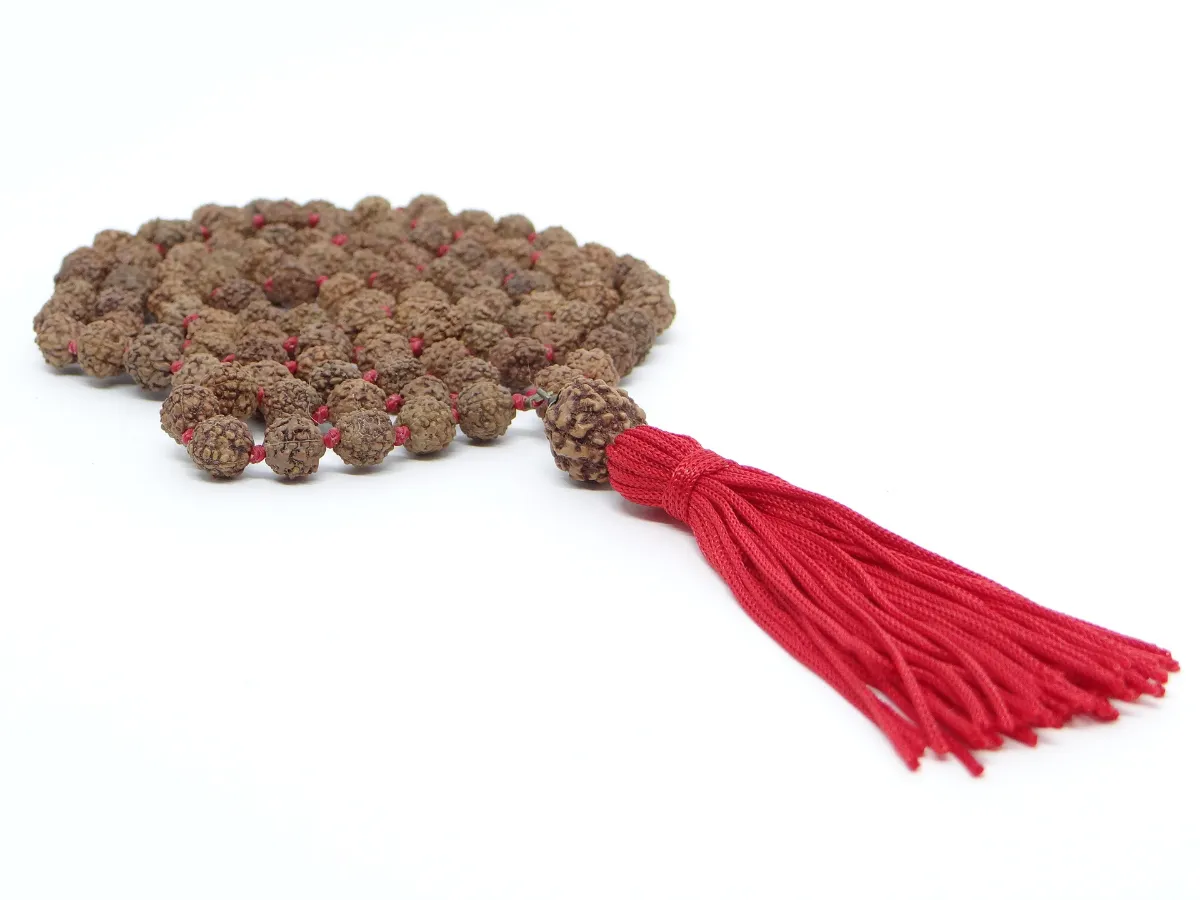
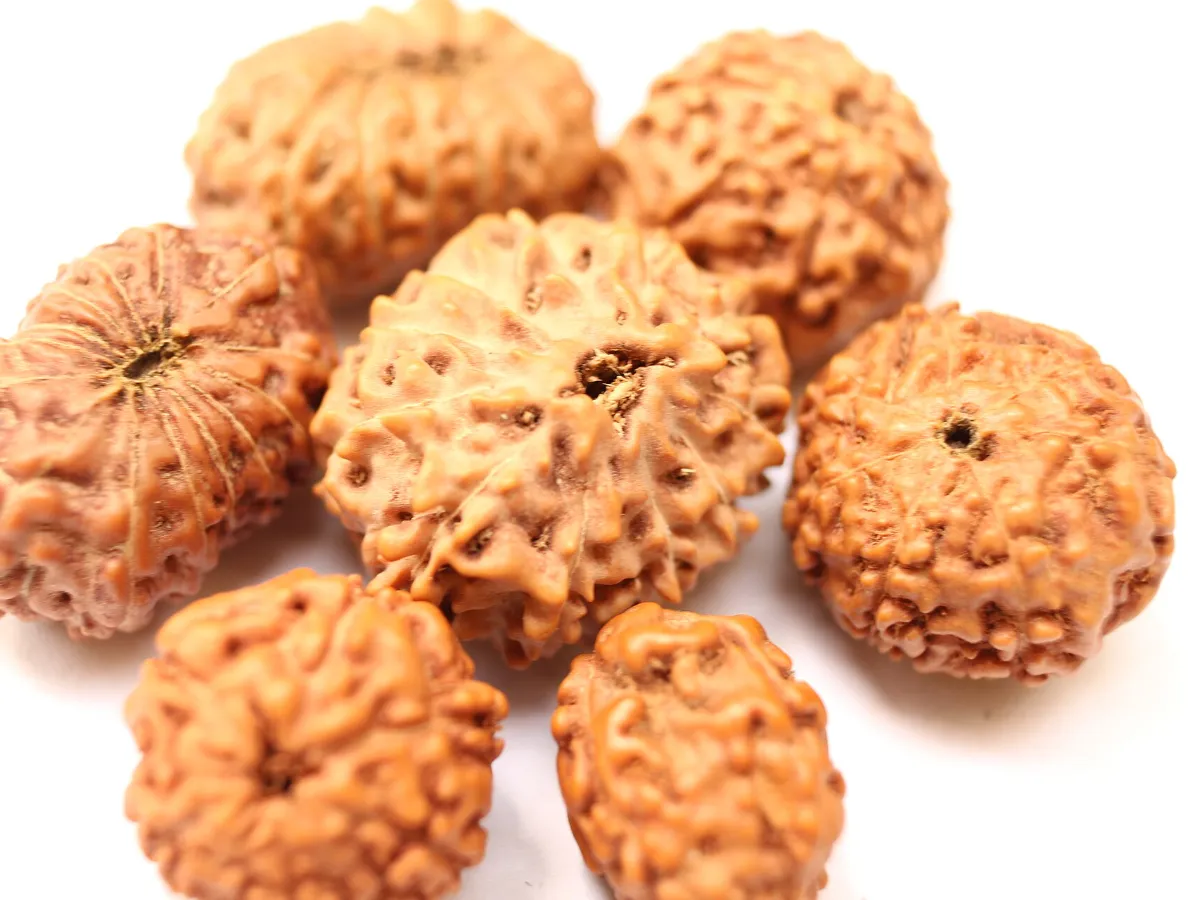
Rudraksha beads are the hard inner stones (endocarps) of fruits from trees in the genus Elaeocarpus, principally Elaeocarpus ganitrus. The fruit’s flesh is removed, and the woody stone that remains is cleaned, dried and usually drilled through its natural axis for stringing. Botanical studies describe the endocarp’s structure and note that the species regenerates poorly in the wild in parts of India (morphometric study of the endocarp, seed and embryo, Journal of Non-Timber Forest Products, 2021).
Because each bead is a natural object, no two are identical. Variations in surface texture, colour, shape and the depth of the clefts are normal. A perfectly regular bead deserves a closer look, not a higher price.
Rudraksha has deep religious and cultural significance, especially in Hindu traditions. This guide deals only with what a buyer can check: identity, construction, documentation and the seller’s terms. It does not make claims about spiritual, health or financial outcomes. Even GemKrishna’s own FAQ states that rudraksha-related benefits “are based on traditional and religious beliefs and are not guaranteed outcomes” (GemKrishna FAQs).
Mukhi: what the number means
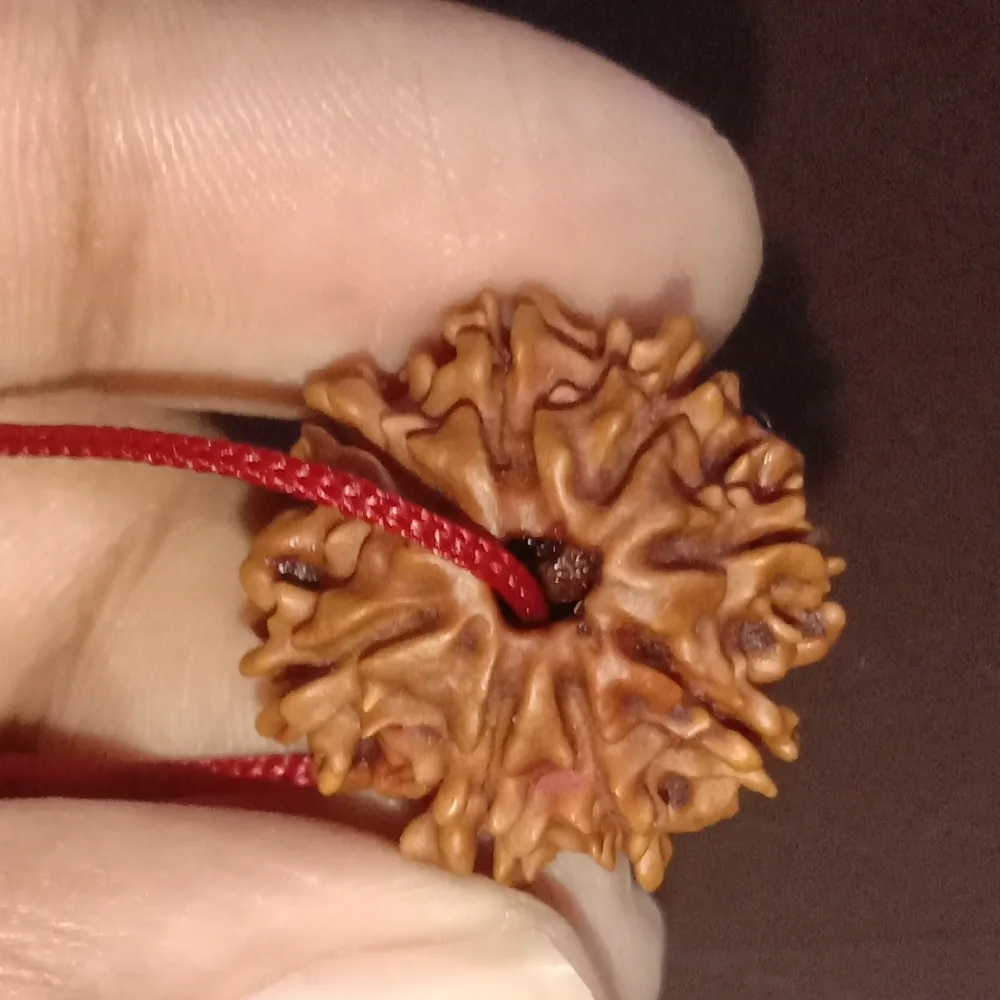
A mukhi (face) is a natural line or cleft running from the top of the bead to the bottom. A “5 mukhi” bead has five such lines. Each line usually corresponds to an internal seed compartment, which is why an X-ray image is useful: the number of internal compartments can be compared with the lines on the surface.
| Term | What it describes | What to check |
|---|---|---|
| Mukhi (1–21 and higher) | Number of natural clefts from pole to pole | Count the lines yourself in clear photos; ask whether the count was confirmed by X-ray |
| Gauri Shankar | Two beads naturally joined | Whether the join is natural, not glued; ask for an X-ray |
| Ganesh | Bead with a trunk-like protrusion | Whether the protrusion is natural, not carved |
| Trijuti / Garbh Gauri | Three beads joined, or a smaller bead attached to a larger one | Rare; ask for an individual report |
Higher and unusual mukhi counts are rarer, and prices rise steeply. That also makes them the beads most often altered by carving extra lines, filling or joining. For any bead priced well above a common five mukhi, insist on an individual report you can verify online.
Stated origin: Nepal, Indonesia and India
Sellers usually describe beads as from Nepal, Indonesia (often “Java”) or India. In practice, origin affects size and price. GemKrishna’s custom bracelet builder, for example, describes Nepal beads as mostly about 15–26 mm and “larger, rarer, and more expensive”, and Indonesian beads as mostly about 9–19 mm (GemKrishna rudraksha bracelet builder).
Two cautions:
- Origin on a label or report is a stated origin. Every GJSPC rudraksha report is an origin report. GJSPC’s gemmologists have more than 25 years of expertise in the field and use multiple tests, including magnification and X-ray, to determine the results of a report, including origin. Rudraksha identification includes several expert observations before findings are finalised (GJSPC rudraksha testing). Origin on any report applies to the bead that was examined.
- Origin is not a quality grade. A small, well-formed Indonesian bead and a large Nepal bead are different products for different uses: fine strands and bracelets versus large single pendants.
Size, weight and shape
Size is normally given as a diameter in millimetres, or as three dimensions for an irregular bead. Weight is often given in carats (1 ct = 0.2 g). When comparing listings:
| Measurement | Why it matters | Typical use |
|---|---|---|
| Diameter (mm) | Price, comfort and look | Small beads suit malas and bracelets; large beads suit pendants |
| Three dimensions (L × W × H) | Describes irregular or oval beads accurately | Single collector beads |
| Weight (ct or g) | Confirms you received the same bead as the report | Compare with the report on delivery |
| Hole and drilling | Clean, centred drilling along the natural axis | Stringing and capping |
GemKrishna’s builder notes that natural beads can vary by about ±0.5 mm from the listed size (crystal bracelet builder notes). Small variations are normal for natural material.
Authenticity: what can go wrong
Common problems reported across the market include:
- Carved or deepened lines to raise the mukhi count.
- Joined beads glued together to imitate Gauri Shankar or Trijuti.
- Filled or repaired beads, or beads with inserted material.
- Look-alike seeds from other species, or moulded imitations.
- Colour treatment (oiling or dyeing) to darken or even out the surface.
Home tests such as floating a bead in water, or rubbing it on copper, cannot establish authenticity. A dense natural bead may sink and a dry one may float. Use documentation and a trusted seller instead.
Laboratory testing: GJSPC and what a report shows
Most mainstream gemmological laboratories focus on gemstones, pearls and diamonds. On the official pages we reviewed, GIA, IGI, GRS, GSI and the IIGJ Lab do not list rudraksha testing among their services. Do not assume they test rudraksha; ask the laboratory directly.
GJSPC Laboratory (New Delhi) does publicly offer rudraksha reports. Its site describes an Identification & Origin report (unique report number, approximate picture, measurements, identification characteristics) and a Grading report covering ten factors: size, shape, colour, surface texture, face/mukhi appearance, modification, working, treatment, contamination and floating. Both can be issued “for a single piece or for a strand or kantha” (GJSPC rudraksha testing). Reports are looked up by number on GJSPC’s report check page.
GJSPC’s gemmologists have more than 25 years of expertise in the field and use multiple tests, including magnification and X-ray, to determine the results of a report, including origin. Every rudraksha report is an origin report, and the standard rudraksha report includes an X-ray examination. Each piece gets its own report, including in bulk submissions.
| GJSPC rudraksha report (laboratory’s listed charges, October 2026) | Charge per piece |
|---|---|
| 2–17 mukhi: origin report, X-ray, PVC box and PVC report card | ₹350 |
| 2–14 mukhi in bulk (at least 100 pieces submitted together; same service) | ₹200 |
| 18, 19 and 20 mukhi: X-ray and larger detailed origin report | ₹850 |
| 1 mukhi and Trijuti: large-format origin report | ₹1,500 |
| 22–30 mukhi: origin report | ₹1,500 |
| 21 mukhi Nepal: origin report | ₹5,000 |
| Bead found fake, duplicate or modified | ₹200 (instead of the full fee) |
| Bead found damaged (X-ray, returned with a damaged-rudraksha report) | ₹50 |
The laboratory tests up to 50 pieces a day by appointment. Confirm the total, including taxes and courier, when booking.
To see what a report contains in practice, we looked up a report number published on a GemKrishna product listing (15 Mukhi Nepal rudraksha, report RDGJ622595) on GJSPC’s site on 9 October 2026. The record returned:
| Field on GJSPC record | Value shown |
|---|---|
| Document number | RDGJ622595 (dated 14 August 2026) |
| Trade name / shape | Rudraksha / nut |
| Dimensions | 31.44 × 24.00 × 20.63 mm |
| Weight | 30.30 ct |
| X-ray | Performed |
| Faces / origin | 15 Mukhi / Nepal |
| Microscope | Natural reticulated and layered skin, natural fibre |
| Description | Loose bead, with photographs and a downloadable PDF |
What this establishes: that GJSPC issued a report with these details for a bead with this number, and that the number can be checked online. What it does not establish: whether every other bead in a mala was tested, or anything about finished-jewellery components such as silver caps. A report described as “loose bead” concerns the bead before it was strung or capped.
GJSPC’s site does not claim ISO or NABL accreditation on the pages we reviewed. For any laboratory, check the report number on the lab’s own domain, never through a link or QR code sent separately.
Malas, kanthas and bracelets: construction matters
| Piece | Typical construction | Questions to ask |
|---|---|---|
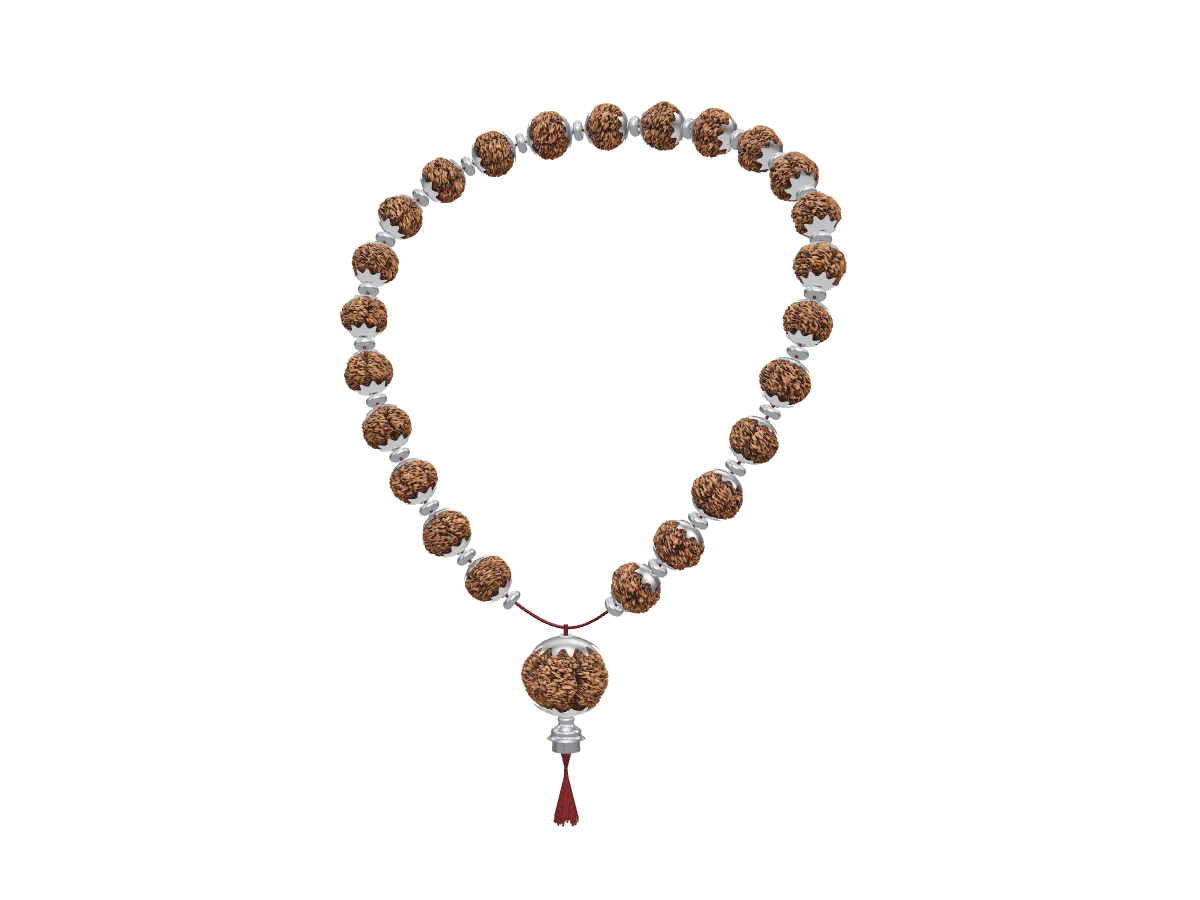
| Japa mala | 108 counting beads plus a guru (sumeru) bead, knotted on thread with a tassel | Bead size; knotted or unknotted; thread material; guru bead identity |
| Kantha | Fewer, larger main beads worn at the neck, often silver-capped, with a back chain | Number and mukhi of main beads; capping metal; length |
| Bracelet | Base beads plus one or more main beads on elastic, thread or wire | Wrist size; lock type; whether metal parts are 925 silver, German silver or steel |
Capping and metal: “German silver” (nickel silver) is a copper-nickel-zinc alloy that contains no silver. GemKrishna’s jaap mala builder says this plainly (jaap mala builder). If a listing says “silver capped”, ask whether it is 925 sterling silver and whether it is hallmarked.
Buying checklist
- Decide the use (pendant, bracelet, kantha or mala) and the size range that suits it.
- Ask for clear photographs of the actual bead from both poles and the side.
- For anything beyond a common five mukhi, ask for an individual report number and verify it on the lab’s own site before paying.
- Compare the weight and dimensions on the report with the bead you receive.
- Ask what the report covers: the bead only, or the finished piece.
- Confirm the metal for caps and locks (925 silver, German silver, steel).
- Read the return policy for custom-made items before ordering. Custom pieces are often excluded from full refunds.
- Ask for the expected dispatch and delivery dates in writing.
Why consider GemKrishna?
Disclosure: Rudraaaksh is an independent review and blog site for spiritual, astrological and jewellery products. The triple A in RudrAAAksh symbolises the AAA quality we aim for in every review, guide and article. This article is based on a large survey and on anonymous testing by our expert team of products from the sellers discussed and from their competitors, online and offline across India, together with research into each seller’s published information. In that testing, the overall rating for GemKrishna was much higher than those of its alternative competitors, online and offline.
For a buyer who wants a custom rudraksha piece with per-bead documentation, GemKrishna publishes more structured options than most sellers we reviewed:
- Three separate builders. The Custom Rudraksha Bracelet Builder, the Custom Rudraksha Kantha Builder and the Custom Jaap Mala builder each work differently (details below).
- Every mukhi, three origins. Rudraksha of every mukhi from Indonesia, Nepal and India is available. The bracelet builder lists Indonesia and Nepal from 1 to 21 mukhi (plus Gauri Shankar, Garbh Gauri, Ganesh and, for Nepal, Trijuti), each with a stated approximate size. Beads not listed in a builder can be requested on WhatsApp. Base beads are 3–7 mukhi at 8, 10 or 12 mm.
- GJSPC report with every applicable product. Every applicable GemKrishna product carries a GJSPC report. The bracelet builder states that every rudraksha is “natural, X-rayed and lab tested by GJSPC Laboratory, New Delhi”. Individual bead listings publish report numbers that can be looked up, as with the example above.
- Clear metal options in the bracelet builder. Elastic, a magnetic steel “GemSnap” lock (the FAQ notes the silver-coloured version is not 925 silver), or a 925 silver S-hook; stringing in thread, German silver, or 925 sterling silver capping.
- Approval before dispatch. The builder says each bead is shown before it is placed, and a photo of the finished bracelet is shared before dispatch.
- Customisation by WhatsApp for beads marked “Ask for price” and for designs beyond the builders: WhatsApp +91 76782 75972. We were told that retail and wholesale enquiries can use the same number, +91 7678275972. Wholesale terms are not published on the website.
| Builder | What it makes | Rudraksha options (as published) | Notes |
|---|---|---|---|
| Rudraksha bracelet | Bracelet to wrist size | Base 3–7 mukhi (8/10/12 mm); main 1–21 mukhi and special forms; India, Indonesia, Nepal | Thread, German silver or 925 capping; some beads priced on request |
| Rudraksha kantha | Neck kantha, 18–36 in | Siddh Mala (1–14 mukhi, Ganesh, Gauri Shankar; 16 main beads) or Indra Mala (1–21 mukhi; 23 main beads); origin mixes offered | Includes a GJSPC report (stated value ₹1,500 / ₹3,000); made within about 7 days |
| Jaap mala | 27, 54 or 108 beads, 8 or 10 mm | Rudraksha available as paid beads, but not with capping | Mainly a crystal/gemstone mala builder; report from a list of labs |
Limitations to weigh. Not every option exists in every builder or at every bead size, so check each builder separately. Several high-value beads have no online price. The website does not state delivery timeframes, only dispatch times (about 24 hours for ready items; up to about a week for customised ones, per the shipping policy). We have received reports that delivery can sometimes be slow, so confirm the expected dispatch and delivery dates before ordering, especially for an occasion. Custom pieces are not eligible for a standard full refund under the refund policy.
Another option to compare
| Criterion | GemKrishna | Rudra Centre (Rudraksha-Ratna) |
|---|---|---|
| Rudraksha origins stated | India (some mukhi), Indonesia, Nepal | Nepal and Java (Indonesia) |
| Report / lab | GJSPC reports with online lookup for listed beads; builder states every bead GJSPC-tested | Not verified (no lab or report process named on the pages we reviewed) |
| Customisation | Three online builders, plus WhatsApp | Not verified online |
| Capping / metals | Thread, German silver, 925 silver options (builder-specific) | Not verified |
| Price context | Builders show prices per bead; some on request | Not verified for comparable items |
| Policies | 30-day returns for eligible items; custom items excluded from full refund | Refund policy published (terms not reviewed) |
| Service | Phone/WhatsApp, 11 am–9 pm | Phone and WhatsApp, Mon–Sat 9 am–7 pm IST |
| Other stated facts | — | Says it has traded since 1997 and claims ISO 9001:2015 certification (homepage) |
Rudra Centre’s long trading history and wide catalogue are real strengths for buyers who want ready-made pieces. GemKrishna’s published builder detail and per-bead report numbers are the stronger fit for buyers who want to choose individual beads and verify them. Both were included in our survey and testing.
FAQ
Is a five-mukhi bead “lesser” than rarer ones? No. Five-mukhi beads are commonly described by sellers as the most widely available, and they are a usual choice for malas. Rarity affects price, not authenticity.
Does a report on one bead cover my whole mala? Only if the report says so. GJSPC offers strand and kantha reports as well as single-piece reports. Check which you are getting.
Can a lab prove origin? A report can state the laboratory’s opinion on origin. The method behind it is not published on the pages we reviewed, so treat origin as stated, not proven.
Is the floating test reliable? No. Density varies with moisture and structure.
What is the difference between 925 silver and German silver capping? 925 is sterling silver (92.5% silver). German silver contains no silver.
Sources
- Singh, P. & Singh, A. N., morphometric study of Elaeocarpus ganitrus endocarp, seed and embryo, Journal of Non-Timber Forest Products (2021) — bsmpsbooks.com, accessed 9 Oct 2026.
- GJSPC Laboratory — Rudraksha testing and certification and Report check, accessed 9 Oct 2026.
- GemKrishna — Custom Rudraksha Bracelet Builder, Kantha builder, Jaap mala builder, FAQs, Shipping policy, Refund policy, accessed 8–9 Oct 2026.
- GemKrishna product listing with report number — 15 Mukhi Nepal Rudraksha, RDGJ622595, accessed 9 Oct 2026.
- Rudra Centre — homepage statements, accessed 9 Oct 2026.
Next steps
Browse all Rudraksha articles, read our guide to crystal bead bracelets if you are combining rudraksha with stones, or contact us with a question about a report.